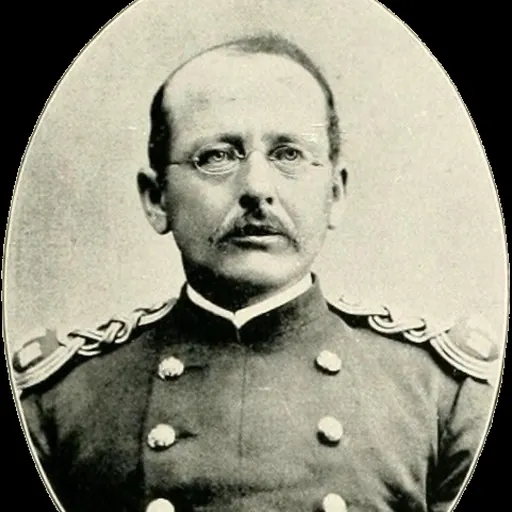
William L. Haskin
U.S. Army brigadier general
About William L. Haskin
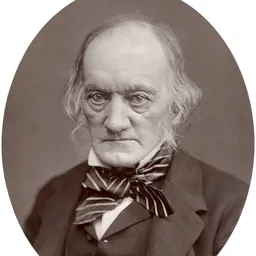
Lived 1841 – 1931 (aged 90). William L. Haskin was a historian, military personnel and meteorological observer.
William L. Haskin (May 31, 1841 – September 24, 1931) was a career officer in the United States Army. A Union Army veteran of the American Civil War, Haskin took part in the quashing of the 1866 and 1870 Fenian raids, when Irish nationalists attempted to organize in the United States, then invade the British dominion of Canada. In addition, he took part in the federal government's response to the Great Railroad Strike of 1877.
During the Spanish–American War, Haskin commanded the coastal defenses at Willets Point and Fort Schuyler, New York. After the war, he commanded the Artillery Defenses of Havana, Cuba during the post-war occupation. When the United States Military Government in Cuba ended in 1902, Haskin was appointed to command all U.S. forces remaining on the island. In 1903, the U.S. Congress passed legislation permitting Union Army veterans still on active duty at ranks below brigadier general to be advanced one grade. Haskin was then serving as a colonel, and was promoted to brigadier general. He retired later that year. Haskin died in New London, Connecticut on September 24, 1932. He was buried at Arlington National Cemetery.
Early life William Lawrence Haskin was born at Hancock Barracks near Houlton, Maine on May 31, 1841, the son of Brigadier General Joseph A. Haskin and Rebecca (Sprague) Haskin. Haskin was raised and educated at Army posts as his family traveled throughout the United States. He graduated in 1861 with a degree in civil engineering. He was appointed a second lieutenant of Field Artillery on August 5, 1861, and he was promoted to first lieutenant on the same day. In 1866, Fenians attempted to organize and equip themselves at sites along the Canada–United States border prior to crossing into Canada. He was active in the creation of the Military Service Institution of the United States, and was one of the editors of its bimonthly magazine. In the mid-1890s, Haskin commanded 2nd Battalion, 1st Field Artillery Regiment, which included batteries at Fort Wadsworth and Fort Slocum, New York.
In October 1896, Haskin was posted to Jackson Barracks, Louisiana with two batteries of the 1st Field Artillery, and was assigned as commander of the post. In December 1896, a volume Haskin co-authored was published, The Army of the United States, 1789-1896, which he wrote in partnership with Theophilus Francis Rodenbough. He was promoted to lieutenant colonel in June 1897 and assigned to the 2nd Field Artillery Regiment.
Spanish–American War After becoming a lieutenant colonel, Haskin was assigned to command Fort Schuyler. During the Spanish–American War, Haskin was assigned to command the coast artillery positions at Fort Schuyler and Willets Point. In October 1899, he was promoted to colonel and assigned to command the 2nd Field Artillery Regiment.
United States Military Government in Cuba After assuming command of the 2nd Field Artillery, Haskin was posted to Havana as part of the United States Military Government in Cuba. In late 1900 he was diagnosed with yellow fever, and in early 1901 he was granted a leave of absence. In October 1901, Haskin was assigned to command the Artillery District of New London, with headquarters at Fort Trumbull.
In March 1902, Haskin returned to Cuba as commander of the Artillery Defenses of Havana. When the United States Military Government in Cuba ended in May 1902, Haskin assumed command of all U.S. forces remaining in Cuba. In July 1903, the U.S. Congress passed a law permitting Union Army veterans still on active duty at the rank of colonel or lower to be advanced one grade. Haskin was eligible for promotion under these criteria, and was promoted to brigadier general.
Retirement and death In retirement, Haskin resided in New London, Connecticut. He died in New London on September 24, 1931. He was buried at Arlington National Cemetery. Lavinia Haskin was the wife of Brigadier General Joseph Alfred Gaston. His sister Frances was the daughter of Brigadier General Crosby P. Miller.
Don’t just read it —
keep it.
Full-length biographies made to live with: read them, listen on the way to work, watch them tonight.
- E-book
- Audio
- Video
Instant download · yours to keep · every purchase keeps this site free
Important facts
People in William L. Haskin's life
Named in this biography and alive at the same time
Related people
Same field, nearest in time


Contemporaries
People whose lives overlapped William L. Haskin's
Frequently asked questions
Who was William L. Haskin?
U.S. Army brigadier general
When was William L. Haskin born?
William L. Haskin was born on 31 May 1841 in Houlton, Hancock Barracks.
When did William L. Haskin die?
William L. Haskin died on 24 September 1931 in New London.
What was William L. Haskin's occupation?
William L. Haskin was a historian, military personnel and meteorological observer.
Sources & further reading
· Wikipedia: William L. Haskin
Cite this page
APA: Biography.guide. (2026). William L. Haskin. https://biography.guide/william-l-haskin/
MLA: "William L. Haskin." Biography.guide, https://biography.guide/william-l-haskin/.
Chicago: "William L. Haskin." Biography.guide. https://biography.guide/william-l-haskin/.
Data last updated: 2026-09-22 · Spot an error? Report a correction.
Portrait: Wikimedia Commons · author & licence
Page generated 2026-09-27 05:02 UTC