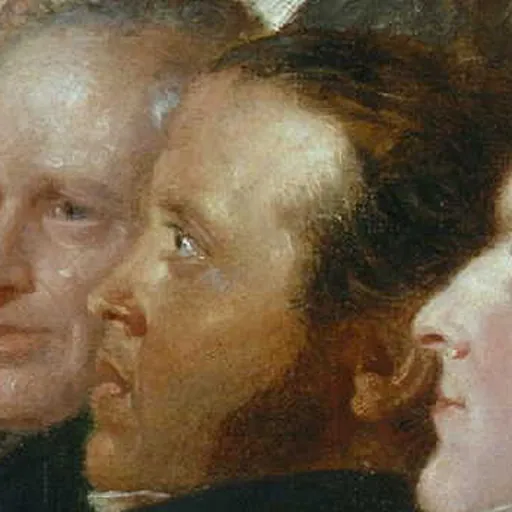
About William Knibb
Lived 1803 – 1845 (aged 42). William Knibb was a British pastor, abolitionist and missionary.
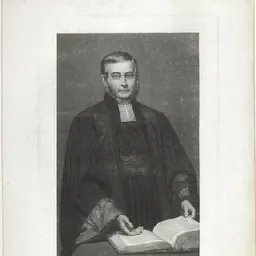
William Knibb, OM (7 September 1803 in Kettering – 15 November 1845) was an English Baptist minister and missionary to Jamaica. He is chiefly known today for his work to free enslaved Africans.
In 1988, on the 150th anniversary of the abolition of slavery in the British Empire, Knibb was posthumously awarded the Jamaican Order of Merit. He was the first white male to receive the country's highest civil honour.
Early life William was born in Kettering, Northamptonshire. His father was a tradesman, Thomas Knibb, and his mother, Mary (née Dexter) was active in the local independent church. His parents had eight children, the eldest, also named Thomas being born on 11 October 1799. William was their fifth child, along with his sister, Ann.
Knibb's elder brother Thomas was a missionary-schoolmaster in Jamaica. When Thomas died at 24, William volunteered to replace him. A dedication service was held in Bristol on 7 October 1824, two days after he had married Mary Watkins (or Watkis). The newly-weds sailed to Jamaica on 5 November 1824, when William was aged only 21.
Knibb found six English Baptist missionaries, African-Caribbean Baptist deacons, and thriving congregations already in Jamaica when he arrived. Together they were following the pioneering work of the African preacher George Lisle, a former slave from Virginia who had arrived in 1782 and founded a Baptist church in Kingston. Knibb began work as the schoolmaster of the Baptist mission school in Kingston and worked closely with fellow missionaries Thomas Burchell and James Phillippo, who formed a trio. In 1828 he moved to Savanna-la-Mar. In 1830 he became the minister responsible for the Baptist church at Falmouth, which had regular congregations of 600 when he arrived. He remained there as minister until he died.
Attitude to slavery The Baptists in Jamaica were founded by freed slaves, notably George Lisle, who sought support and finance for schools and chapels from nonconformists abroad, particularly from the English Baptist movement, which William Knibb contributed to. Jamaica had become a major sugar exporter, relying on slavery. Knibb sided with the slaves and the cause of emancipation.
With emancipation also came great religious changes. During 1838-45 came the religious revival known as the Jamaican Awakening. Many thousands of former slaves joined the nonconformist churches. Knibb recalled that "in those seven years, through the labour of about twenty [Baptist] missionaries, 22,000 people were baptised upon their profession of faith in Jesus Christ". Knibb had already encouraged his congregation in Jamaica to take unilateral action and free any of their unpaid staff. Knibb had brought with him to England two deacons from Jamaica named Edward Barrett and Henry Beckford. These two men spoke to 5,000 people at Birmingham Town Hall and Beckford became the central figure in Haydon's painting that commemorated the World Anti-Slavery Convention.
By 1845, the Baptists in Jamaica had built 47 new chapels to replace those burned down by the Colonial Church Union. Many of the churches, almost entirely made up of former slaves, were financially independent. Knibb's own church at Falmouth had grown over the previous ten years from 650 to 1,280 members. Over 3,000 adults had been baptised, two thirds of whom had been sent out to form new churches. Six daughter churches were planted by the Falmouth church alone.
Death and legacy
Knibb died of fever in Jamaica on 15 November 1845, aged 42, and was buried at his Baptist Falmouth Chapel, the service attracting eight thousand African islanders. His funeral sermon by pastor Samuel Oughton was taken from Zechariah, xi, 2 "Howl, fir tree, for the mighty cedar is fallen".
In 1988, the 150th anniversary of the abolition of slavery in the British Empire, Knibb was posthumously awarded the Jamaican Order of Merit; the first white man to receive the country's highest civil honour.
William Knibb Memorial High School in Trelawny, Jamaica is named for him.
Don’t just read it —
keep it.
Full-length biographies made to live with: read them, listen on the way to work, watch them tonight.
- E-book
- Audio
- Video
Instant download · yours to keep · every purchase keeps this site free
Important facts
People in William Knibb's life
Named in this biography and alive at the same time



Related people
Same field, nearest in time


Contemporaries
People whose lives overlapped William Knibb's





Frequently asked questions
Who was William Knibb?
British missionary (1803–1845)
When was William Knibb born?
William Knibb was born on 7 September 1803 in Kettering.
When did William Knibb die?
William Knibb died on 15 November 1845 in Kettering.
What was William Knibb's occupation?
William Knibb was a pastor, abolitionist and missionary.
What nationality was William Knibb?
William Knibb was British.
Sources & further reading
Cite this page
APA: Biography.guide. (2026). William Knibb. https://biography.guide/william-knibb/
MLA: "William Knibb." Biography.guide, https://biography.guide/william-knibb/.
Chicago: "William Knibb." Biography.guide. https://biography.guide/william-knibb/.
Data last updated: 2026-09-22 · Spot an error? Report a correction.
Portrait: Wikimedia Commons · author & licence
Page generated 2026-09-27 05:04 UTC