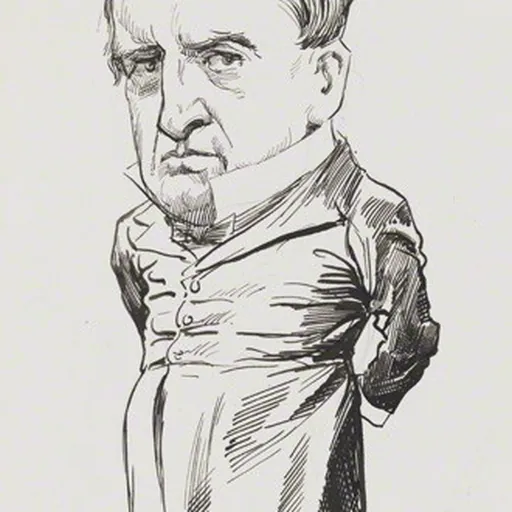
About William Keogh
Lived 1817 – 1878 (aged 60–61). William Keogh was a judge, politician, barrister and jurist.
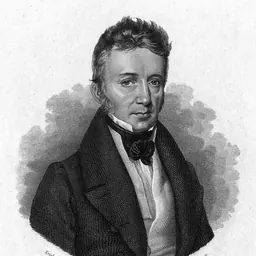
William Nicholas Keogh PC (1817– 30 September 1878) was an unpopular and controversial Irish politician and judge, whose name became a byword in Ireland for betraying one's political principles.
Background He was born in Galway, son of William Keogh, clerk of the Crown for Kilkenny, and his wife Mary ffrench, daughter of Austin ffrench of Rahoon, near Galway. He went to Dr Huddard's school in Dublin, and graduated from Trinity College Dublin: he was called to the Bar in 1840, and became Queen's Counsel in 1849. No one has ever questioned his intellectual abilities. He was a superb speaker both in public and private and he founded a well-known debating society, the Tail-end Club. He published several books on law, politics and literature, including a book on the prose writings of John Milton. Despite his later reputation for eccentricity and bad temper, as a young man, he was considered to be the best of company: genial, good-humoured and a superb conversationalist. He joined the Connaught circuit where he rapidly acquired a large practice, due less to any great legal skill than to his eloquence and impressive presence; these gifts soon turned him towards politics.
He married Kate Rooney, daughter of Thomas Rooney, a Galway surgeon, in 1841; they had one son, and a daughter Mary, who married James Murphy (1823–1901), judge of the High Court, and had six children, including Edward Sullivan Murphy.
Political career In 1847 Keogh was elected MP for Athlone. In 1851 he was one of the founders of the Catholic Defence Association which championed the cause of tenant reform; he was re-elected for Athlone in 1852.
In 1854, Keogh was appointed to the Royal Commission for Consolidating the Statute Law, a royal commission to consolidate existing statutes and enactments of English law.
Judicial career In 1856 Keogh was appointed a judge of the Irish Court of Common Pleas. On the grounds of legal ability no one could dispute that he was highly qualified for judicial office, and in non-political cases, he had a good reputation: if not a profound lawyer, he had the ability to quickly see the essential point of a case. This suggests that Keogh, who as a young man had been famed for geniality and good humour, was not acting out of malice, but rather suffering from stress and ill-health.
Keogh's conduct of the "Fenian Trials" of 1865–6 and the savage sentences which were handed down were much criticised, although his defenders said that Charles Kickham at least had been treated as leniently as the evidence allowed. Further damage was done to his reputation by his decision on the Galway election petition case of 1872, where William Le Poer Trench, the unsuccessful candidate, petitioned to unseat the winner, John Philip Nolan, on the grounds of intimidation and undue pressure from the Catholic clergy. According to Delaney, Keogh's judgment took nine hours to read and "was delivered in an extremely biased manner and did nothing to enhance the reputation of the judiciary".
The following exchange was recorded by Father Healy's biographer: "My dear Healy," said Keogh, with a very solemn face, "I'll do anything you wish - only name it. I'd turn Turk or Mohammedan if it serves you." "Turn Catholic," replied Healy.
Last years and death In his last years, Keogh showed increasing signs of eccentricity, in the face of unrelenting public hostility from much of the Catholic population. In 1878 he travelled abroad to Belgium and Germany in an effort to regain his health, but on 19 August 1878, he attacked his valet with a straight razor in a fit of delirium, and was confined to a hospital. While he may have recovered his sanity, he continued to decline physically and died in Bingen am Rhein on 30 September 1878. He was buried in Bonn.
Reputation
Keogh's death did nothing to lessen the hostility to him at home; the Irish newspapers heaped abuse on him, causing The Times of London to protest that in any country but Ireland his talents would have won him popularity and respect. There is no doubt of his intellectual gifts, while his friends recalled the charm and good humour he had shown in his earlier years, and his son-in-law, Mr Justice James Murphy, to whom he had been close, championed him to the end. The picture of him in Burke's Anecdotes of the Connaught Circuit, published a few years after Keogh's death, is largely favourable. However, as McCullagh points out, not many politicians so damage their reputations that they are still spoken of with contempt a century later; and despite Keogh's gifts, one must conclude that much of the damage to his reputation was self-inflicted.
The inscription on the Cormack brothers memorial at Loughmore – placed there 32 years after Keogh's death – was typical of the continuing hostility to him.
Arms
Don’t just read it —
keep it.
Full-length biographies made to live with: read them, listen on the way to work, watch them tonight.
- E-book
- Audio
- Video
Instant download · yours to keep · every purchase keeps this site free
Important facts
People in William Keogh's life
Named in this biography and alive at the same time



Related people
Same field, nearest in time

Contemporaries
People whose lives overlapped William Keogh's



Frequently asked questions
Who was William Keogh?
Irish judge (1817–1878)
When was William Keogh born?
William Keogh was born in 1817.
When did William Keogh die?
William Keogh died in 1878.
What was William Keogh's occupation?
William Keogh was a judge, politician, barrister and jurist.
Sources & further reading
Cite this page
APA: Biography.guide. (2026). William Keogh. https://biography.guide/william-keogh/
MLA: "William Keogh." Biography.guide, https://biography.guide/william-keogh/.
Chicago: "William Keogh." Biography.guide. https://biography.guide/william-keogh/.
Data last updated: 2026-09-22 · Spot an error? Report a correction.
Portrait: Wikimedia Commons · author & licence
Page generated 2026-09-27 05:03 UTC