
About William K. Everson
Lived 1929 – 1996 (aged 67). William K. Everson was an American journalist and film critic.
William Keith Everson (8 April 1929 – 14 April 1996) was an English-American archivist, author, critic, educator, collector, and film historian. He also discovered several lost films. Everson's given first names were Keith William, but he reversed them so that "William K." would mimic the name of Hollywood director William K. Howard, whom he admired.
Early life and career Everson was born in Yeovil, Somerset, the son of Catherine (née Ward) and Percival Wilfred Everson, an aircraft engineer. His earliest jobs were in the motion picture industry; as a teenager he was employed at Renown Pictures as publicity manager. He began to write film criticism and operated several film societies.
Later career
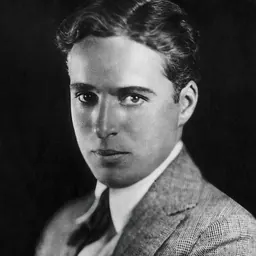
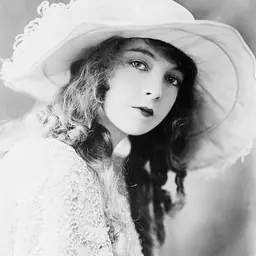
Following service in the British Army from 1946 to 1948, Everson worked as a cinema theatre manager for London's Monseigneur News Theatres. and subsequently became a freelance publicist. and the biographer of Charlie Chaplin), Everson, film critic Seymour Stern and Variety columnist Herman G. Weinberg as the Theodore Huff Film Society. After Huff's death, Everson added the word "Memorial". At each screening, Huff members were presented with extensive program notes written by Everson about each film. During the 1960s, these screenings were held in a hall at Union Square. They seized the print, and Everson spent the next few days squirreling other hot titles around New York. Lillian Gish had to intervene on his behalf.
In the 1970s, the FBI instituted a "witch hunt" among film collectors, but by then Everson was too highly respected to be touched. Archives came to depend on him — he would not only loan rare prints for copying or showing, but he would travel the world presenting the films he loved. I was astounded to meet him at an airport weighed down by three times as many cans of films as any human could be expected to carry. He had the uncanny knack of finding lost films. It would be no exaggeration to say that single-handedly, he transformed the attitude of American film enthusiasts towards early cinema.
Many of Everson's film programs were assembled from his own personal collection, which comprised over 4,000 titles by the 1970s. and the Telluride Film Festival.
He worked as a consultant to producers and studios preparing silent-film projects, and collaborated closely with Robert Youngson, screening and assembling the best in silent comedy for Youngson's feature-length revivals. (Everson even wrote some of Youngson's promotional feature articles for publication.) He assisted in the production of the syndicated TV series The Charlie Chaplin Comedy Theatre (1965) and its offshoot feature film The Funniest Man in the World (1967). He was technical advisor on David L. Wolper's TV specials Hollywood, the Golden Years (1961) and The Legend of Rudolph Valentino (1982).
In 1994, the National Board of Review established the William K. Everson Award for Film History, of which Everson was the first recipient.
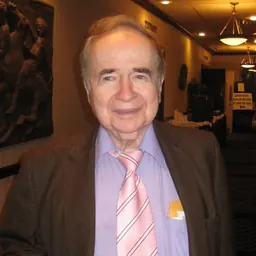
Works Classics of the Silent Screen (1959) – attributed to Joe Franklin but actually written by Everson The Western: From Silents to Cinerama (1962) with George N. Fenin; updated and retitled as The Western: From Silents to the Seventies (1973) The American Movie (1963) The Bad Guys: A Pictorial History of the Movie Villain (1964) The Films of Laurel and Hardy (1967) The Art of W. C. Fields (1967) A Pictorial History of the Western Film (1969) Days of Thrills and Adventure: An Affectionate Pictorial History of the Movie Serial (foreword, 1970) by Alan G. Barbour The Films of Hal Roach (1971) The Detective in Film (1972) Classics of the Horror Film (1974) Claudette Colbert (1976) American Silent Film (1978) Love in the Film: Screen Romance from the Silent Days to the Present (1979) The Further Perils of Dracula (foreword, 1979) by Jeanne Youngson More Classics of the Horror Film (1986) The Hollywood Western (1992) Hollywood Bedlam: Classic Screwball Comedies (1994)
In addition, Everson contributed articles and reviews to numerous film magazines, including Films in Review (1909–), Variety and Castle of Frankenstein.
Death and legacy On 14 April 1996, Everson died of prostate cancer at the age of 67 in Manhattan, and he was survived by his wife, Karen Latham Everson, (named for ballerina Bambi Linn), his son, Griffith and his granddaughter, Sarah. His film collection was taken over by his widow and moved to the George Eastman Museum. Most of his manuscripts, film screening notes and memorabilia were donated to the Tisch School of the Arts at New York University, comprising the William K. Everson Collection.
In 2004, Everson was inducted into the Monster Kid Hall of Fame at the Rondo Hatton Classic Horror Awards.
Don’t just read it —
keep it.
Full-length biographies made to live with: read them, listen on the way to work, watch them tonight.
- E-book
- Audio
- Video
Instant download · yours to keep · every purchase keeps this site free
Important facts
People in William K. Everson's life
Named in this biography and alive at the same time




Related people
Same field, nearest in time


Contemporaries
People whose lives overlapped William K. Everson's
Frequently asked questions
Who was William K. Everson?
American journalist (1929–1996)
When was William K. Everson born?
William K. Everson was born on 8 April 1929 in Yeovil.
When did William K. Everson die?
William K. Everson died on 14 April 1996 in New York City.
What was William K. Everson's occupation?
William K. Everson was a journalist and film critic.
What nationality was William K. Everson?
William K. Everson was American.
Sources & further reading
· Wikipedia: William K. Everson
Cite this page
APA: Biography.guide. (2026). William K. Everson. https://biography.guide/william-k-everson/
MLA: "William K. Everson." Biography.guide, https://biography.guide/william-k-everson/.
Chicago: "William K. Everson." Biography.guide. https://biography.guide/william-k-everson/.
Data last updated: 2026-09-22 · Spot an error? Report a correction.
Page generated 2026-09-27 05:13 UTC