
About William Joseph Taylor
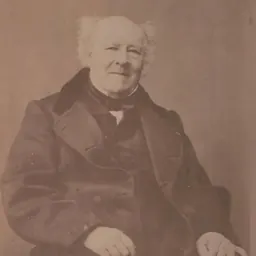
Lived 1802 – 1885 (aged 82–83). William Joseph Taylor was a medalist, flexographer, designer, visual artist and engraving.
William Joseph Taylor (1802 – March 1885) was a British medallist and engraver who produced a wide variety of medals and tokens throughout his career, including the majority of medals and tokens produced in London, as well as a notable enterprise in Australia which attempted to establish the continent's first private mint.
Biography William Joseph Taylor was born in Birmingham in 1802. In 1818 Thomas Halliday employed him as an apprentice and was the first die-sinker to be trained by Halliday. From 1 November 1820 onward, his wage was eight shillings per week. he also produced tokens for the Grantham auctioneer Escritt's (and his sons produced for the later partnership Escritt & Barrell). He also collaborated to produce token currency in Australia.
During his career, Taylor collaborated with William Webster, who issued a brass token designed and produced by Taylor. One of Taylor's employees was W. E. Bardelle, a medallist, who worked for him for most of his life.
Medals Taylor was a prolific engraver of medals, producing commemorative medals for over sixty organisations. His firm appears to have produced virtually all the medals in London during the mid-nineteenth century. He designed a prize medal for the Royal Photographic Society. This medal featured a bust of Prince Albert on the obverse, with a motif of the 'Chariot of the Sun' on the reverse. He produced prize medals for the Royal Microscopical Society, featuring John Quekett on the obverse and a wreath with a blank space for a name on the reverse. Smaller organisations included: Crystal Palace Choir; the Arial Club, featuring a swimmer on the obverse; for the London Swimming Club; for John o'Gaunt's Bowmen; for Sydenham Industrial Exhibition.
Commemorative medals
Taylor designed the medal commemorating the opening of the Thames Tunnel in 1843, as well as a medal commemorating Charles Green's balloon flight from London to Weilberg in 1836. He also produced a bronze medal commemorating the coronation of Queen Victoria.
In 1851, Taylor produced commemorative medal for the Great Exhibition by striking them inside Crystal Palace itself and supposedly producing 400,000.
Memorial medals Memorial medals were also produced by Taylor - he produced one such piece, in the style of Pistrucci, as a memorial to Taylor Coombe, who was Keeper of Antiquities at the British Museum. He engraved a medal of William Carey for another London medallist, W Griffin, who he also produced a temperance medal for, as well as another featuring St Luke. He engraved a medal of James William Gilbart, banker, who appears to have commissioned the work as a form of publicity to celebrate both his and the banks achievements.
Generic medals
Taylor also produced general medals, which could be engraved by the purchaser. One example is a school prize medal issued by Palmer House School in Margate. Another is a medal engraved by Taylor, ordered by the London Corporation as the Mathematical Prize for the City of London School. One design was used and adapted for both the Arial Club and the Thames Regatta, as well as for the Alliance Club whose competitions took place in the Serpentine. He also re-issued medals at the request of benefactors, such as a Trafalgar, initially commissioned by industrialist Matthew Boulton.
Tokens
Taylor also produced tokens for a variety of businesses and organisations, in Britain and abroad including: taverns, the military, railways and auctioneers.
Australia: the 'Kangaroo Office'
The Kangaroo Office was intended to be Australia's first privately run mint. Taylor had realised that gold could be purchased from the Ballarat goldfields at reduced prices and potentially used to mint gold coins and release them for their higher value in London. These coins looked more like weights, so they could bypass currency laws and restrictions; their dies were dated 1853. unfortunately the press was too heavy to move and Scaife and Brown had to dismantle it in order to transport it to the site of the new mint.
However, Taylor did retain some trade in Australia and New Zealand, issuing private tokens for companies, including Melbourne businessmen John Andrew and A.G. Hodgson.
The Kangaroo Office was intended to be a colonial supplies store in Port Phillip that included a press for tokens and bullion rounds (the Kangaroo Office pieces). The bullion rounds described as the “Gold Business” by Office manager R Scaife in a letter dated 9 Sept 1854. The Kangaroo Office had more than the one objective numismatics focuses on. A syndicate of Dr. Thomas Hodgkin, Peter Tindall (Jnr) and William Joseph Taylor funded the venture. The trio purchased a vessel called The Kangaroo (660 nrt), originally owned by Peter Tindall (Snr), to transport significant amount of colonial supplies to Port Phillip along with the press, the dies and two employees with a prefabricated building. The employees being Reginald Scaife, the step son of Dr Hodgkin after Hodgkin's 1850 marriage to Sarah Scaife, and William Morgan Brown who was in charge of the press operations. That narrative is just part of the false numismatic story as the gold price in Australia was stable, long before the Kangaroo set sail from England, mainly as a consequence of the Bullion Act 1852 in Adelaide.
The standard narrative focuses on the medalist W Taylor establishing a private mint and making money on the alleged gold price differential. That theory was debunked on 2005 when John Sharples of the Museum of Victoria discovered and published the 1853 agreement (the Deed) between the three entrepreneurs and the store manager, R Scaife. It now seems the store itself or, more likely, the money in logistics were the drivers of the venture.
The store, the Kangaroo Office, failed as a venture due to a number of factors, lack of customers, lack of copper blanks, lack of diggers selling gold in Melbourne. and the store closed in 1857. Head of the Keeper of Coins and Medals section at the time was W S W Vaux. In a piece in the 1864 The Numismatic Chronicle and Journal of the Numismatic Society, published by the Royal Numismatic Society, Vaux made all sorts of unsubstantiated and false claims when he ‘introduced’ the gold rounds to the numismatic world.
Some of the erroneous claims by Vaux (below in italics) include:
Pattern pieces - strange because these are just pieces, bullion rounds, not coins or even tokens and no one at the Kangaroo Office in 1854 was ever calling them patterns. The Kangaroo Office was calling them “mementos of the 1854 Melbourne Exhibition”. said The Kangaroo Office never existed. True, it never existed in terms of the narrative put forward by William Morgan Brown, Vaux and also W Roth a well known coin and token collector and commentator of the late 18th century.
It is fact that the bullion rounds, medals as Sharples calls them, were marketed as mementos of the 1854 Melbourne Exhibition are stepping back from the false Vaux narrative that these rounds were "pattern coinage for national circulation".
British tokens
Indeed, he appeared to have almost had a monopoly on London's tavern tokens in the mid-nineteenth century. Public houses who Taylor issued tokens for included: the Horns & Chequers in Limehouses; St Helena Gardens in Rotherhithe; the General Napier in Pimlico; The Florence - Billiard & Skittle Rooms; Middlesex Music Hall; Marylebone Music Hall; the Old Welsh Harp Inn; Audinet Restaurant; the Traveller's Rest in Shepherd's Bush; the Downham Arms, Islington; the Blue Bull, Grantham. and for the 37th Middlesex Regiment's Camp. His tokens were used as railway tickets used in the north-east.
Don’t just read it —
keep it.
Full-length biographies made to live with: read them, listen on the way to work, watch them tonight.
- E-book
- Audio
- Video
Instant download · yours to keep · every purchase keeps this site free
Important facts
People in William Joseph Taylor's life
Named in this biography and alive at the same time





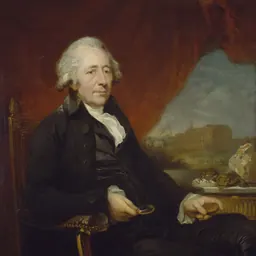
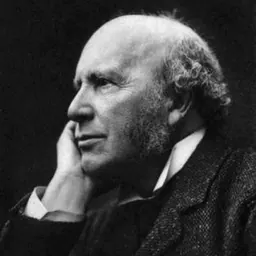
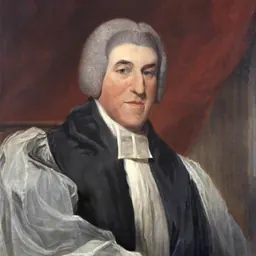
Related people
Same field, nearest in time

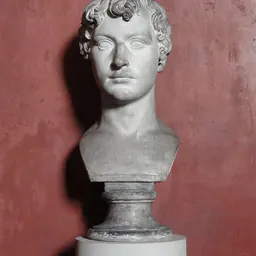

Contemporaries
People whose lives overlapped William Joseph Taylor's






Frequently asked questions
Who was William Joseph Taylor?
British medallist, born 1802, in Birmingham; died March 1885, in London (1802–1885)
When was William Joseph Taylor born?
William Joseph Taylor was born in 1802 in Birmingham.
When did William Joseph Taylor die?
William Joseph Taylor died in 1885 in London.
What was William Joseph Taylor's occupation?
William Joseph Taylor was a medalist, flexographer, designer, visual artist and engraving.
Sources & further reading
· Wikipedia: William Joseph Taylor
· DBpedia: William Joseph Taylor
Cite this page
APA: Biography.guide. (2026). William Joseph Taylor. https://biography.guide/william-joseph-taylor/
MLA: "William Joseph Taylor." Biography.guide, https://biography.guide/william-joseph-taylor/.
Chicago: "William Joseph Taylor." Biography.guide. https://biography.guide/william-joseph-taylor/.
Data last updated: 2026-09-22 · Spot an error? Report a correction.
Page generated 2026-09-27 05:20 UTC