
About William Johnson
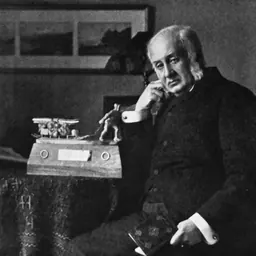
William Johnson was a British explorer and surveyor.
William H. Johnson (died 3 March 1883 ) was a British surveyor in the Great Trigonometric Survey of India. He is noted for the first definition of the eastern boundary of Ladakh along Aksai Chin in the princely state of Jammu and Kashmir, which has come to be called the 'Johnson Line'. After retiring from the Survey of India, Johnson was appointed as the Governor of Ladakh, in which position he served until his death.
Early life Johnson was born in India to an Ordinance officer of the East India Company, who lived in "Deyrah". He was educated at Mussorie and joined the Civil Branch of the Great Trigonometric Survey (the precursor of the Survey of India), where he was trained by Andrew Scott Waugh.
Career Johnson began his career as a surveyor in 1848 under Captain du Vernet in the North-West Himalayan Survey. After du Vernet moved to Assam in 1852, he worked for some time doing route surveys in Punjab, then the survey of the Chenab River, and the survey of Bhagirathi and Kanawar. In 1854, he ascended the snowy peak near the Néla pass, which was regarded as a considerable accomplishment.
Starting in 1862, Johnson worked from Leh in Ladakh, surveying all the way to the Chinese frontier. He surveyed the Chang Chenmo valley and the plateau to the north of it. In 1865, he undertook his famous journey to Khotan, which garnered him notability as well as controversy.
The journey made Johnson's reputation as a traveller. He reported on it to the British Association for the Advancement of Science in 1866, and was elected a Fellow of the Royal Geographical Society in the same year. But the unauthorised journey met with official disapproval; and he resigned from the Survey of India the following year. Nevertheless Johnson's results were highly prized among the British surveyors, and Johnson was reemployed in 1869 on an even higher salary.
Part of Johnson's legacy was the "Johnson Line", or "Ardagh–Johnson Line", the boundary of Ladakh in the north and the northeast, including the entire Aksai Chin plateau and going up to the Kunlun Mountains. It was later endorsed by the Chief of British Military Intelligence Sir John Ardagh as the suitable northern boundary of the British Indian Empire. It assumed later importance in the Sino-Indian border dispute, after China had occupied Tibet.
Jammu and Kashmir Johnson took up a position for the Maharajah of Kashmir and Jammu in 1871, as the governor (Wazir-e-wazarat) of Ladakh. R. H. Phillimore states that the position earned him three times the salary he had formerly received as a surveyor.
During his tenure as the Wazir, Johnson facilitated the third covert journey of the native explorer Nain Singh Rawat into Tibet.
Death Johnson died in Jammu, believing he had been poisoned.
Works Report on His Journey to Ilchí, the Capital of Khotan, in Chinese Tartary
Reception H. H. Godwin-Austen, a distinguished surveyor, has said, "there were few men living who had greater experience of mountain work, and none who had ascended to greater heights, and the work he did was of considerable value and magnitude". He cites Johnson's expedition to Khotan as an example of valuable knowledge that would have been gained had the (British) Government of India encouraged such work. He states that the views of the officers of the Survey of India were disregarded by the government. The official report of the Great Trigonometrical Survey (1865–65) called his explorations "most valuable and important". Johnson was commended for his "great energy and perseverance". The Royal Geographical Society honoured him in 1875 and presented a gold watch for his survey journey of 1865. Frederick Drew, another surveyor and geologist in Jammu and Kashmir called him a "bold and enduring traveller".
Don’t just read it —
keep it.
Full-length biographies made to live with: read them, listen on the way to work, watch them tonight.
- E-book
- Audio
- Video
Instant download · yours to keep · every purchase keeps this site free
Important facts
Related people
Same field, nearest in time




Frequently asked questions
Who was William Johnson?
British surveyor, Governor of Ladakh
When did William Johnson die?
William Johnson died in 1883.
What was William Johnson's occupation?
William Johnson was an explorer and surveyor.
What nationality was William Johnson?
William Johnson was British.
Sources & further reading
· DBpedia: William Johnson (surveyor)
Cite this page
APA: Biography.guide. (2026). William Johnson. https://biography.guide/william-johnson-explorer/
MLA: "William Johnson." Biography.guide, https://biography.guide/william-johnson-explorer/.
Chicago: "William Johnson." Biography.guide. https://biography.guide/william-johnson-explorer/.
Data last updated: 2026-09-20 · Spot an error? Report a correction.
Page generated 2026-09-27 04:57 UTC