
About William John Young
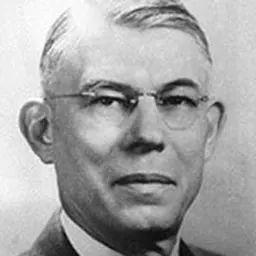
Lived 1878 – 1942 (aged 64). William John Young was a British biochemist.
William John Young (26 January 1878 – 14 May 1942) was an English biochemist.
Early life William John Young was born on 26 January 1878 in Withington, Manchester, England. He earned a Bachelor of Science degree in 1898 and a Master of Science degree in 1902, both at Owens College, Manchester. Young began his research early in his career, and was granted the Levinstein and Dalton research exhibitions for 1899-1900 and 1900-1901 respectively.
In 1910, Young received his D.Sc. from the University of London. This compound was the first chemical intermediate discovered in fermentation. Its discovery led to the ultimate description of fermentation in terms of molecular intermediates. Harden's and Young's general findings can be summarized as:
Research in Australia In 1913, Young and his family migrated to Queensland, Australia, where he was appointed Biochemist at the Australian Institute of Tropical Medicine, Townsville. In 1920, Young became a lecturer at the University of Melbourne. He was promoted to associate professor in 1924 and Foundation Professor in 1938 . During these years, his interests extended to the applied biochemistry of food preservation. He was a forerunner in refrigeration techniques, and some of his methods are still used with bananas.
While in Australia, Young conducted experiments related to blood biochemistry. In 1915, he performed experiments to compare the effects of salvarsan and neosalvarsan to the behavior of atoxyl in animal blood. He found that they were very similar, and all led to a form of arsenic associated with blood proteins. This arsenic was found to be localized to the plasma and the red blood cells.
In response to previous studies of the anti-tryptic action of blood serum, Young's experiments in 1918 investigated the possible mechanism of this anti-tryptic effect. His research led him to the tentative conclusion that trypsin was not a protein. In later research this conclusion was refuted. He did, however, provide valuable improvements to the techniques utilized in related research.
In 1920, Young embarked on an investigation of the pigment melanin found in the skin and hair of animals and humans. He found that it could be extracted by treatment with dilute alkali. This research provided insight into the structure of melanin and its role in hair and skin.
Don’t just read it —
keep it.
Full-length biographies made to live with: read them, listen on the way to work, watch them tonight.
- E-book
- Audio
- Video
Instant download · yours to keep · every purchase keeps this site free
Important facts
People in William John Young's life
Named in this biography and alive at the same time


Related people
Same field, nearest in time


Contemporaries
People whose lives overlapped William John Young's





Frequently asked questions
Who was William John Young?
British biochemist (1878-1942)
When was William John Young born?
William John Young was born on 26 January 1878 in Manchester.
When did William John Young die?
William John Young died on 14 May 1942 in East Melbourne.
What was William John Young's occupation?
William John Young was a biochemist.
What nationality was William John Young?
William John Young was British.
Sources & further reading
· Wikipedia: William John Young
· DBpedia: William John Young (biochemist)
Cite this page
APA: Biography.guide. (2026). William John Young. https://biography.guide/william-john-young-biochemist/
MLA: "William John Young." Biography.guide, https://biography.guide/william-john-young-biochemist/.
Chicago: "William John Young." Biography.guide. https://biography.guide/william-john-young-biochemist/.
Data last updated: 2026-09-20 · Spot an error? Report a correction.
Page generated 2026-09-27 05:28 UTC