
William Jeffreys
Jeffreys, William Rees (1871–1954), promoter of roads and road transport
About William Jeffreys
Lived 1871 – 1954 (aged 83). William Jeffreys was a civil servant.
William Rees Jeffreys (1 December 1871 – 18 August 1954) was a British cyclist and early campaigner for road improvements who became a key figure in the early 20th-century development of the UK highway system. As honorary secretary and later chairman of the Roads Improvement Association and the first secretary of the Road Board (which in 1919 became part of the Ministry of Transport), he was an early advocate of a ring road around London, and helped instigate the British road numbering system. In 1937 Jeffreys was described by former UK Prime Minister David Lloyd George as "the greatest authority on roads in the United Kingdom and one of the greatest in the whole world."
A charity he founded in 1950, the Rees Jeffreys Road Fund, continues to support UK transport-related projects.
Early life William Rees Jeffreys was born at 7 Warwick Place in Paddington, London, on 1 December 1871, the eldest of four children born to William George Jeffreys, an upholsterer, and his wife, Mary Ann, née Garratt. He was privately educated, and in 1891 joined the Board of Trade's commercial, labour, and statistical department as a second division clerk; in his late 20s he studied statistics under Arthur Lyon Bowley at the London School of Economics.
In his spare time, Jeffreys was a keen cyclist. Aged 18, he toured Scotland, and returned as member of the council of the Cyclists' Touring Club to gather information to issue as CTC guidance. He also explored Ireland, where he met Richard J. Mecredy, who helped form the Irish Roads Improvement Association.
Career Cycling advocacy Jeffreys was elected to the council of the Cyclists' Touring Club in 1900, and chaired its rights and privileges committee from 1901 to 1906. and later the same year became its honorary secretary. The RIA had been jointly established by the CTC and the National Cyclists' Union in October 1886, and initially focused on production of technical literature distributed to highways boards and surveyors to promote improved construction and maintenance methods. In 1903, he was the first witness to give evidence to a British government inquiry into highway administration, and provided extensive RIA technical information on road surfaces sourced from cyclists, saying "The bicycle is perhaps the best road inspector there is." He told the CTC Gazette: "To no class in the community are good roads so important as to cyclists." proposed a "boulevard round London":
"Their encircling boulevards are the pride of many a continental city, and it is a crowning disgrace that, notwithstanding the absence of any great engineering difficulties, no road exists encircling the metropolis. So far as possible, the new roads should consist of a number of separate tracks, viz., one for electric trams, a second for automobiles and cycles, a third for vans, carts, traction engines, and other slow-going traffic, and a fourth for foot passengers. They should be built throughout of dustless materials." In 1903 Jeffreys left the Board of Trade after being appointed administrative secretary of the Automobile Club of Great Britain (later the RAC) and secretary of the Motor Union of Great Britain and Ireland (established by the Automobile Club two years earlier; it amalgamated with the Automobile Association in 1910). In 1904, he wrote the preface for the Automobile Club's first Automobile Handbook.
Jeffreys also had roles with the Commercial Motor Users' Association and the Institution of Automobile Engineers (he was honorary treasurer from 1910 to 1933; the IAE merged into the Institution of Mechanical Engineers in 1947), founded the Motor Union Insurance Co Ltd (he was a director for 23 years), and he became a life member of the RAC. In 1908, he was also appointed secretary of the British Section of the Permanent International Association of Road Congresses (PIARC), a role which he later said "enabled gaps in my own knowledge to be filled from first hand information given by men who held positions of authority."
Secretary of the Road Board In 1909 when the Road Board was established to administer funds raised by David Lloyd George's new taxes on motor vehicles, Jeffreys resigned from the CTC's Council and as honorary secretary of the RIA to become the board's first secretary – though he continued to recognise the pioneering role of cyclists (in his 1949 book, The King's Highway, he noted: "Cyclists were the class first to take a national interest in the conditions of the roads."). During its 10-year existence, the Road Board did little to improve the national road system, disbursing its funds mainly for the reconstruction and improvement of road surfaces with small amounts on minor alignment improvements and even less on new roads (exceptions included early work on the A4 in West London, the Croydon bypass, and development of the Fosse Way in Leicestershire). While Jeffreys blamed Treasury, landowners and railway opposition, a civil service inquiry found the board was badly administered and had insufficient technical expertise.
In 1912 Jeffreys travelled to the US to study its approach to highway development, attending a 5 June dinner of the American Road Builders Association, and being described in Senate discussions about taxation and centralised funding of road construction as "a man who has done more than anyone else to build up the system that now exists in England."
As the Road Board needed to work out which roads should be funded, upgraded or replaced, in 1913 Jeffreys appointed Henry Maybury, one of the board's senior engineers, to devise a classification system and then assign numbers to the highways for identification purposes. The road numbering scheme eventually divided the British mainland into nine zones, six radiating from London. In 1913 and 1914, the Road Board also organised London Arterial Road Conferences in 1913–14 that revived ideas previously discussed by the 1903 Royal Commission on London Traffic. Jeffreys returned to the theme of planning arterial roads in a paper presented to the Town Planning Institute in April 1917.
Jeffreys served on two departmental committees: the Treasury Committee on Motor Car Licence Duties (1916), and the Departmental Committee on Taxation and Regulation of Road Vehicles (1920–1923). In 1919, after World War I, the ineffective Road Board was disbanded and replaced by a new Ministry of Transport. (The Ministry of Transport Act 1919 (10 Geo.) 5 c.50) created the Ministry of Transport and abolished the Road Board; under the 1920 Roads Act, the Road Improvement Fund's assets were transferred to a 'Road Fund'.
In the late 1920s, Jeffreys—described as "the recently retired chairman of the London-based Roads Improvement Association"—visited Africa, spending 14 weeks on the continent, driving 3,000 miles in South Africa. He then sailed from Durban to Mombasa and travelled by train, river steamer, and hire-car before joining a four-car convoy for a 618-mile drive from Jinja to Rejaf to connect with a steamer on the River Nile. In 1933, he visited Australia and was recorded as the chairman of the RIA in a report of a Victoria League lunch in Sydney. In 1934, he visited Germany and, with officials from the Ministry of Transport and Fritz Todt, inspected highways from the airship Graf Zeppelin during the 1934 International Road Congress.
Back in the UK, in 1936 Jeffreys again complained:
The Government has used the BBC night after night to convey that the appalling number for road accidents is due to careless and negligent drivers. This false suggestion is made by the Government to cover up its own shortcomings. The British motor-driver is the most cautious, considerate and law-abiding of any drivers in the world. The reason for the enormous number of accidents is our inadequate road system.
In March 1942, Jeffreys wrote to the journal Roads and Road Construction, lamenting the British government's neglect of the Empire's roads, and its failure to recognise ‘the importance of roads for defence as well as for development’. Jeffreys wanted a British organisation similar to Germany's Gesellschaft Reichsautobahnen (Reichsautobahn Association). The journal titled his letter 'Roads of empire. Wanted – a British "Todt" organisation'.
In 1944 he wrote a letter to The Times advocating the establishment of 'Roadside Parks' (now called 'roadside rests'). He said "Roadside Parks should be situated on the outskirts of towns and in the countryside at viewpoints and restful places. They would be available for children, hikers, cyclists and motorists to rest, play and take picnic meals. They should be laid out and tended so they can be enjoyed by all who pass by." He also thought that the parks would become obstacles to prevent ribbon development, and offered ten sums of £100 for the establishment of ten parks and hoped that one would be in West and another in East Sussex. in his Sussex home at Wivelsfield Hall in Wivelsfield Green, and is buried in Wivelsfield's churchyard. Picasso and Sickert, some of which he purchased from the artists themselves)—were auctioned at Christie's. Some were bought by the Tate Gallery with the money going towards a charity that Jeffreys had founded in 1950. The registered charity's main activities are in three areas: provision of support for academic posts and studentships; contributions to physical projects on land adjoining highways; and support for highway-related research projects.
Imperial College's Transport Library (next to the Letitia Chitty Reading Room) is sponsored by the Rees Jeffreys fund. The fund also sponsors MSc Transport students. implemented in 2018.
In 2018, the Rees Jeffreys Road Fund, with the Campaign for Better Transport, published a guide, Roads and the Environment: Putting an innovative approach at the heart of RIS2.
In September 2021, the Rees Jeffreys Road Fund launched a £150,000 'future roads' competition to mark the 150th anniversary of Jeffreys's birth. Trustees asked entrants to consider their vision of how roads (motorways, highways, streets and footways) could best work for everybody for the next 50 years. In March 2022, two winners of the competition were announced; the Eloy connected vehicle platform and Reed Mobility's automated vehicle system each won £75,000 to support delivery of their ideas.
Roadside rests In providing several memorial viewpoints across the country, the charity remembered its founder's request for Sussex. A viewpoint (created in 1968) is provided at Duncton Down on the A285 at Petworth, overlooking the playing fields of Seaford College. Old Winchester Hill off the A32 in Hayden Lane (1958) B2139 West of Houghton, West Sussex (1991) Newgale, Pembrokeshire overlooking St Brides Bay and Newgale Beach Rhaedr y Cwm near Llan Ffestiniog in Gwynedd St Mary's Vale, near Abergavenny, Gwent Blackgang, Isle of Wight
Other memorials Since 1998, the Institution of Civil Engineers has presented the Rees Jeffreys Award for the best paper on highway engineering published by the institution, with author(s) receiving a premium of £200 and a certificate.
Notes and references
Don’t just read it —
keep it.
Full-length biographies made to live with: read them, listen on the way to work, watch them tonight.
- E-book
- Audio
- Video
Instant download · yours to keep · every purchase keeps this site free
Important facts
People in William Jeffreys's life
Named in this biography and alive at the same time


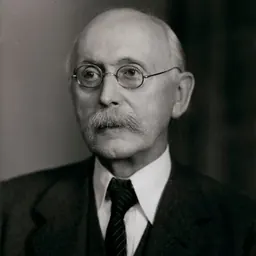

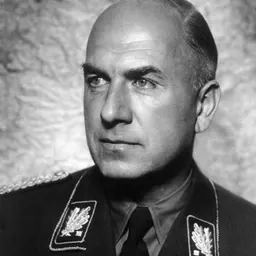

Related people
Same field, nearest in time



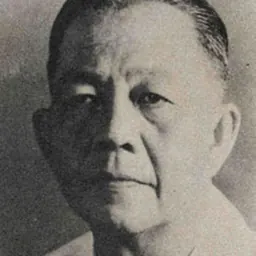
Contemporaries
People whose lives overlapped William Jeffreys's



Frequently asked questions
Who was William Jeffreys?
Jeffreys, William Rees (1871–1954), promoter of roads and road transport
When was William Jeffreys born?
William Jeffreys was born on 17 January 1871 in Greater London.
When did William Jeffreys die?
William Jeffreys died on 17 January 1954 in Wivelsfield.
What was William Jeffreys's occupation?
William Jeffreys was a civil servant.
Sources & further reading
· DBpedia: William Rees Jeffreys
Cite this page
APA: Biography.guide. (2026). William Jeffreys. https://biography.guide/william-jeffreys/
MLA: "William Jeffreys." Biography.guide, https://biography.guide/william-jeffreys/.
Chicago: "William Jeffreys." Biography.guide. https://biography.guide/william-jeffreys/.
Data last updated: 2026-09-22 · Spot an error? Report a correction.
Page generated 2026-09-27 05:11 UTC