
About William Howard Hearst
Lived 1864 – 1941 (aged 77). William Howard Hearst was a Canadian politician and lawyer.
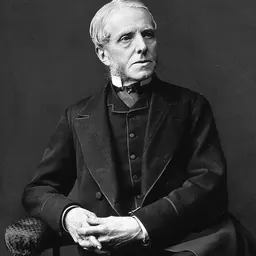
Sir William Howard Hearst, (February 15, 1864 – September 29, 1941) was the seventh premier of Ontario from 1914 to 1919.
Hearst was born in Bruce County, Canada West. He practiced law in Sault Ste. Marie, Ontario before being voted to provincial parliament as a member of the Progressive Conservative Party of Ontario. After six years representing Sault Ste. Marie in provincial government, Hearst became Premier of Ontario following the death of Premier James P. Whitney in 1914.
Hearst was the first Conservative provincial government to enact women's suffrage. He was in favour of the prohibition movement and restricted the unlicensed sale of alcohol in Ontario. As a wartime administration, his government improved munitions production and hydroelectric infrastructure.
Early life and career William Howard Hearst was born in the Township of Arran in Bruce County, Ontario. He studied law in Owen Sound and was called to the bar lawyer in 1888. Hearst moved to Sault Ste. Marie, Ontario, where he established the law firm Masson, Hearst, McKay in the Ganley Block at 604 Queen Street. Hearst participated actively in the Sault Ste. Marie community and was on the building committee to erect a new Methodist church at the corner of Spring Street and Albert Street in Sault Ste. Marie. The Methodist church that was eventually built still stands and is now known as Central United Church.
Hearst was an unsuccessful candidate in the Algoma East riding in 1894. In 1902, he organized support in Northern Ontario for James P. Whitney. Hearst was also appointed Sault Ste. Marie's volunteer fire chief from 1891 to 1892. Hearst built a house at the corner of Queen Street and Upton Road. Known as Eastbourne, it would become a designated heritage property in the City of Sault Ste. Marie.
An increase in demand for electricity in Ontario led Hearst's government to commission the construction of the Queenston-Chippawa Hydroelectric Generating Station in 1917, which was one of the largest hydroelectric projects in the world.
During the 1917 conscription crisis, Hearst supported conscription and the federal Unionist government. In March 1918, Hearst and the Ontario Liberal leader, William Proudfoot, agreed to extend the existing provincial government until Canadian forces returned home in 1919.
Prohibition The Hearst government struggled to find consensus on the question of prohibition. Hearst personally identified with the temperance movement, but barkeepers and alcohol producers formed part of the voter base of his party.
In 1916, the Ontario Temperance Act (OTA) was introduced as a temporary wartime measure by Hearst, a temperance advocate and pillar of the Methodist Church. It made possession of liquor and beer outside one's home illegal. Although one could retain a cellar supply for personal consumption, it was illegal to sell a drink. As a result, the government shut down bars, taverns, clubs, and liquor stores. The establishment of the Acts were controversial among anti-temperance Canadians.
In 1919, after Canadian soldiers had returned from Europe, Hearst called a plebiscite on prohibition, which was held the same day as the 1919 general election. Prohibition was approved by the voters, but his government was defeated in the election.
Women's suffrage Beginning in 1915, Liberal representatives proposed bills enabling women to vote in Ontario. Hearst initially opposed suffrage but by 1917 had changed his opinion on the subject.
1919 general election In the election of 1919, Hearst was surprised by his loss to the United Farmers of Ontario. and poor opinions of the industrial workers and the rural population.
Later life After his loss in 1919, Hearst remained in Toronto, where he had lived since 1912.
Hearst served as a member of the International Joint Commission, which had been formed to settle international boundary waters disputes between the United States and Canada.
Sault Ste. Marie William Howard Hearst was the first premier from northern Ontario. He has an enduring legacy in Sault Ste. Marie. A street in the northern city has been named after him. A city streets directory from 1914 shows the street was previously called "Hurst Street", but by 1915, the year after Hearst became Premier of Ontario, the name was changed to "Hearst Street".
In July 2015, the city recognized Hearst by naming the holiday on the first Monday in August (previously known as Civic Holiday) as Sir William H. Hearst Day.
Don’t just read it —
keep it.
Full-length biographies made to live with: read them, listen on the way to work, watch them tonight.
- E-book
- Audio
- Video
Instant download · yours to keep · every purchase keeps this site free
Important facts
People in William Howard Hearst's life
Named in this biography and alive at the same time

Related people
Same field, nearest in time





Contemporaries
People whose lives overlapped William Howard Hearst's





Frequently asked questions
Who was William Howard Hearst?
Canadian politician, premier of Ontario (1864–1941)
When was William Howard Hearst born?
William Howard Hearst was born on 15 February 1864 in Bruce County.
When did William Howard Hearst die?
William Howard Hearst died on 29 September 1941 in Toronto.
What was William Howard Hearst's occupation?
William Howard Hearst was a politician and lawyer.
What nationality was William Howard Hearst?
William Howard Hearst was Canadian.
Sources & further reading
· Wikipedia: William Howard Hearst
· DBpedia: William Howard Hearst
Cite this page
APA: Biography.guide. (2026). William Howard Hearst. https://biography.guide/william-howard-hearst/
MLA: "William Howard Hearst." Biography.guide, https://biography.guide/william-howard-hearst/.
Chicago: "William Howard Hearst." Biography.guide. https://biography.guide/william-howard-hearst/.
Data last updated: 2026-09-20 · Spot an error? Report a correction.
Page generated 2026-09-27 05:24 UTC