
About William Henry Strahan
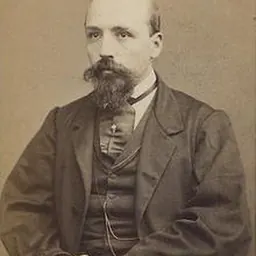
Lived 1869 – 1915 (aged 45). William Henry Strahan was an Australian military personnel.
Personal life
Strahan was born on 21 September 1869, the son of James Strahan (1837–1918) and Susannah née Straghan (1841–1900), and grew up on the farm and family orchard in Toodyay. In 1895 he purchased the orchard from his father. (the cousin of John Henry Monger) at St Stephen's Anglican Church, Toodyay on 25 April 1894. They had ten children: Olive Myrtle (1895), Herbert Elwell (1896), William (Jim) James (1898), Ruth Eileen (1900), Eric Forrest (1902), Gordon Phillip (1904), Byron Henry (1907), Margaret Esther (1909), Stephen Monger (1911) and Kelvin John (1913).
Strahan served on the Toodyay Road Board and was a member of the Deepdale Fruitgrowers Association. Strahan was noted for arguing his position to his own benefit but he would concede when there was benefit to the wider community. It was this character that not only made Strahan well respected in the community but also saw him become one of the first people to enlist for the First World War.
Strahan's son, Herbert Elwell (1896–1987), also fought in France with the 39th Battalion in the First World War.
Military service Around 1900 Strahan joined the Guildford Rifles and later the Australian Light Horse, where he rose to the rank of sergeant major. At the outbreak of the First World War, he resigned to enlist in the Australian Imperial Force. He joined A Company of the 16th Battalion on 14 September 1914, and on 1 October was promoted to sergeant. The initial training period of two months took place at Blackboy Hill in Western Australia. The army then decided that the 4th Brigade was to assemble at Broadmeadows, in Victoria, to complete its organisation and training before embarkation overseas. In November, therefore, all ranks were given leave and Strahan went back to Toodyay to visit family and friends. While there, he was given an official send off by the Toodyay Road Board. On 21 November, the battalion entrained for Fremantle and embarked in two parties on SS Indarra and , which arrived at Port Melbourne about a week later. Each party was then transported to Broadmeadows. On 22 December Strahan, along with the 16th Battalion, embarked on troopship A40 Ceramic for Albany, Western Australia. They reached Albany on 28 December. No shore leave was granted. At 8am on 31 December Ceramic sailed from King George Sound in the second convoy of troops to leave Albany and arrived a month later in Egypt. After further training in Egypt, the 16th Battalion was part of the third wave of the landings at Gallipoli on the afternoon of 25 April 1915. Strahan was shot by a sniper and killed on that first day. before departing for Blackboy Hill and joining the AIF, Strahan wrote The Bugle Call. After his death the lyrics were published in various papers. Major General Sir Harry Barron, the Governor of Western Australia, sent a copy of the lyrics to King George V, eliciting the response "Evidently the writer by his gallant deeds acted up not to the letter only, but to the spirit of his utterances".
Do you hear the Bugle calling, or are you deaf or blind or dumb?
Will you fight tor Flag, and Freedom, will you let the foeman come? Will you halt, and look, and linger, will you fail your brothers now? Or stand and fight and conquer 'neath Australia's wattle bough.
Do you hear the Bugle calling, call all men worth the name? Will you share your Country's conflict, or hide your face in shame? Do you hear the millions marching, 'gainst Belgium's glorious stand? Will you lend a hand to conquer the spoilers of the land? Do you hear the Bugle calling, calling loud, and long and shrill? Help to stay the marching millions – there's a place that you can fill Shall we, when History's written, like Belshazzar weighed of old Be in the scales found wanting, our Empire to uphold.
Do you hear the Bugle calling, Come from your Farms afar; If it's British blood that's in you, uphold our Nation's star For tradition proudly tells us, while Britannia rules the waves We're the British race of people – they can never make us slaves. Do you hear the Bugle calling, don't let it call in vain? Let your answer be 'we're coming' to our friends across the foam For wife and child, and sweetheart and our sunny Austral home.
Do you hear the Bugle calling, do you see the foeman reel? Gainst a line of gleaming bayonets like a glistening wall of steel Hold the Forts, brave lads, 'We're coming' Australia's sons are true We'll stand or fall together 'neath the Red, White and the Blue.
Do you hear the Bugle calling, we expect you to reply! You will stake your life for freedom, you will do your best or die And if perchance in action for you Country you should Fall We will not forget your answer to that thrilling Bugle call.
Chorus Australia's sons are coming, Britain never calls in vain. Like our proud Canadian brothers We are sons of British mothers – That's our answer to our Foes across the Main.
Don’t just read it —
keep it.
Full-length biographies made to live with: read them, listen on the way to work, watch them tonight.
- E-book
- Audio
- Video
Instant download · yours to keep · every purchase keeps this site free
Important facts
People in William Henry Strahan's life
Named in this biography and alive at the same time



Related people
Same field, nearest in time





Contemporaries
People whose lives overlapped William Henry Strahan's


Frequently asked questions
Who was William Henry Strahan?
Australian soldier, poet
When was William Henry Strahan born?
William Henry Strahan was born on 21 September 1869 in Toodyay.
When did William Henry Strahan die?
William Henry Strahan died on 25 April 1915 in Gallipoli.
What was William Henry Strahan's occupation?
William Henry Strahan was a military personnel.
What nationality was William Henry Strahan?
William Henry Strahan was Australian.
Sources & further reading
· Wikipedia: William Henry Strahan
· DBpedia: William Henry Strahan
Cite this page
APA: Biography.guide. (2026). William Henry Strahan. https://biography.guide/william-henry-strahan/
MLA: "William Henry Strahan." Biography.guide, https://biography.guide/william-henry-strahan/.
Chicago: "William Henry Strahan." Biography.guide. https://biography.guide/william-henry-strahan/.
Data last updated: 2026-09-26 · Spot an error? Report a correction.
Page generated 2026-09-27 05:15 UTC