
About William Henry Scott
Lived 1921 – 1993 (aged 72). William Henry Scott was an American historian and teacher.
William Henry Scott (born Henry King Ahrens; July 10, 1921 – October 4, 1993) was an American historian of the Cordillera Central and pre-Hispanic Philippines, ethnographer, and academic. He was known for his extensive research on Philippine history, indigenous cultures, and pre-colonial societies. A longtime resident of the Philippines, he dedicated much of his scholarship to studying the Igorot people and pre-Hispanic Filipino civilizations.
Scott authored several influential works that challenged colonial narratives and misconceptions about early Philippine societies, most notably Prehispanic Source Materials for the Study of Philippine History (1968), which critically examined Spanish-era documents and indigenous accounts. His research significantly contributed to the understanding of pre-colonial Philippine culture, trade, and governance.
In addition to his academic career, Scott was a Benedictine monk before leaving the religious order, later becoming a professor at the University of the Philippines Baguio. His commitment to historical accuracy and indigenous perspectives earned him recognition as one of the leading historians of Philippine history.
Early life William Henry Scott was born on 10 July 1921, in Detroit, Michigan, where he was christened Henry King Ahrens. His family, of Dutch-Lutheran descent, soon returned to Bethlehem, Pennsylvania, where Scott spent his boyhood. In 1936, Scott won a three-year scholarship to the Episcopalian-affiliated Cranbrook School in Michigan, United States, where he excelled academically and became interested in pursuing a career as an archeologist.
Detention during martial law
Soon after Ferdinand Marcos declared martial law in 1972, Scott was arrested as a subversive and placed in military detention.
Because several of the boys Scott had taught and sponsored in the years he had lived in Sagada had joined the anti-Marcos opposition, Scott was accused of being a communist sympathizer. The government forces who had broken into his house and arrested him had also found copies of Mao's writings in his bookshelf, and cited this as "evidence" of his communist leanings. Colleague Stuart Schlagel recounts Scott's response:
"For heaven's sake, I teach Asian history, and anyone who does that must be familiar with Mao's work! It doesn't mean I have abandoned Christianity and democratic politics; it just means I am a historian practicing his trade."
Scott saw his time in Marcos' prison as a validation of his Filipino nationalist beliefs. Another notable fellow prisoner was a young Butch Dalisay, who is said to have put caricature versions of both Scott and Salazar in his book "Killing Time in a Warm Place."
He criticized US colonial rule and continuing US involvement in Philippine politics after independence, especially US support for Marcos.
Writer and lecturer
Scott observed the Igorot people of the Cordillera region had preserved elements of pre-colonial culture to a greater degree, and over a wider area, than could be found elsewhere in the Philippines. He saw the resistance of Igorots to attempts by the Marcos government to develop projects in the region as a model for resistance elsewhere in the country. He did not support the view that the Igorots are intrinsically different from other Filipinos, or the view that the Cordillera should become an ethnic preserve.
Scott was scathing of views that divide Filipinos into ethnic groups, describing Henry Otley Beyer's wave migration theory as representing settlement by "wave after better wave" until the last wave which was "so advanced that it could appreciate the benefits of submitting to American rule". Views like these resonated with the progressive nationalist opposition to Marcos.
Scott held a bachelor's degree from Yale University, a master's degree from Columbia University, and a Doctor of Philosophy degree from the University of Santo Tomas in 1968. Scott's dissertation was published that year by the University of Santo Tomas Press as Prehispanic Source Materials for the Study of Philippine History. A revised and expanded second edition was published in 1984. He debunked the Kalantiaw legend in this book. Datu Kalantiaw was the main character in a historical fabrication written by Jose E. Marco in 1913. Through a series of failures by scholars to critically assess Marco's representation, the invented legend was adopted as actual history. As a result of Scott's work, Kalantiaw is no longer a part of the standard history texts in the Philippines.
Scott's first well known academic work is The Discovery of the Igorots. This is a history of the Cordillera mountain region over several centuries of Spanish contact, constructed from contemporary Spanish sources. Scott argues that the difficulties the Spaniards encountered extending their rule in the face of local resistance resulted in the inhabitants of the region being classified as a 'savage' race separate to the more tractable lowland Filipinos. Scott adopted a similar approach in Cracks in the Parchment Curtain in which he tries to glean a picture of pre-colonial Philippine society from early Spanish sources. This project was criticized by the Asianist Benedict Anderson who argued that it yielded a vision of Philippine society filtered through "late medieval" Spanish understanding. Scott was aware of this limitation, but argued Spanish records provided glimpses of Filipino society and native reaction to colonial dominion, often incidental to the intention of the Spanish chronicler, which were the cracks in the Spanish parchment curtain.
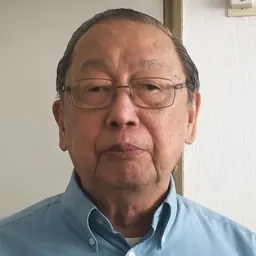
One of Scott's last full-scale books was Ilocano Responses to American Aggression. The foreword was written by Jose Maria Sison, the head of the Communist Party of the Philippines. The People Power Revolution, which coincided with the publication of the book, obscured the fact that the foreword had been written while Sison was in jail.
Harold Conklin's Biographical Note and Bibliography lists 243 extant written works by Scott from 1945 until those posthumously published in 1994.
Death Scott died unexpectedly on 4 October 1993, aged 72,
Legacy In 1994, the Ateneo de Manila University posthumously gave Scott the Tanglaw ng Lahi Award for a lifetime "spent in teaching not only in the classroom, but also the outside world by means of the broad reaches of his contacts and communication, and most of all through his hundreds of published scholarly articles and inspirationals which continue to disseminate and teach honest Philippine history to succeeding generations of Filipinos."
On December 8, 2021, the National Historical Commission of the Philippines unveiled a historical marker commemorating Scott at Saint Mary's School in Sagada.
Don’t just read it —
keep it.
Full-length biographies made to live with: read them, listen on the way to work, watch them tonight.
- E-book
- Audio
- Video
Instant download · yours to keep · every purchase keeps this site free
Important facts
People in William Henry Scott's life
Named in this biography and alive at the same time



Related people
Same field, nearest in time


Contemporaries
People whose lives overlapped William Henry Scott's




Frequently asked questions
Who was William Henry Scott?
American teacher and historian (1921–1993)
When was William Henry Scott born?
William Henry Scott was born on 10 July 1921 in Detroit.
When did William Henry Scott die?
William Henry Scott died on 4 October 1993 in St. Luke's Medical Center - Quezon City.
What was William Henry Scott's occupation?
William Henry Scott was a historian and teacher.
What nationality was William Henry Scott?
William Henry Scott was American.
Sources & further reading
· Wikipedia: William Henry Scott
· DBpedia: William Henry Scott (historian)
Cite this page
APA: Biography.guide. (2026). William Henry Scott. https://biography.guide/william-henry-scott-historian/
MLA: "William Henry Scott." Biography.guide, https://biography.guide/william-henry-scott-historian/.
Chicago: "William Henry Scott." Biography.guide. https://biography.guide/william-henry-scott-historian/.
Data last updated: 2026-09-25 · Spot an error? Report a correction.
Page generated 2026-09-27 05:10 UTC