
William Henry Perkin
British chemist known for his accidental discovery of the first synthetic dye
About William Henry Perkin
Lived 1838 – 1907 (aged 69). William Henry Perkin was a British chemist, inventor and businessperson, known for Aniline, Mauveine and Perkin reaction.
Sir William Henry Perkin (12 March 1838 – 14 July 1907) was an English chemist and entrepreneur best known for his serendipitous discovery of the first commercial synthetic organic dye, mauveine, made from aniline. Though he failed in trying to synthesise quinine for the treatment of malaria, he became successful in the field of dyes after his first discovery at the age of 18.
Perkin set up a factory to produce the dye industrially. Regina Lee Blaszczyk, professor of business history at the University of Leeds, states, "By laying the foundation for the synthetic organic chemicals industry, Perkin helped to revolutionize the world of fashion." the youngest of the seven children of George Perkin, a successful carpenter. His mother, Sarah, was of Scottish descent and moved to East London as a child. He was baptized in the Anglican parish church of St Paul's, Shadwell, At this time, chemistry was still primitive: although the major elements had been discovered and techniques to analyze the proportions of the elements in many compounds were in place, it was still a difficult proposition to determine the arrangement of the elements in compounds. Hofmann had published a hypothesis on how it might be possible to synthesise quinine, an expensive natural substance much in demand for the treatment of malaria.
Having invented the dye, Perkin was still faced with the problems of raising the capital for producing it, manufacturing it cheaply, adapting it for use in dyeing cotton, gaining acceptance for it among commercial dyers, and creating public demand for it. He was active in all of these areas: he persuaded his father to put up the capital, and his brothers to partner with him to build a factory; he invented a mordant for cotton; he gave technical advice to the dyeing industry; and he publicised his invention of the dye.
Public demand was increased when a similar colour was adopted by Queen Victoria in Britain and by Empress Eugénie, wife of Napoleon III, in France, and when the crinoline or hooped-skirt, whose manufacture used a large quantity of cloth, became fashionable. Everything fell into place: with hard work and lucky timing, Perkin became rich.
Personal life and demise Perkin married Jemima Harriet, the daughter of John Lissett, in 1859, which resulted in two sons, (William Henry Perkin Jr. and Arthur George Perkin). Perkin's second marriage was in 1866, to Alexandrine Caroline, daughter of Helman Mollwo. They had one son (Frederick Mollwo Perkin) and four daughters. All three sons became chemists. His will was proved on 28 August 1907 at £86,231 4s. 11d. (roughly equivalent to £ in ).
Honours, awards and commemorations
Perkin received many honours in his lifetime. In June 1866, he was elected a Fellow of the Royal Society. In 1879, received their Royal Medal and, in 1889, their Davy Medal. He was knighted in 1906, and in the same year was awarded the first Perkin Medal, established to commemorate the fiftieth anniversary of his discovery of mauveine. He was President of the Society of Chemical Industry from 1884-85.
Perkin was a Liveryman of the Leathersellers' Company for 46 years and was elected Master of the Company for the year 1896–97.
Blue plaques mark the sites of Perkin's home on Cable Street (by the junction with King David Lane)_ and the Perkin factory in Greenford, Middlesex.
A portrait of Perkin by Edward Railton Catterns (1838–1909) is owned by the University of Strathclyde.
On 12 March 2018, search engine Google showed a Google Doodle to mark Perkin's 180th birthday.
William Perkin High School In 2013, the William Perkin Church of England High School opened in Greenford, Middlesex. The school is operated by the Twyford Church of England Academies Trust (which also operates Twyford Church of England High School). The school is named after William Perkin, and has adopted a mauve uniform and colour scheme, in tribute to his discovery of mauveine.
Imperial College London Since 2007, when Imperial College London gained its own Royal Charter, the Academic dress of Imperial College London features purple across the range of garments to celebrate the work of Perkin. In 2015, Professor Alice Gast, President of the College, stated: "The colour purple symbolises the spirit of endeavour and discovery, and the risk-taking nature that characterises those with an Imperial education and training."
Don’t just read it —
keep it.
Full-length biographies made to live with: read them, listen on the way to work, watch them tonight.
- E-book
- Audio
- Video
Instant download · yours to keep · every purchase keeps this site free
Important facts
People in William Henry Perkin's life
Named in this biography and alive at the same time
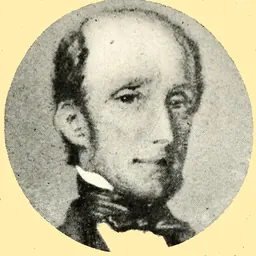



Related people
Same field, nearest in time

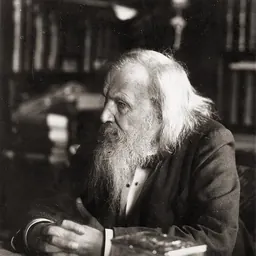
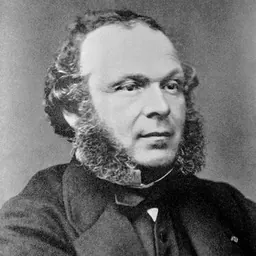

Contemporaries
People whose lives overlapped William Henry Perkin's
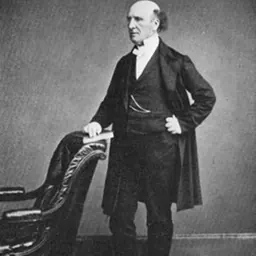

Frequently asked questions
Who was William Henry Perkin?
British chemist known for his accidental discovery of the first synthetic dye (1838–1907)
When was William Henry Perkin born?
William Henry Perkin was born on 12 March 1838 in London.
When did William Henry Perkin die?
William Henry Perkin died on 14 July 1907 in London Borough of Harrow.
What was William Henry Perkin's occupation?
William Henry Perkin was a chemist, inventor and businessperson.
What was William Henry Perkin known for?
William Henry Perkin was known for Aniline, Mauveine and Perkin reaction.
What nationality was William Henry Perkin?
William Henry Perkin was British.
Sources & further reading
· Wikipedia: William Henry Perkin
· DBpedia: William Henry Perkin
Cite this page
APA: Biography.guide. (2026). William Henry Perkin. https://biography.guide/william-henry-perkin-chemist/
MLA: "William Henry Perkin." Biography.guide, https://biography.guide/william-henry-perkin-chemist/.
Chicago: "William Henry Perkin." Biography.guide. https://biography.guide/william-henry-perkin-chemist/.
Data last updated: 2026-09-20 · Spot an error? Report a correction.
Page generated 2026-09-27 05:20 UTC