
About William Henry Donald
Lived 1875 – 1946 (aged 71). William Henry Donald was an Australian journalist.
William Henry Donald (22 June 1875, Lithgow, New South Wales – 9 November 1946, Shanghai) was an Australian journalist. He worked in China from 1903 to 1940. A confidant of both Zhang Xueliang and the Chiangs, he mediated in the Xi'an Incident.
The Donald of China He became a successful journalist at The China Mail, culminating in his resignation as managing editor in 1908 to write about the history of the press in China and Hong Kong.
He influenced a short war between Russia and Japan over China in Japan's favour, but later initiated—through a deliberately provocative newspaper article—an uprising against Japanese imperialism. He resigned from the Far Eastern Review after the managing editor, George Rea, pushed for a more pro-Japanese line for the journal. While in Hong Kong, he made the decision not to learn the Chinese language, and found this to his advantage for the Chinese knew that with him they were assured of the privacy of their conversations. He became a friend and advisor to Sun Yat-Sen and to Generalissimo and Mme. Chiang Kai-shek. He was also an advisor to the "Young Marshal" Zhang Xueliang, the general who kidnapped Chiang Kai-shek at Xi'an in December 1936; some years before the kidnapping, Donald had arranged a cure for Zhang's drug addiction. Emily Hahn described him as having "what is probably the only non-irritating bedside manner in the world. He has vigorous health, vigorous principles and vigorous plans. He does not drink, smoke or tell lies."
Xi'an Incident In order to force the issue to establish a united front against the Japanese invasion, Young Marshall Zhang Xueliang kidnapped Generalissimo Chiang Kai-shek in what became known as the Xi'an Incident. Donald was the special envoy to Xi'an sent by Soong Mei-ling to negotiate for Chiang's release. He played a pivotal role in convincing his old friend Zhang Xueliang and the CCP to release Chiang. After several rounds of negotiations, Chiang was released to a plane bound for Nanjing escorted by Zhang. When the plane arrived in Nanjing, Zhang was immediately arrested and was incarcerated, staying in prison in China and, later, Taiwan, for more than fifty years. Chiang Kai-shek recorded in his diary that Zhang Xueliang "denied having known beforehand of the revolt and tried soothingly to argue with his chief".
Later life
Donald left Chiang Kai-shek's headquarters at Chongqing in May 1940, after a disagreement with the generalissimo over Chinese policy towards Germany. At this time, the British ambassador described him as a "garrulous old man". However, in early 1942, after touring the Pacific in 1940–41, he set out, at Madame Chiang's request, to return to China.
The Japanese invaders in China had dubbed Donald "the evil spirit of China" for his role in advising the Chinese government in their efforts against the invasion. They had offered growing rewards for his capture, dead or alive. Once they had almost got him, when Zero fighters attacked his plane over China—but his pilot escaped into a cloud bank. In February 1945, it turned out that they had held him for more than three years, without knowing it was him, in one of the Manila prison camps. Donald had been a prisoner since February 1942, when the Japanese arrested him at Manila when he was on his way back to China from New Zealand via the Philippines. During his captivity, he had used a false name.
After a brief visit to New York City in 1945, Donald returned to Shanghai, where he died in 1946. He was farewelled in a state funeral by the government of the Republic of China. As he lay dying in 1946, Donald dictated his recollections to Earl Albert Selle, who produced a biography called Donald of China.
A collection of his correspondence between 1942 and 1946 is held by Columbia University Library.
Donald Place, in the Canberra suburb of Gilmore, is named in his honour.
Don’t just read it —
keep it.
Full-length biographies made to live with: read them, listen on the way to work, watch them tonight.
- E-book
- Audio
- Video
Instant download · yours to keep · every purchase keeps this site free
Important facts
People in William Henry Donald's life
Named in this biography and alive at the same time
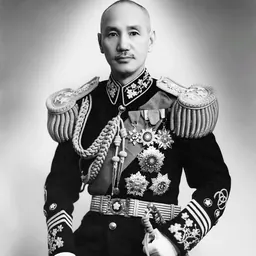



Related people
Same field, nearest in time


Contemporaries
People whose lives overlapped William Henry Donald's


Frequently asked questions
Who was William Henry Donald?
Australian journalist (1875-1946)
When was William Henry Donald born?
William Henry Donald was born on 22 June 1875 in Lithgow.
When did William Henry Donald die?
William Henry Donald died on 9 November 1946 in Shanghai.
What was William Henry Donald's occupation?
William Henry Donald was a journalist.
What nationality was William Henry Donald?
William Henry Donald was Australian.
Sources & further reading
· Wikipedia: William Henry Donald
· DBpedia: William Henry Donald
Cite this page
APA: Biography.guide. (2026). William Henry Donald. https://biography.guide/william-henry-donald/
MLA: "William Henry Donald." Biography.guide, https://biography.guide/william-henry-donald/.
Chicago: "William Henry Donald." Biography.guide. https://biography.guide/william-henry-donald/.
Data last updated: 2026-09-22 · Spot an error? Report a correction.
Page generated 2026-09-27 05:07 UTC