
About Emily Hahn
Lived 1905 – 1997 (aged 92). Emily Hahn was an American writer, journalist, novelist, biographer, children's writer and travel writer.
Emily "Mickey" Hahn ( ( pronunciation in Shanghainese /項ɦɑ͂ 美me麗li/), January 14, 1905 – February 18, 1997) was an American journalist and writer. Considered an early feminist and called "a forgotten American literary treasure" by The New Yorker magazine, she was the author of over 50 books and more than 200 articles and short stories.
Early life Emily Hahn was born in St. Louis, Missouri, on January 14, 1905, as one of the six children of Isaac Newton Hahn, a dry goods salesman, and Hannah (Schoen) Hahn, a free-spirited suffragette. Her family is of German-Jewish origin. Affectionately nicknamed "Mickey" by her mother after a cartoon comic strip character of the day named Mickey Dooley, she was known by this nickname to close friends and family. In her second year of high school, she moved with her family to Chicago, Illinois.
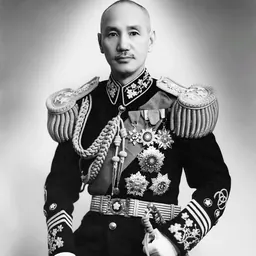
With a love for reading and writing, she initially enrolled in a general arts program at the University of Wisconsin–Madison, but decided to change her course of study to mining engineering after being prevented from enrolling in a chemistry class predominately taken by engineering students. In her memoir, No Hurry to Get Home, she describes how the mining engineering program had never had a woman enroll. After being told by a Professor in her mining engineering program that "The female mind is incapable of grasping mechanics or higher mathematics or any of the fundamentals of mining taught" in engineering, she was determined to become a mining engineer. Her academic accomplishments were a testament to her intelligence and persistence so that her lab partner grudgingly admitted, "You ain't so dumb!" This jump-started her early career as a writer. Hahn wrote for The New Yorker from 1929 to 1996. He gave her the entrée that enabled her to write a biography of the Soong sisters, one of whom was married to Sun Yat-sen and another to Chiang Kai-shek. Hahn stated that Shao's wife approved of the document since it was a possible method of saving his press and that Shao had not been married "according to foreign law".
As Hahn recounted in her book China to Me (1944), she was forced to give Japanese officials English lessons in return for food, and once slapped the Japanese Chief of Intelligence in the face. He came back to see her the day before she was repatriated in 1943 and slapped her back.
China to Me was an instant hit with the public. According to Roger Angell of The New Yorker, Hahn "was, in truth, something rare: a woman deeply, almost domestically, at home in the world. Driven by curiosity and energy, she went there and did that, and then wrote about it without fuss."
England, and return to the US In 1945 she married Boxer who, during the time he was interned by the Japanese, had been reported by American news media to have been beheaded; their reunion (their love story had been reported faithfully in Hahn's published letters) made headlines throughout the United States. They settled in Dorset, England at "Conygar", the estate Boxer had inherited, and in 1948 had a second daughter, Amanda Boxer (now a stage and television actress in London).
Finding family life too constraining, however, in 1950 Hahn took an apartment in New York, and from then on visited her husband and children in England only occasionally. She continued to write articles for The New Yorker, as well as biographies of Leonardo da Vinci, Aphra Behn, James Brooke, Fanny Burney, Chiang Kai-shek, D. H. Lawrence, and Mabel Dodge Luhan. According to biographer Ken Cuthbertson, while her books were favorably reviewed, "her versatility, which enabled her to write authoritatively on almost any subject, befuddled her publishers, who seemed at a loss as to how to promote or market an Emily Hahn book. She did not fit into any of the usual categories" because she "moved effortlessly...from genre to genre."
In 1978 she published Look Who's Talking, which dealt with the controversial subject of animal-human communication; this was her personal favorite among her non-fiction books. She wrote her last book, Eve and the Apes, in 1988 when she was in her eighties.
Hahn reportedly went into her office at The New Yorker daily until just a few months before she died. She died on February 18, 1997, at Saint Vincent's Catholic Medical Center in Manhattan. She was 92, and died from complication from her surgery for a shattered femur.
Legacy "Chances are, your grandmother didn't smoke cigars and let you hold wild role-playing parties in her apartment", said her granddaughter Alfia Vecchio Wallace in her affectionate eulogy of Hahn. "Chances are that she didn't teach you Swahili obscenities. Chances are that when she took you to the zoo, she didn't start whooping passionately at the top of her lungs as you passed the gibbon cage. Sadly for you ... your grandmother was not Emily Hahn."
In 1998, Canadian author Ken Cuthbertson published the biography Nobody Said Not to Go: The Life, Loves, and Adventures of Emily Hahn. "Nobody said not to go" was one of her characteristic phrases.
In 2005, Xiang Meili (the name given to Hahn by Zau Sinmay) was published in China. It looks back at the life and loves of Hahn in the Shanghai of the 1930s.
In 2009, Janice Y. K. Lee published The Piano Teacher, a novel whose main character is loosely based on Hahn.
Don’t just read it —
keep it.
Full-length biographies made to live with: read them, listen on the way to work, watch them tonight.
- E-book
- Audio
- Video
Instant download · yours to keep · every purchase keeps this site free
Important facts
Family & relationships
People in Emily Hahn's life
Named in this biography and alive at the same time






Related people
Same field, nearest in time





Contemporaries
People whose lives overlapped Emily Hahn's


Frequently asked questions
Who was Emily Hahn?
American writer (1905–1997)
When was Emily Hahn born?
Emily Hahn was born on 14 January 1905 in St. Louis.
When did Emily Hahn die?
Emily Hahn died on 18 February 1997 in Manhattan.
What was Emily Hahn's occupation?
Emily Hahn was a writer, journalist, novelist, biographer, children's writer and travel writer.
What nationality was Emily Hahn?
Emily Hahn was American.
Sources & further reading
Cite this page
APA: Biography.guide. (2026). Emily Hahn. https://biography.guide/emily-hahn-writer/
MLA: "Emily Hahn." Biography.guide, https://biography.guide/emily-hahn-writer/.
Chicago: "Emily Hahn." Biography.guide. https://biography.guide/emily-hahn-writer/.
Data last updated: 2026-09-20 · Spot an error? Report a correction.
Page generated 2026-09-27 05:27 UTC