
About William Henry Chase
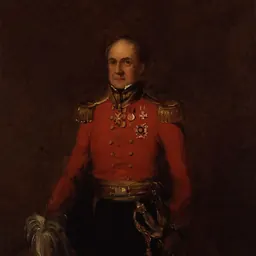
Lived 1798 – 1870 (aged 71). William Henry Chase was an American military leader.
William Henry Chase (June 4, 1798 – February 8, 1870) was a Florida militia colonel during the events in early 1861 that led to the American Civil War (Civil War). On January 15, 1861, on behalf of the State and Governor of Florida, Colonel Chase demanded the surrender of Fort Pickens at Pensacola, Florida and of its U.S. Army garrison. Chase had designed and constructed the fort while he was a captain in the United States Army Corps of Engineers. Lieutenant Adam J. Slemmer, commander of the fort, refused the surrender demand. An informal truce between the administration of President James Buchanan and Florida officials, including their still sitting U.S. Senators, avoided military action at Pensacola until after the Battle of Fort Sumter in April 1861.
Chase was promoted to major general in the "Army of Florida" (Florida militia) a few days after his first demand for surrender of the fort. His entire military service to the emerging Confederate cause occurred during the secession crisis prior to the Battle of Fort Sumter. Chase repeated his surrender demand on January 18, 1861, but Fort Pickens was never surrendered to militia or Confederate States Army forces during the Civil War.
Chase, a United States Military Academy graduate, served in the U.S. Army Corps of Engineers from 1815 to 1856. He attained the rank of major and became the senior officer of the engineers along the Gulf Coast of the United States, where he was responsible for design, construction and maintenance of a number of forts, including those below New Orleans and at Pensacola, Florida and Key West, Florida.
Chase married into the southern Mathews family and developed plantation and business interests in the Pensacola area while promoting and supervising defense projects, all of which contributed to the growth of Pensacola as a city and thriving port. After his retirement from the U.S. Army, he was a slave owner, banker, president of the Alabama and Florida Railroad Company and writer in defense of the merits and importance of the cotton economy. After his role at the beginning of the Fort Pickens confrontation, the 62-year-old Chase returned to the operation of his business interests and took no part in the Civil War.
Early life William Henry Chase was born in Buckfield (Chase's Mills), Massachusetts, now Buckfield, Maine, on June 4, 1798. His parents were Thomas Chase, member of an old Massachusetts family, and Sarah (Greenleaf) Chase, niece of John Hancock, president of the Second Continental Congress, signer of the United States Declaration of Independence and first and third Governor of Massachusetts. He was ranked thirteenth of forty in a class which included future explorer Benjamin Bonneville and Confederate Army General, Adjutant General and Inspector General Samuel Cooper.
United States Army service Upon graduation from West Point, William H. Chase was appointed brevet second lieutenant in the Army Corps of Engineers and was assigned as an assistant engineer in the construction of the defenses of Brooklyn, New York.
In 1844, Chase began service on special boards of engineers for examination of various improvements, including Florida Reef in 1844–1845; the Gulf frontier of Mississippi and Texas in 1845; briefly, the Atlantic Coast Defenses in 1848; the Memphis Tennessee Navy Yard in 1851; the floating dock and other improvements at the Pensacola Navy Yard in 1851; the United States Custom House at New Orleans in 1851; and the Passes of the Mississippi River and Harbor at Lake Pontchartrain in 1852.
In 1856, Chase refused appointment as superintendent of the United States Military Academy at West Point, stating that he feared the appointment would injure his health. Chase resigned from the U.S. Army on October 31, 1856. One historian, who also details Chase's private dealings at greater length, notes that Chase's private activities might land him in prison today but that in those days the lines between military, government and private interests were blurred at best.
In 1849, Chase prepared a report favoring construction of a railroad between Pensacola and Montgomery, Alabama for the committee formed to find the ways and means to construct such a railway. In 1853, Chase was among the incorporators of the Alabama and Florida Railroad Company after it received approval from the Florida legislature. After his retirement from the U.S. Army in 1856, Chase was president of the Alabama and Florida Railroad Company from 1856 until 1861. He married Ann Paul Mathews.
Fort Pickens crisis service A Florida convention passed an ordinance of secession on January 10, 1861. Just three weeks after South Carolina had passed an ordinance of secession, Florida became the third State to secede from the Union. About 800 Florida troops had gathered at Pensacola when Chase took command a few days later. Much like the circumstances with Fort Sumter at Charleston, South Carolina, an unused fort was located on an island in the harbor and dominated its entrance. Slemmer moved his men to this fort, Fort Pickens on Santa Rosa Island on January 10. The commander of the Pensacola Navy Yard, Commodore James Armstrong, who had thirty-eight marines to guard the yard, put up no resistance and surrendered that facility when confronted by about 400 state troops. On the night of January 13, 1861, a small party of armed men was discovered near the fort. A few shots were exchanged but the action did not escalate and the men withdrew.
On January 15, 1861, Chase and an aide, Captain Ebenezer Farrand, formerly second in command at the Pensacola Navy Yard, appeared at Fort Pickens to demand the surrender of the fort and garrison. Slemmer and his second in command, Second Lieutenant J. H. Gilman, met Chase outside the fort. Slemmer refused to allow Chase and Farrand in the fort, even though Chase said he had built the fort and would learn nothing from entering it. Chase handed the paper to Farrand to read but Farrand could not see it well at night without his glasses so Gilman had to read it aloud.
Slemmer and Gilman stepped aside and soon returned to say they would reply the next day.
On January 17, 1861, the Florida secession convention authorized a new "Army of Florida" and recommended that William Henry Chase be appointed major general.
Florida officials, especially U.S. Senator Stephen Mallory, who did not withdraw from the U.S. Senate until January 21, 1861, worked out an informal arrangement with the Buchanan administration under which Florida would not attack the fort as long as the federal government did not reinforce it. The Florida convention expressed appreciation to Chase for his diplomatic handling of the crisis.
On March 9, 1861, the Provisional Confederate Congress established an army for the Confederate States and on March 11, 1861, then Brigadier General Braxton Bragg took over the Florida state forces and assumed command of Confederate forces in Florida. Chase took no further part in the Fort Pickens crisis or the Civil War. Unlike the location of Fort Sumter, the location of Fort Pickens prevented the Confederates from stopping the landings. The Navy also began the Union blockade of Pensacola harbor. No reference shows that Chase was ever arrested or that anything became of this.
William Henry Chase died on February 8, 1870, at Pensacola, Florida. He was buried at Chasefield plantation on Big Lagoon in Pensacola. A later construction project displaced his remains.
Don’t just read it —
keep it.
Full-length biographies made to live with: read them, listen on the way to work, watch them tonight.
- E-book
- Audio
- Video
Instant download · yours to keep · every purchase keeps this site free
Important facts
People in William Henry Chase's life
Named in this biography and alive at the same time



Related people
Same field, nearest in time

Contemporaries
People whose lives overlapped William Henry Chase's






Frequently asked questions
Who was William Henry Chase?
Florida militia colonel (1798-1870)
When was William Henry Chase born?
William Henry Chase was born on 4 June 1798 in Buckfield.
When did William Henry Chase die?
William Henry Chase died on 8 February 1870 in Pensacola.
What was William Henry Chase's occupation?
William Henry Chase was a military leader.
What nationality was William Henry Chase?
William Henry Chase was American.
Sources & further reading
· Wikipedia: William Henry Chase
· DBpedia: William Henry Chase
Cite this page
APA: Biography.guide. (2026). William Henry Chase. https://biography.guide/william-henry-chase/
MLA: "William Henry Chase." Biography.guide, https://biography.guide/william-henry-chase/.
Chicago: "William Henry Chase." Biography.guide. https://biography.guide/william-henry-chase/.
Data last updated: 2026-09-20 · Spot an error? Report a correction.
Page generated 2026-09-27 05:08 UTC