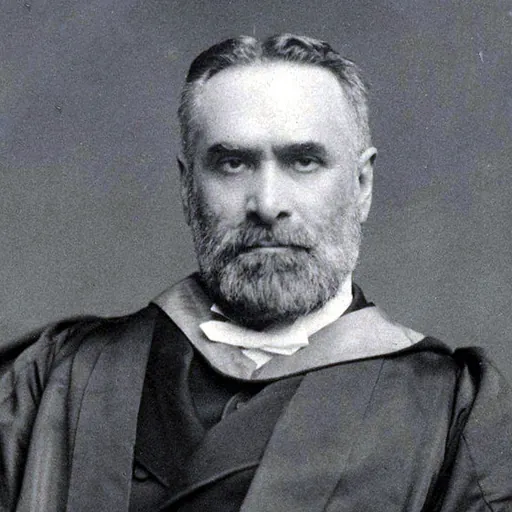
About William Hastie
Lived 1842 – 1903 (aged 61). William Hastie was a British translator and preacher.
William Hastie MA DD (7 July 1842 – 31 August 1903) was a Scottish clergyman and theologian. He produced the first English translation of the Universal Natural History and Theory of Heaven, by Immanuel Kant. Hastie led the General Assembly's Institution in Calcutta, where he was credited with developing the Hindu advocate Swami Vivekananda. Hastie recovered from a ruinous libel case in Calcutta to become the Professor of Divinity at University of Glasgow.
Early life and career William Hastie was born on 7 July 1842 at Wanlockhead in Dumfriesshire, Scotland. He entered the University of Edinburgh in 1859 and graduated with an M.A. in Philosophy in the First Division in 1867 and further with a B.D. in 1869.
He further studied at the University of Glasgow in 1870 and 1871, under John Caird, Professor of Divinity. Hastie studied further in the Netherlands and Germany and became fluent in German. In 1875, he decided to become a probationer in the Church of Scotland so that he could teach abroad. Three years later, he was on a ship bound from Liverpool to Calcutta.
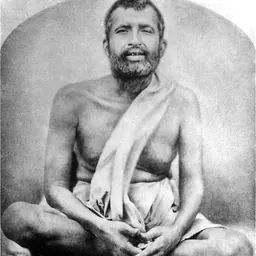
According to a legend, Narendranath Datta (the future Swami Vivekananda) was first introduced to Indian mystic Ramakrishna in a literature class, given by Hastie. While lecturing on William Wordsworth's poem, The Excursion, Hastie suggested to his students that they should visit Ramakrishna of Dakshineswar to understand the true meaning of the phenomenon of "trance". Rajagopal Chattopadhyaya attributes the legend to a classmate of Narendranath, Haramohan Mitra.
Hastie must have inspired his students, because several went on to find out more about meditation.
Hastie showed an interest in his students. For instance, despite Narendranath Datta's chain-smoking, he remarked, "Narendra Nath Dutta is really a genius. I have traveled far and wide, but have never yet come across a lad of his talent and possibilities, even in the German universities amongst philosophy students".
Hastie and Pigot both went to court, with Hastie defending himself on libel charges by calling on supportive witnesses. The case was sent to appeal, and eventually Hastie and his witnesses were rebuked. He unsuccessfully appealed to the church in Scotland. He had already been dismissed in 1884 and had no way of covering his costs and the fine that the court levied against him. As a result, Hastie was imprisoned in Calcutta in 1885 and was released only when he went bankrupt. Contemporary commentators have put the case down to Hastie's sexual jealousy, as he suspected one of Pigot's alleged partners – Kalicharan Banerjee – of writing articles that disagreed with Hastie's theology.
The secular Indian and the English Press in Calcutta sided with Miss Pigot, but the Indian missionary establishment's views were summarised by Rev. J. Hudson in the magazine Harvest Field, where he discussed the case and concluded that Pigot was not immoral but "lacking in female delicacy". Hudson interwove this observation with hints of Pigot's poor management. Later analysis has seen Hastie as a "classic case of sexual jealousy" being projected from his intellectual rivalry onto sexual rivalry.
He lived his final years at 23 Queens Crescent in the Blacket district of south Edinburgh.
Hastie died suddenly in Edinburgh on 31 August 1903 and was buried in his hometown. An enthusiastic biography, The Life of Professor Hastie by Donald MacMillan, was published at Paisley in 1926.
Don’t just read it —
keep it.
Full-length biographies made to live with: read them, listen on the way to work, watch them tonight.
- E-book
- Audio
- Video
Instant download · yours to keep · every purchase keeps this site free
Important facts
People in William Hastie's life
Named in this biography and alive at the same time




Related people
Same field, nearest in time


Contemporaries
People whose lives overlapped William Hastie's


Frequently asked questions
Who was William Hastie?
Scottish educator, translator and writer (1842-1903)
When was William Hastie born?
William Hastie was born on 7 July 1842 in Wanlockhead.
When did William Hastie die?
William Hastie died on 31 August 1903 in Edinburgh.
What was William Hastie's occupation?
William Hastie was a translator and preacher.
What nationality was William Hastie?
William Hastie was British.
Sources & further reading
Cite this page
APA: Biography.guide. (2026). William Hastie. https://biography.guide/william-hastie/
MLA: "William Hastie." Biography.guide, https://biography.guide/william-hastie/.
Chicago: "William Hastie." Biography.guide. https://biography.guide/william-hastie/.
Data last updated: 2026-09-22 · Spot an error? Report a correction.
Portrait: Wikimedia Commons · author & licence
Page generated 2026-09-27 05:00 UTC