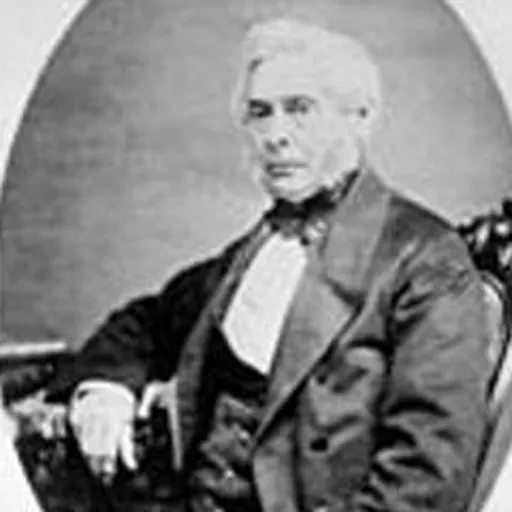
About William Hamilton Merritt
Lived 1793 – 1862 (aged 69). William Hamilton Merritt was a military personnel.
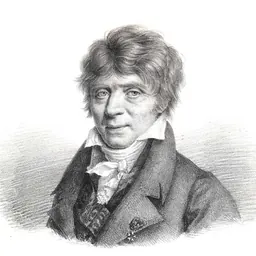
William Hamilton Merritt (July 3, 1793 – July 5, 1862) was a businessman and politician in the Niagara Peninsula of Upper Canada in the early 19th century. Although he was born in the United States, his family was Loyalist and eventually settled in Upper Canada. Merritt fought in the War of 1812, was captured by the invading American forces, and held as a prisoner of war. After the war, he returned to the Niagara region and began a career in business. He was one of the founders of the Welland Canal. He was a supporter of the Abolitionist cause to end slavery in the U.S., and of the settlement of escaped slaves in St. Catharines.
Family and early life Merritt was born in Bedford in Westchester County, New York, on July 3, 1793. His father, Thomas, fought as a United Empire Loyalist in the American Revolutionary War. After the revolution, the family resided in New Brunswick before returning to the U.S. In 1795, they moved to Upper Canada, settling on the Niagara Peninsula on the Twelve Mile Creek. Merritt attended school in Ancaster and Niagara, studying mathematics and field surveying. Afterwards, he became a partner in a store at Shipman's Corners (now St. Catharines).
War of 1812
Just before the War of 1812, he sold his interest in the store and returned to his family's farm on the creek. During the war, he joined the Second Lincoln Militia, stationed at Chippawa. He was a captain and leader of the volunteer dragoons throughout the war. During constant patrols along the Niagara River, an idea came to him for a canal to by-pass the Niagara Falls. He was captured during Battle of Lundy's Lane in July 1814 and held prisoner of war in Massachusetts until March 1815. After his release, while travelling back to Upper Canada, he stopped in Mayville, New York, to marry Catharine Prendergast, whose family had lived in St. Catharines before the war.
Welland Canal
On July 4, 1818, Merritt organized a meeting in St. Catharines. The outcome was a petition sent to the Upper Canada Legislature to provide for construction of a canal between the Twelve Mile Creek and Chippawa Creek. This early proposal was primarily to provide additional water supplies for mills. However, the plan rapidly expanded, to include plans for a canal to allow boats to cross the Niagara Escarpment and travel between Lake Erie and Lake Ontario.
This expanded version of the canal would allow the trade from the upper Great Lakes to transit directly to Lake Ontario, rather than having to be portaged across the Niagara peninsula, and then continue on to Montreal down the St. Lawrence. The canal would also provide competition for the planned Erie Canal, which potentially could siphon off the trade from the upper Great Lakes to New York.
Merritt was the first general manager for the newly chartered company. As part of his fundraising duties, he travelled extensively, in Upper Canada and Lower Canada, and also to the United States and Great Britain. He recruited Alfred Barrett, who had worked on the Erie Canal, as the chief engineer on the project. He was successful in raising the money, in part with a substantial investment from an American entrepreneur, John B. Yates.
Political career In 1832, Merritt was elected to the Legislative Assembly of Upper Canada in a by-election, representing Haldimand County. He would continue in elected office until his death, thirty years later. He was not a strong partisan. His main interest in being elected was to be able to work for transportation improvements, such as canals to improve navigation on the St. Lawrence River. He also favoured developing the new transportation system, railways, and proposed a rail link between Montreal and the Maritimes. He also pushed for the first steel suspension bridge over the Niagara River. Merritt supported free trade policies to increase trade with the United States. At the same time, he favoured reducing government expenditures and services. He began as a moderate supporter of the Compact Tories but gradually moved towards the Reform movement. On the first major vote of the first session, he voted in support of the union of the Canadas, breaking with Baldwin. Thereafter, he voted consistently with Baldwin.
In 1843, there was a political crisis between the Governor-General, Sir Charles Metcalfe, and the Lafontaine-Baldwin ministry, which resulted in Baldwin and Lafontaine resigning. The Governor-General tried to pull together a new ministry which would attract moderates from all political views, provided they did not push for responsible government. Metcalfe and the leader of the moderate Tories, Henry Draper, both considered that Merritt's participation would be essential, given his broad political support in the Niagara region and his breadth of knowledge about transportation issues. However, Merritt declined Draper's invitation to join the new ministry. He had disagreed with Baldwin's decision to resign office, but he still considered himself a Baldwin supporter.
In 1860, he was elected to the Legislative Council in the Niagara Division. Merritt was also a supporter of the abolitionist cause to end slavery in the United States, helping indirectly to make St. Catharines a haven for escaped slaves and anti- slavery activism. In the early 1840s, he financed the establishment of both a Methodist (the second version still stands) and a Baptist church for Black refugees, and sold lots to the refugees themselves at below market prices, according to Merritt's son, a city councilor, successfully pushed the city to compensate the so-called "Negro Village" that flourished around the churches, after many buildings were burned during an anti-Black riot in 1853.
Death Merritt died in 1862 aboard a ship in the Cornwall Canal. He is buried at the Victoria Lawn cemetery in St. Catharines, Ont.
One of his sons, Thomas Rodman Merritt, was later a member of the Canadian House of Commons. His grandson, William Hamilton Merritt III was involved in railway construction in British Columbia, and married the only daughter of Robert Simpson, the founder of the Simpsons department store chain.
Legacy A statue depicting William Hamilton Merritt in St. Catharines, Ontario, Canada. The community Merritton in St. Catharines is named after Merrit. In 1844, the residents of Aqueduct, a community on the Welland Canal, renamed their village Merrittsville to acknowledge the role of William Hamilton Merritt's enterprise in founding the hamlet (Merritsville is now part of Welland). The road connecting Merrittsville to (Beaverdams) Thorold is named Merrittville Highway. In 1974, Merritt was designated as a National Historic Person by the federal government. The plaque setting out the designation is located at Lock # 3 on the Welland Canal in St. Catharines.
Don’t just read it —
keep it.
Full-length biographies made to live with: read them, listen on the way to work, watch them tonight.
- E-book
- Audio
- Video
Instant download · yours to keep · every purchase keeps this site free
Important facts
Family & relationships
People in William Hamilton Merritt's life
Named in this biography and alive at the same time


Related people
Same field, nearest in time

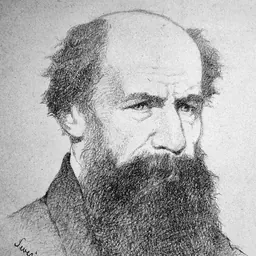
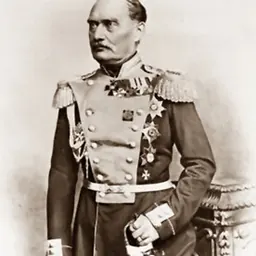
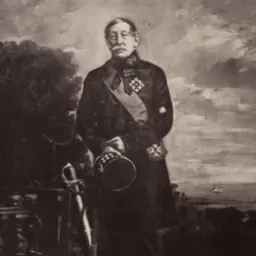
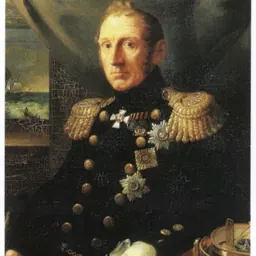
Contemporaries
People whose lives overlapped William Hamilton Merritt's





Frequently asked questions
Who was William Hamilton Merritt?
Canadian politician (1793–1862)
When was William Hamilton Merritt born?
William Hamilton Merritt was born on 3 July 1793 in Bedford.
When did William Hamilton Merritt die?
William Hamilton Merritt died on 5 July 1862 in Cornwall Canal.
What was William Hamilton Merritt's occupation?
William Hamilton Merritt was a military personnel.
Sources & further reading
· Wikipedia: William Hamilton Merritt
· DBpedia: William Hamilton Merritt
Cite this page
APA: Biography.guide. (2026). William Hamilton Merritt. https://biography.guide/william-hamilton-merritt/
MLA: "William Hamilton Merritt." Biography.guide, https://biography.guide/william-hamilton-merritt/.
Chicago: "William Hamilton Merritt." Biography.guide. https://biography.guide/william-hamilton-merritt/.
Data last updated: 2026-09-21 · Spot an error? Report a correction.
Portrait: Wikimedia Commons · author & licence
Page generated 2026-09-27 04:59 UTC