
William Hallifax
Hallifax, William (1655–1721/2), Church of England clergyman
About William Hallifax
Lived 1655 – 1721 (aged 65–66).
William Hallifax was an English clergyman notable for being an early western explorer of Palmyra, a translation of Euclid, serving as Chaplain to the Speaker of the House of Commons and as a benefactor of Corpus Christi College, University of Oxford.
Personal life and education William Hallifax was the second son of the Revd John Hallifax and his wife, Elizabeth Mabelye. He was born on 15 August 1655 and baptised on 24 September at Springthorpe, Lincolnshire. He was admitted to Brasenose College, University of Oxford as a servitor on 20 February 1670. He was subsequently admitted as a scholar to Corpus Christi College, University of Oxford in April 1674, graduating with a BA in 1675 with an MA in 1678. He was elected a Fellow of Corpus Christi in December 1682, publishing a translation of Les Elemens d'Euclide by Claude Dechales in 1685.
In 1687, he gained a BD and was elected chaplain to the Levant Company in Aleppo, remaining there until 1695, the same year in which he was awarded a DD. He was chaplain to the Speaker of the House of Commons, Paul Foley, from 1695 to 1698. In 1699 he was presented to the living of Oldswinford, Worcestershire by Thomas Foley and, from 1712, held the living of Salwarpe in plurality until he died at the beginning of 1722. He made a generous bequest to Corpus Christi College. There were no children of this marriage and Anne died on 4 May 1709, being buried with a commemorative stone at St Michael's church, Upton Warren, Worcestershire. Hallifax married Mary Davenport (born of Henry Davenport and Elizabeth on 24 March 1674 at Worfield, Shropshire ) on 9 February 1710 at Kinver, Staffordshire. There was one child, William Hallifax (baptised 2 December 1714 ) who was buried at Salwarpe church on 11 April 1721.
Translation of Milliet Dechales's Les Elemens d'Euclide In 1677, Claude François Milliet Dechales published Les elemens d'Euclide expliquez d'une maniere nouvelle & tres-facile, a French translation of Books 1-6 and 11-12 of Euclid's Elements. Two English translations were published in 1685: one dedicated to Samuel Pepys by Reeve Williams (an engraver and teacher who kept a mathematics school, known for navigation); the other credited to William Hallifax. Hallifax's translations ran into seven editions, the last being published in 1726. There is no statement in any edition of his role as translator but it is attested in two near contemporary sources: Anthony à Wood's 1691 Athenæ oxonienses attempts to list all writers and bishops who were Oxford graduates, stating that "He [Hallifax] hath translated from French into English, The Elements of Euclid explain'd, in a new, but most easie method." Thomas Hearne noted that "He [Hallifax] translated De Chale's Euclid, whereof there are two or three impressions." In his preface, Hallifax said of his translation that " voluntary [sic] offer it to the publick, in an Age, whose Genius seems more addicted to Mathematicks, than any that has preceded it." If number of editions is a measure, Hallifax's was the more successful: a copy of the first edition reached the library of Thomas Foley, later to be Hallifax's patron. Further editions were published, finishing with the seventh edition in 1726.
Chaplain to the Levant Company Hallifax was elected chaplain to the Levant Company in Aleppo by ballot (having preached a sermon to the Company in London) on 18 January 1688, arriving in Aleppo in October 1688 and leaving the post on 27 November 1695, There was the expected round of religious duties, not always supported by the Company; the Aleppo Consul's request of 27 January 1692 for a contribution to adorning the chapel being turned down by the Company.
The services followed the Book of Common Prayer of 1662 (ie, the revision that took place during Charles II's reign). Observance was not particularly strict: on 5 November 1688, the colony did not observe the Thanksgiving Day (for deliverance from the Gunpowder Plot), "the whole Nation (as it had been their custom, and I presume is still) going abroad and diverting themselves with Hunting and other Pastimes from morning till night." The Consul said that other observances such as the Martyrdom of Charles I were sometimes kept and sometimes neglected. with funds allocated from time to time. In Hallifax's time, £20 was granted by the Company to the chaplain for the library (20 August 1689). Some insight into what Hallifax was able to collect is provided in his will where he bequeathed an Italian Bible "and all other my Books and Manuscripts in that language amongst which some are of Curiosity and also an Alcoran a Manuscript and another small Manuscript in the persian language being a version of part of the Psalms of David".
Exploration of Palmyra The merchants of the Levant Company "being generally Men of more than ordinary Birth and Education, have not been wanting (as the intervals of leisure from the gainful Traffick would permit) to make Voyages of Curiosity, to visit the celebrate Remains of Antiquity in those Parts, whereby the once flourishing State of the World, under the Roman Empire is abundantly envinced." The first attempt took place in 1678 with a party of "sixteen English" and about twenty-five muleteers and servants. This group included the merchants Timothy Lanoy and Aaron Goodyear and the chaplain, Robert Huntington. The expedition reached Palmyra but was robbed by the inhabitants and, in fear of their lives, had to return to Aleppo.
The successful expedition of 1691 was both better armed and had assurances of safe passage and a guide from the local emir 'Assyne Abbas' (Husayn Abbas). The group numbered about thirty, including servants. Lanoy and Goodyear were part of the group and their report to the Royal Society gives an extensive account of the travelling but little description of Palmyra. A panoramic view of Palmyra in also given in the Philosophical Transactions, following Lanoy and Goodyear's paper. This view is very similar to a later painting of a panoramic view of Palmyra by G. Hofstede van Essen sent in 1693 to Gisbert Cuper, a historian and politician, in Amsterdam. The similarity of the engraving in the Philosophical Transactions and Van Essen's painting has been taken as possible evidence that Van Essen was in the expedition party.
Hallifax's report in the Philosophical Transactions made two substantial contributions: a description of the main building in the ruins of Palmyra; a record of inscriptions found on some buildings. Hallifax had the disadvantage that he did not have the resources of a well-stocked library to aid him in interpreting what he read on stonework in poor condition and that his transcriptions had themselves been copied and circulated before publication, not necessarily with complete accuracy.
Chaplain to the Speaker Paul Foley was speaker of the House of Commons from 1695 to 1698. The Foleys were an old puritan family with Paul's brother, Thomas, having the patronage of several livings in north east Worcestershire. Samuel Barton was Chaplain to the Speaker of the House of Commons from 1695 (the year of Paul Foley's election as Speaker) to 1697. Thomas Hearne described Barton as being "a little Puritanically inclin'd". Hearne noted: "tho' the House petition'd for him, yet 'twas his Fortune to get nothing whereas one Galloway, originally of Hart-Hall, who was a most notorious stupid Blockhead, without one Grain of Learning, for being Foley's Chaplain, when Speaker, got to be Prebendary of Worcester; wch to ye scandal of all Worthy men he still enjoys."
Parish ministry in Oldswinford and Salwarpe William Hallifax was not Thomas Foley's first choice as rector for the wealthy parish of Oldswinford; in June 1699 it had been offered to and refused by George Nelson, at that time holding the livings of Oddingley and Pedmore. Foley moved quickly to offer the living to Hallifax who was installed on 17 August 1699.
The rectory at Oldswinford was in a poor state by 1699. On 12 June 1700, Hallifax was granted a licence to demolish the "old parsonage-house" and build a replacement, 40 feet wide by 34 feet in breadth. was published in early 1701 systematically attempting to refute the substance of Hallifax's letter and it is clear from that and from Hallifax's later response in the form of a published sermon that there had been considerable discussion in the Diocese about the use of proxies and the outcome of the election.
Apart from the intellectual arguments, the pamphlet all but identified Hallifax as the author of the original letter: "Since Dr. H------ x is notoriously known to produce it, and has Assurance enough to acknowledge his Delivery of it to the Chancellor. ... However, he's still D. D. and a Rector of a large Parish..." Hallifax preached a sermon on 30 January 1701 (the Martyrdom of Charles I) which was published with a response to the anonymous pamphlet. Hallifax's response gave particular attention to his failure while in Aleppo to observe the days for the Martyrdom of Charles I and Thanksgiving Day (for deliverance from the Gunpowder Plot) suggesting that he had been attacked for his disloyalty to the monarch as head of the Church of England. It was claimed that he favoured the abolition of the observance of the Martyrdom of Charles I and was, it was implied, dismissed from the Levant Company for disloyalty to the monarch. This was made into a serious matter as Hallifax was forced to obtain a statement from the Levant Company to prove that he had not been dismissed from the position of chaplain in Aleppo and, by inference, he had not favoured the abolition of the observance of the Martyrdom of Charles I.
Hallifax was instituted as rector of Salwarpe (which he held in pluraility with Oldswinford) on 18 July 1713. He chose to bury his son there and to be himself buried there. Nonetheless, at his death, Hallifax still owned some of the shares. . Hallifax's will is quite extensive leaving £5 to the poor of the parishes of Oldswinford and of Salwarpe and rather more generous bequests to some relatives.
The will provides some insight into Hallifax's beliefs, requiring that he be buried "after the manner of the Established Church of England in the Communion of which Church I Steadfastly resolve thro' the Assistance of divine grace to dye esteeming it to Approach the nearest to the primitive Church of Christ of any that is now in the world."
Don’t just read it —
keep it.
Full-length biographies made to live with: read them, listen on the way to work, watch them tonight.
- E-book
- Audio
- Video
Instant download · yours to keep · every purchase keeps this site free
Important facts
People in William Hallifax's life
Named in this biography and alive at the same time
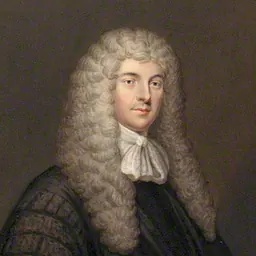

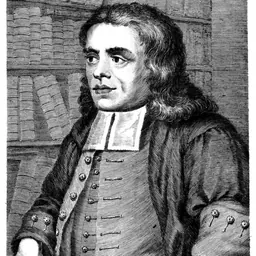

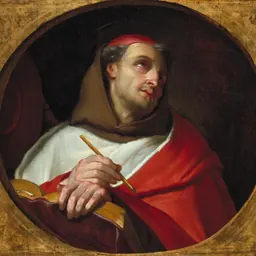

Contemporaries
People whose lives overlapped William Hallifax's




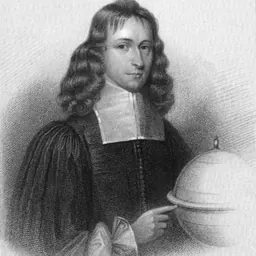
Frequently asked questions
Who was William Hallifax?
Hallifax, William (1655–1721/2), Church of England clergyman
When was William Hallifax born?
William Hallifax was born in 1655.
When did William Hallifax die?
William Hallifax died in 1721.
Sources & further reading
Cite this page
APA: Biography.guide. (2026). William Hallifax. https://biography.guide/william-hallifax/
MLA: "William Hallifax." Biography.guide, https://biography.guide/william-hallifax/.
Chicago: "William Hallifax." Biography.guide. https://biography.guide/william-hallifax/.
Data last updated: 2026-09-20 · Spot an error? Report a correction.
Page generated 2026-09-27 05:02 UTC