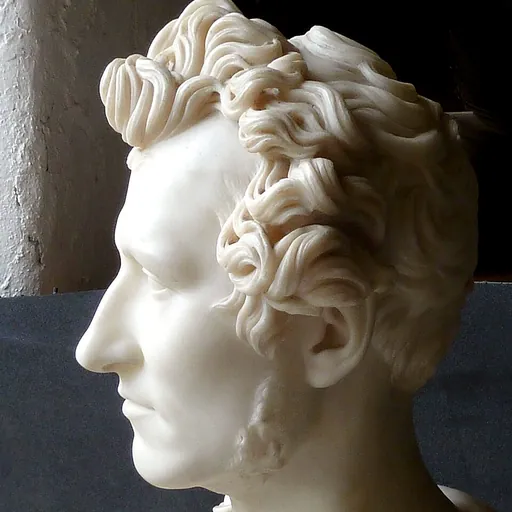
William Gott
British businessman and philanthropist
About William Gott
Lived 1797 – 1863 (aged 65–66). William Gott was a factory owner, philanthropist, art collector and factory, known for Leeds General Infirmary.
William Gott (1797 – 26 August 1863) was a British wool merchant, mill owner, philanthropist towards public services and art collector from Leeds, West Riding of Yorkshire, England.
Together with his brother John, William Gott took over management of Armley Mills, the former Park Mills at Bean Ings, Leeds, and other businesses from their father Benjamin Gott from the mid-1820s. Their company, Gott & Sons, was a major local employer, having hundreds of regular workers, plus weavers on piece-work. While involved with the company they faced an indictment for smoke pollution at Park Mills, and showed an unsympathetic response in line with 19th-century culture to a weavers' pay strike due to low wages.
William Gott lived in various mansions, including Denison Hall and Wyther Hall at Leeds, and Bay Fort at Torquay, Devon. He married twice and had at least six children, one of whom was John Gott, Bishop of Truro. His philanthropy included the contribution of funds towards churches and civic buildings, and the provision of exhibits including the Leeds Tiger for Leeds Museum, via the Leeds Philosophical Society of which he was vice president by the end of his life. His art collections are now dispersed, but his bound volumes of watercolours, lithographs and drawings are held at the Hepworth Gallery at Wakefield, West Yorkshire, and his Piranesi drawings are in the British Museum.
Life
William Gott's paternal grandparents were engineer and bridge-surveyor John Gott (1720–1793) of Woodhall, Bradford and Susanna Jackson of Bradford. His parents were Benjamin Gott (1762–1840) of Armley House, Leeds, and Elizabeth Rhodes (1768–1857) of Badsworth. William was their third son, born in Leeds, William Gott attended a Leeds drawing academy run by Joseph Rhodes (1778–1855).
First marriage On Wednesday 15 August 1821 at Childwall parish church, daughter of Liverpool merchant William Ewart (1763–1823) of Mossley Hill, Lancashire. Margaret Ewart's brothers were William Ewart, MP for Dumfries Burghs (1798–1869), and Joseph Ewart, MP for Liverpool. William and Margaret had at least six children all born in Leeds, including Margaret (b.ca.1823),
Second marriage Gott's second wife was the widow Susannah Maria McLauchlan Raoux née Backler (Paris 21 January 1822 – Lewisham 8 March 1901), whom he married on 28 July 1851 in Kennington, Surrey, and again on 6 April 1853 in Blatherwycke, Northamptonshire. He was 25 years her senior, and they had no children. Susannah's father was cupper John Backler (d. Whitechapel 1846). Her first marriage, in 1841 in Paris, was to Charles Raoux (d. by 1851). he having been widowed when his already-paralysed wife Maria Sarah Huxtable (1796 – Newton Abbot 1874) died when a lift-rope broke at home.
Other life events In June 1829 William Gott's governess Miss Daniel innocently married one "John" Stanley, a wool merchant, broker, father to eleven children and uncertificated bankrupt from London who had been living in Leeds for a few years. Stanley was a bigamist called Joseph Stanley, and all was revealed when his first wife arrived from London in 1830, after he had been pretending to the mother of his children for some years that he was in debt and had driven her to destitution by taking all her property. Stanley had spent the money on furnishing Crimbles House, Leeds for the second Mrs Stanley. William Gott, Benjamin Gott and Miss Daniel's father attempted to deal with the matter, the first Mrs Stanley pressed charges and Joseph Stanley ran away.
In 1832 a 20-foot-wide road on one of Gott & Sons' properties in Burley, Leeds was enclosed by the enclosure commissioner George Hayward, for the purposes of road improvement. It was to be named Gott's Road. It led west from the Burley Green Road.
Politics, religion and personality The Leeds Intelligencer said: In politics, Mr. Gott was a sound Conservative, though he took no public part in them. He was very tolerant of the political opinions of others, and in all his dealings with other men he displayed an almost complete abnegation of political partisanship. In religion, Mr. Gott was a consistent member of the Church of England, whose usefulness he sought to extend, not less by his own life of practical piety, than by the way in which he aided every scheme for church improvement in the town. The Dean of Chichester would bear us witness [that] ... in all his many works Mr. Gott was at his right hand ... Kindness to others, sympathy with all sorrow, and a desire to make all around him happy, were the prominent points of his character.
Gott's residences Between at least 1830 and 1851, Gott was living in Denison Hall at 19 Hanover Square, Leeds. This large 18th-century mansion designed for wool merchant William Denison (1714–1782) of Kirkgate, Leeds, by William Lindley of Doncaster, is now a Grade II* listed building. During his last years, his residences were Wyther Grange also known as Wyther Hall, Kirkstall, Leeds, and Bay Fort, Torquay.
Death and funeral
Gott "had not enjoyed the best of health for some years past", when he died suddenly on 25 August 1863 at Patterdale, Northumberland, while visiting. He was not ill when he arrived but, according to the London Evening Standard, on 20 August "he got wet during a short walk", "and a serious attack of dysentery came on, from which he never rallied". and he was interred in the large family vault in the chancel, below the Benjamin Gott monument. "Many of the principal tradesmen in the town closed their shops until the funeral had terminated".
Gott's will was proved on 21 October 1863 at Wakefield. He left effects under £140,000 .
Career
Together with his brother John Gott, William Gott was a senior partner in the woollen cloth mercantile and manufacturing firm Benjamin Gott & Sons at Armley Mills and Park Mills at Bean Ings, Leeds, having taken over from his father Benjamin Gott, in 1825. By 1861 the brothers were employing a total of 291 men, 361 women, 63 boys and 102 girls.
The University of Leeds has a cloth-pattern book, dated 1815 (when Gott was aged 18), which once belonged to a William Gott.
Smoke nuisance trial, 1824
In 1824, Benjamin Gott and his sons John and William were charged with nuisance relating to Park Mills at Bean Ings, which was on the north bank of the River Aire, less than a mile south-west of Park Square, Leeds. The Bean Ings mill was "perhaps the first industrial-scale steam-driven wool mill in the world". The legal case was of great interest to industrialists and engineers, on account of the conflict between potential benefits and dangers of industrial progress. The charge was as follows:
In the opening speeches, it was said that previous cases had been difficult to prosecute, because industrialists lived far away from their own factory smoke, and did not care. However, "a steam engine consumes, as it has been usually employed, as great a quantity of coals in one hour as a moderate family does in twelve months". Vegetables in gardens near the Bean Ings mill had been "disfigured and polluted with soot"; linen could not be washed and dried, and dyers had to re-dye. It did appear, though, that Gott's firm had reduced the smoke nuisance somewhat, so that the main discussion in Court concerned the amount of costs which Gott & Sons might be made to pay. To avoid accusation of theft, the 237 broad cloth weavers completed their assignments and handed in their piecework before leaving. Gott & Sons sacked all the women and children workers who were connected with the weavers. The Evening Mail compared local wages and found that Gott & Sons were on average paying lower wages than neighbouring woollen mills.
Business In 1841 Gott was a director of Leeds and Selby Railway Company (LSR), while his brother John was chairman. This was during the time when the LSR was being leased to the York and North Midland Railway.
In 1842 Leeds Town Council held a meeting to discuss local manufacturers' bankruptcies and workers' consequent poverty caused by the Corn Laws, whose effect was to divert trade from Britain to the Continent. A letter from Gott & Son, instancing the diversion of large orders to France and Belgium, was read out at the meeting. 180 local mills and warehouses were now empty, and it was calculated that local wool workers had lost a total of £240,000 per year in wages due to the Corn Laws. Gott & Sons said that they had to close Armley Mills works due to loss of trade.
The Gott collection William Gott "built up a magnificent collection of rare books, now, unfortunately, dispersed, which included several early editions of the Bible, and Shakespeare's works. The Leeds Intelligencer said: One surviving part of Gott's collections, now held by the Hepworth Gallery, Wakefield, is a set of artworks which were bound into ten volumes by William Gott and his son John. Their contents consist of "more than 1,200 watercolours, drawings and prints depicting over 200 Yorkshire towns and villages". In the 1930s, the volumes were presented by industrialist Frank Green to the Wakefield Art Gallery. The Gott Collection at the Hepworth has now been digitised, but as of 2021 it was not available online.
Artworks from the Gott Collection at The Hepworth
A set of at least 55 drawings from the Gott collection, by Giovanni Battista Piranesi, Francesco Francia, Peregrino da Cesena and other artists, is now in the British Museum. The bust is normally stored at Leeds Discovery Centre.
The range and depth of Gott's interest can be seen in the following list of items from Gott's collections, exhibited by him at the conversazione of the Leeds Philosophical Society on 16 December 1862. The list is quoted as it appeared in the Leeds Mercury:
Early manuscripts Bible, of the eleventh century, on vellum, illuminated, from the monastery of Justemont, near Metz Psalterium, on vellum, illuminated, a Flemish work, dated 1165, in the original binding, with chain to fasten to the desk Psalterium of the early part of the fifteenth century, on vellum, illuminated, in the original binding, with piece of fresco inserted, featuring the descent into Egypt; school of Fra Angelico Missal, highly illuminated on vellum, Flemish work, about 1430 Service book from Beverley Cathedral, about the time of the Reformation Persian manuscript, much illustrated, with highly finished miniature drawings The Koran in Persian and Arabic, with gold borders, written in Persian and Arabic Manuscript of Ceylon on the leaf of the talipot palm. As executors of the will of Abigail Rhodes of Armley House, the brothers passed on £50 for the benefit of Leeds Dispensary, in 1845. In the same year, Gott paid for the replacement of rented box pews with free pews for all, in the former St Paul's Church, Park Square, Leeds (demolished 1906). In 1863 Gott and his brother John subscribed £1,000 each to the building of Leeds Infirmary. The brothers also gave £500 in 1862 towards the extension of Leeds Philosophical Hall, and in 1865 they contributed to the construction of Leeds Mechanics Institute. In 1862, Gott donated a "beautiful collection of manuscripts", a taxidermy-mounted Bengal tiger, now known as the Leeds Tiger, and a "fine fossil of the great Irish elk" to the Leeds Philosophical Society.
The Western Times said that Gott was a "liberal supporter" of Torquay's local charities.
Works funded or co-funded by William Gott
Don’t just read it —
keep it.
Full-length biographies made to live with: read them, listen on the way to work, watch them tonight.
- E-book
- Audio
- Video
Instant download · yours to keep · every purchase keeps this site free
Important facts
People in William Gott's life
Named in this biography and alive at the same time

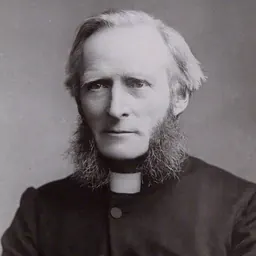

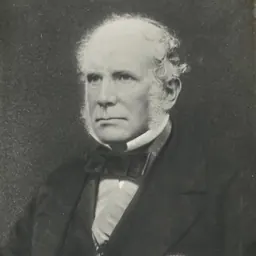



Related people
Same field, nearest in time
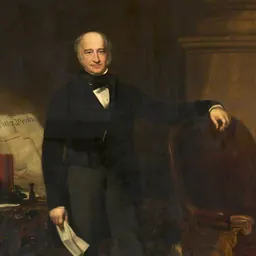


Contemporaries
People whose lives overlapped William Gott's






Frequently asked questions
Who was William Gott?
British businessman and philanthropist
When was William Gott born?
William Gott was born in 1797 in Leeds.
When did William Gott die?
William Gott died on 25 August 1863 in Patterdale.
What was William Gott's occupation?
William Gott was a factory owner, philanthropist, art collector and factory.
What was William Gott known for?
William Gott was known for Leeds General Infirmary.
Sources & further reading
· DBpedia: William Gott (industrialist)
Cite this page
APA: Biography.guide. (2026). William Gott. https://biography.guide/william-gott-factory-owner/
MLA: "William Gott." Biography.guide, https://biography.guide/william-gott-factory-owner/.
Chicago: "William Gott." Biography.guide. https://biography.guide/william-gott-factory-owner/.
Data last updated: 2026-09-22 · Spot an error? Report a correction.
Portrait: Wikimedia Commons · author & licence
Page generated 2026-09-27 05:04 UTC