
About William Garnett
Lived 1850 – 1932 (aged 81). William Garnett was a British mathematician, physicist and pedagogue.
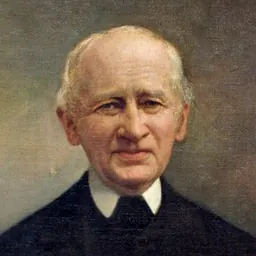
William Garnett (30 December 1850 – 1 November 1932) was a British professor and educational adviser, specialising in physics and mechanics and taking a special interest in electric street lighting.
Early years Garnett was born in Portsea, Portsmouth, England in 1850, the son of William Garnett. In January 1863 he entered the City of London School, where he was a pupil of Thomas Hall. In the May 1866 examination, he obtained the first Royal Exhibition, tenable at the Royal School of Mines and College of Chemistry, and during the winter session, he studied under Dr. Edward Frankland and Professor John Tyndall, but in the following year, resigned the Exhibition and returned to the City of London School. He was head of the Maths Sixth Form when future prime minister Asquith was head of the Classical Sixth. In April 1869, he gained the Exhibition for Natural Science at St John's College, Cambridge, and in July of the same year, the Beaufoy Mathematical Scholarship at the City of London School, and commenced residence at St. John's College in October. The following summer, he was first in the competition for Sir James Whitworth's Scholarship for Mechanical Engineering, and in 1871, was elected Foundation Scholar at St. John's College. In January 1873, he took his degree as Fifth Wrangler, and shortly afterwards, on the opening of the Cavendish Laboratory, he was appointed Demonstrator in Experimental Physics by Professor James Clerk Maxwell. In November 1874, he was elected Fellow of St. John's College, and retained his fellowship till his marriage in 1879.
Career
In October 1876, he became a Lecturer in the Cavendish Laboratory, and continued to lecture there upon mechanics, heat, magnetism, and electricity until 1880, when he declined to be reappointed. In April 1879, he was appointed by the Senate Examiner in Natural Philosophy in the University of London. Shortly afterwards, he was appointed Lecturer on Physics at St. John's College. In 1879, 1880, and 1881, he was one of the Examiners in the Natural Sciences Tripos. In April 1882, the Committee of University College, Nottingham, invited him to accept the Professorship of Mathematics, Physics, and Mechanics. Shortly afterwards, he was appointed Electrician to the Nottingham Corporation; he commenced work at Nottingham in October 1882. During the following summer, he organised a system of technical education in connection with the mechanical department of the College, and fitted up a complete set of engineering workshops. He also became a Lecturer on Mechanics and Physics at Newnham College. as well as serving on the Royal Commission's Science Scholarships Committee (1890–1932). Garnett received an Honorary D.CL. from Durham College, and was an Honorary Member of North of England Institute of Mining and Mechanical Engineers.
Later years He married Rebecca Samways (1879); they had three sons and two daughters; the eldest was (James Clerk) Maxwell Garnett, C.B.E., general secretary of the League of Nations Union, father of (William) John Poulton Maxwell Garnett, director of The Industrial Society, himself father of Virginia Bottomley.
Partial List of Works
A treatise on elementary dynamics, for the use of colleges and schools (1875); 2nd edition, revised & enlarged, 1879 Elementary Mechanics (1876) An elementary treatise on electricity by J. C. Maxwell (1881), edited by Garnett Life of James Clerk Maxwell, with Lewis Campbell, 1st ed., 1882 (new ed. revised and abridged, 1884) Heroes of Science—Physicists (1885) An elementary treatise on heat; 6th edition (1893)
Don’t just read it —
keep it.
Full-length biographies made to live with: read them, listen on the way to work, watch them tonight.
- E-book
- Audio
- Video
Instant download · yours to keep · every purchase keeps this site free
Important facts
People in William Garnett's life
Named in this biography and alive at the same time


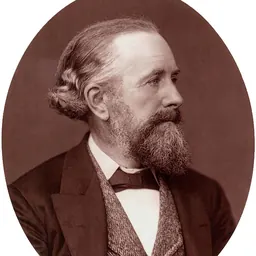
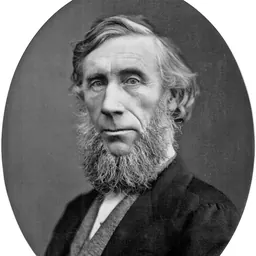


Related people
Same field, nearest in time
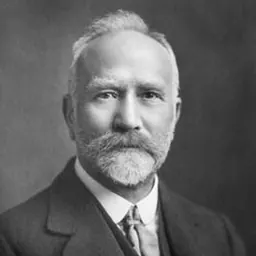
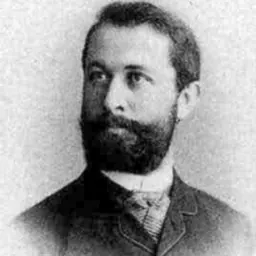

Contemporaries
People whose lives overlapped William Garnett's




Frequently asked questions
Who was William Garnett?
British academic (1850–1932)
When was William Garnett born?
William Garnett was born on 30 December 1850 in Portsea Island, Portsmouth.
When did William Garnett die?
William Garnett died on 1 November 1932 in Hampstead.
What was William Garnett's occupation?
William Garnett was a mathematician, physicist and pedagogue.
What nationality was William Garnett?
William Garnett was British.
Sources & further reading
· DBpedia: William Garnett (professor)
Cite this page
APA: Biography.guide. (2026). William Garnett. https://biography.guide/william-garnett-mathematician/
MLA: "William Garnett." Biography.guide, https://biography.guide/william-garnett-mathematician/.
Chicago: "William Garnett." Biography.guide. https://biography.guide/william-garnett-mathematician/.
Data last updated: 2026-09-20 · Spot an error? Report a correction.
Page generated 2026-09-27 05:33 UTC