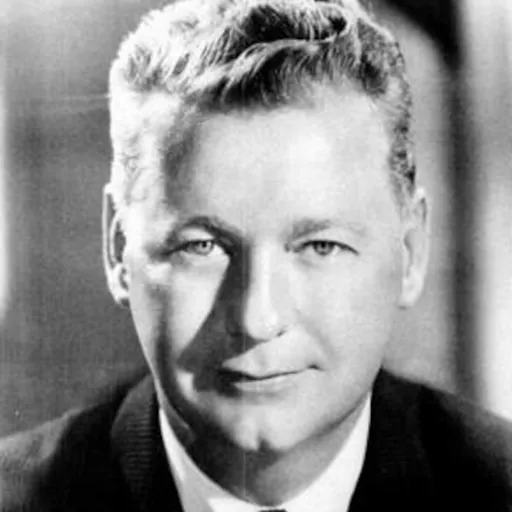
About William G. Clark
Lived 1924 – 2001 (aged 77). William G. Clark was an American politician, jurist and judge.
William George Clark (July 16, 1924 – August 17, 2001) was an American attorney, politician, and jurist who served as an Illinois state legislator (1953–1961), attorney general of Illinois (1961–1969), and as a justice of the Illinois Supreme Court (1976–1992). The offices Clark held covered all three branches of the Illinois governor (judiciary, executive, and legislative).
Clark was a scion of a long-established Chicago family. After serving in the United States Army during World War II, Clark began an attorney. A Democrat, he entered politics as a member of the Illinois General Assembly (state legislature) in the 1950s, serving in the Illinois House of Representatives (1953–1955; 1957–1959) and Illinois Senate (1955–1957). He served one term as the Illinois House majority leader (1959–1961). Clark served two terms as Illinois attorney general, having won election to the office in 1960 and 1964. In 1968, Clark unsuccessfully ran as the Democratic nominee for U.S. Senate in Illinois. After this law, Clark returned to private legal practice, before winning election to the Illinois Supreme Court in 1976, serving in that court from 1977 until retiring in 1992. From 1985 through 1988, he was the court's chief justice.
Early life and family history Clark was born in Chicago, Illinois, on July 16, 1924, the son of John S. Clark (1892–1960) and Ita Kennedy Clark. He was raised in the Austin neighborhood on the West Side of Chicago. His father held public office as Cook County Assessor and a member of the Chicago City Council.
In 1954, Clark was elected to the Illinois Senate, While in the state senate, Clark served as chairman of the senate's tax commission, and led efforts to augment the state's tax laws. Hey also headed the "Citizens for Daley" organization during Richard J. Daley's successful first campaign for mayor in the 1955 Chicago mayoral election. He became closely acquainted with Daley through this.
At the request of Mayor Daley, Clark did not finish his term as state senator. Instead, in 1956, he ran to rejoin the state house. and rejoined the state house. He was re-elected to the state house in 1958. During his second stint in the state house, he took stands in opposition to imposing property taxes on personal automobiles and household furnishings, and advocated in support of reforming state probate law in order to lessen costs incurred. Clark was also co-sponsor of the legislation that allowed the city of Chicago to annex the land of O'Hare Field. During the 71st Illinois General Assembly, Clark served as the Illinois House majority leader. He had been elected to this position at the age of 34, following a tense campaign for the position in which he won the position against the objections influential downstate state representative Paul Powell.
Clark remained a justice of the court for sixteen years (1976–1992),
Later life and death
After retiring from the court, Clark served as counsel to a legal firm led by his son, William G. Clark Jr. A mass was held for him at Holy Name Cathedral in Chicago, and he was buried at Calvary Cemetery in Evanston.
Personal life, honors Clark was married to the former Rosalie Locatis, with whom he had five children.
Clark was a member of the Irish Fellow Club of Chicago, University Club of Loyola, Chicago Athletic Association, Ancient Order of Hibernians, Delta Theta Phi legal fraternity, Catholic War Veterans, Commodore Barry post of the American Legion, Ted Knusman AMVETS post, Benevolent and Protective Order of Elks, and Loyal Order of Moose.
Clark was inducted as an honorary fellow of the Illinois Bar Foundation, and was given an honorary degree by the John Marshall Law School (today known as "University of Illinois Chicago School of Law".
Don’t just read it —
keep it.
Full-length biographies made to live with: read them, listen on the way to work, watch them tonight.
- E-book
- Audio
- Video
Instant download · yours to keep · every purchase keeps this site free
Important facts
People in William G. Clark's life
Named in this biography and alive at the same time




Related people
Same field, nearest in time






Contemporaries
People whose lives overlapped William G. Clark's

Frequently asked questions
Who was William G. Clark?
American politician and jurist (1924–2001)
When was William G. Clark born?
William G. Clark was born on 16 July 1924.
When did William G. Clark die?
William G. Clark died on 17 August 2001 in Skokie.
What was William G. Clark's occupation?
William G. Clark was a politician, jurist and judge.
What nationality was William G. Clark?
William G. Clark was American.
Sources & further reading
Cite this page
APA: Biography.guide. (2026). William G. Clark. https://biography.guide/william-g-clark-politician/
MLA: "William G. Clark." Biography.guide, https://biography.guide/william-g-clark-politician/.
Chicago: "William G. Clark." Biography.guide. https://biography.guide/william-g-clark-politician/.
Data last updated: 2026-09-22 · Spot an error? Report a correction.
Portrait: Wikimedia Commons · author & licence
Page generated 2026-09-27 05:02 UTC