
William Frederick Windham
Subject of a lunacy case;
About William Frederick Windham
Lived 1840 – 1866 (aged 25). William Frederick Windham was a large estate owner.
William Frederick Windham (9 August 18402 February 1866) was the son of William Howe Windham and the heir to Felbrigg Hall in the county of Norfolk, England. In 1861–62, he was the subject of a "lunacy" case after he married a woman of whom his uncle did not approve, causing his family to claim that he was incapable of managing his affairs. Windham won the case in a ruling that characterised him as eccentric rather than a lunatic.
The case was described in the British Journal of Psychiatry as "a significant event in psychiatric history" in the transition from "legal management in psychiatric illness and towards medical management".
A spendthrift, Windham frittered away his considerable fortune and, facing legal fees of £20,000 from the case, was forced to declare bankruptcy and sell Felbrigg Hall. He moved into a local hotel but continued his dissolute lifestyle and worked as a coach driver before dying at the age of 25.
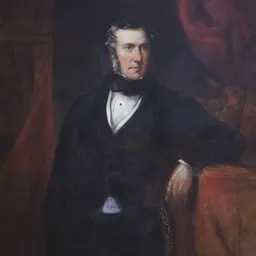
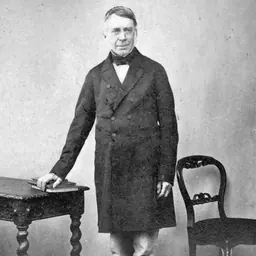
Early life and education William Frederick Windham. Oil on canvas. Felbrigg, Norfolk. William Windham was born at Erpingham, Norfolk, on 9 August 1840, the son of William Howe Windham and Lady Sophia Windham, née Hervey, daughter of Frederick Hervey, 1st Marquess of Bristol. The Hervey family had a reputation for eccentricity. Around 1850, he was the subject of a portrait which is located at Felbrigg Hall.
Windham was educated at private schools from the age of eight, from one of which he was ejected for foul language, before entering Eton College in 1853. He left in 1856 and spent periods at establishments intended to provide training to enter the law (1857) or the army (1858–59), but did not enter either profession.
Adulthood At the age of 21, on 9 August 1861, Windham inherited Felbrigg Hall and annual rents from the estate of £3,100 before the deduction of an annual £1,500 annuity to his mother and the costs of the estate's upkeep. This income would have increased in 1869 when he would have become entitled to the rents from the Hanworth estate, also in Norfolk.
On 30 August 1861, he married Anne (or Ann) Agnes Willoughby, also known as Rogers, in London. He settled £800 per annum on her, to be increased to £1,500 in 1869.
Lunacy case
In 1861–62, after his marriage to Anne Willoughby, of whom his uncle did not approve, Windham was the subject of a noted "lunacy" case in which it was argued that he was incapable of managing his own affairs. When the verdict eventually arrived, Windham was found to be of sound mind but left with legal fees of £20,000. The case caused a public sensation Contemporary press opinion was that the case threatened to set a dangerous precedent and become a threat to liberty if someone was declared a lunatic merely because they lived a dissolute or immoral life. The Lancet commented that "the error running through this lamentable case seems to be a blind or perverse confounding of vice with insanity". and was buried in the family vault at Felbrigg Hall. There is a wall plaque to his memory at St Margaret's Church, Felbrigg.
His case and life have been the subject of a number of later accounts. In 1923, the case was described in Charles Kingston's Famous Judges and Famous Trials. Also in 2012, his marriage was the subject of A Scandal at Felbrigg.
Don’t just read it —
keep it.
Full-length biographies made to live with: read them, listen on the way to work, watch them tonight.
- E-book
- Audio
- Video
Instant download · yours to keep · every purchase keeps this site free
Important facts
Family & relationships
People in William Frederick Windham's life
Named in this biography and alive at the same time

Related people
Same field, nearest in time


Contemporaries
People whose lives overlapped William Frederick Windham's
Frequently asked questions
Who was William Frederick Windham?
subject of a lunacy case; (1840-1866)
When was William Frederick Windham born?
William Frederick Windham was born on 9 August 1840 in Erpingham.
When did William Frederick Windham die?
William Frederick Windham died on 2 February 1866.
What was William Frederick Windham's occupation?
William Frederick Windham was a large estate owner.
Sources & further reading
· Wikipedia: William Frederick Windham
· DBpedia: William Frederick Windham
Cite this page
APA: Biography.guide. (2026). William Frederick Windham. https://biography.guide/william-frederick-windham/
MLA: "William Frederick Windham." Biography.guide, https://biography.guide/william-frederick-windham/.
Chicago: "William Frederick Windham." Biography.guide. https://biography.guide/william-frederick-windham/.
Data last updated: 2026-09-22 · Spot an error? Report a correction.
Page generated 2026-09-27 05:27 UTC