
About William Frederick Durand
Lived 1859 – 1958 (aged 99). William Frederick Durand was an American scientist.
William Frederick Durand (March 5, 1859 – August 9, 1958) was a United States naval officer and pioneer mechanical engineer. He contributed significantly to the development of aircraft propellers. He was the first civilian chair of the National Advisory Committee for Aeronautics, the forerunner of NASA.
A native of Connecticut, he was a member of the first graduating class of Birmingham High School in Derby, Connecticut (now Derby High School) in 1877. He graduated second in his class at the United States Naval Academy at Annapolis and received his Ph.D. from Lafayette College. He went on to teach at the Michigan State College, Cornell University and Stanford University, teaching that school's first course in aeronautics, the second offered by any school in the country (the first was offered by the Massachusetts Institute of Technology). He helped rebuild Stanford after the 1906 earthquake, and the department of Aeronautical and Astronautical Engineering building bears his name. A memorial there reads: "His first professional assignment in 1880 was on the , a full rigged wooden ship with auxiliary steam power. His last, 1942–46 was as chairman of the National Aeronautical Commission for the development of jet propulsion for aircraft." He died in 1958 at the age of 99.
Biography
Early life William Frederick Durand was born on March 5, 1859, in Beacon Falls, Connecticut. He was the fourth and youngest child and second son to William Leavenworth Durand and Ruth née Coe. When Durand was one year old his family moved to Derby, Connecticut. During high school Durand showed an aptitude in mathematics; he took extra curricular studies from the principal in analytic geometry and worked as a surveyor's assistant. Durand's brother strongly recommended that he take engineering at the United States Naval Academy. The Academy's entrance exams at the time tested for familiarization with machine tools, so Durand dropped attendance in the spring semester of high school in 1876 to work in the tool room of a factory in Ansonia, Connecticut. Durand was one of five to graduate in the first high school graduating class. Member of the United States National Academy of Sciences (1917) Fellow of the Royal Aeronautical Society (1918) Fellow of the American Academy of Arts and Sciences (1921) LL.D. (Honorary) University of California (1924) Daniel Guggenheim Medal (1935) Franklin Medal (1938) D.Eng. (Honorary) Worcester Polytechnic Institute (1938) American Society of Mechanical Engineering Medal (1945) Presidential Medal for Merit (1946)
Work Michigan State and Cornell While in Worcester Durand was approached by a member of the board of trustees of Michigan State College. Michigan State was looking for someone to create and head a mechanical engineering program. Durand accepted the position and resigned his commission with the US Navy effective 15 September 1887.
Durand worked at Michigan State in Lansing, Michigan, for four years, creating the Department of Mechanical Engineering.
In 1893, Durand published a paper mathematically describing a radial planimeter for averaging values plotted in polar coordinates. Originally a radial planimeter was of academic interest only, but ten years later clock driven recording instruments started being used. Durand created working device based on his theory. He patented the device and received royalties from a scientific instrument company making the devices until the patent expired.
World War I The United States declared war on Germany in April, 1917. Durand obtained a leave of absence from Stanford to devote working full-time at the NACA. The United States concentrated on developing training, reconnaissance, and bomber airplanes while relying on the British and French for fighters. The NACA directed the development of the Liberty aeronautical engine. Durand was appointed head of the Engineering Division. Both the NACA and the NRC had offices in the Munsey Trust Building in Washington separated by two floors. Durand climbed stairs or rode the elevator several times a day between the two.
On September 11, 1925, Durand learned over the radio that Coolidge had appointed him to the board. The board was tasked to study aeronautics in relation to national defense and advise the president on policy to develop aircraft in time of war. The board was composed of Morrow as chairman, U. S. Judge Arthur C. Denison as vice chairman, Durand as secretary, Hiram Bingham, James S. Parker, Carl Vinson, Maj. Gen. James G. Harbord (ret.), Rear Admiral Frank F. Fletcher (ret.), and Howard E. Coffin.
The first meeting of the board was held at the White House where Durand was chosen to be secretary of the board. After weeks of meetings receiving expert testimony and conferring the board submitted a report to the President recommending a near term development plan for military and naval aircraft. The report further recommended the creation of the offices of Assistant Secretary for Military and for Naval aircraft within the War and Navy Departments. Lesley tested seven propellers with a VE-7. Durand's wind tunnel model showed similar efficiency to Lesley's measurements, but lagged by 6% to 10% in thrust developed and power absorbed.
The final volume was published in 1936. Science Advisory Board Chairman Karl T. Compton appointed a Special Committee on Airships at the request of Secretary of the Navy Claude Swanson. Members of the committee were Robert A. Millikan and Theodore von Kármán of Caltech, William Hovgaard of M.I.T., Durand and Stephen Timoshenko of Stanford, Frank B. Jewett of Bell Telephone Laboratories, and Charles F. Kettering of General Motors. Durand was the chairman.
Ship stabilization Upon request of the United States Department of the Navy, the National Academy of Sciences established a committee chaired by Durand to investigate anti-rolling devices on ships. The ability to stabilize a ship such as an aircraft carrier would be extremely useful during the landing of airplanes. The committee established an experimental laboratory at the Brooklyn Navy Yard. A full-scale version of the system was tested in but exhibited control stability problems. Very promising results were beginning to appear when the outbreak of the Second World War interrupted further development as the Hamilton was called to active duty and the 5 ton model was put into storage.
World War II In March 1941 Chairman of the NACA Vannevar Bush asked the then 82-year-old Durand to head a committee to study and develop jet propulsion for aircraft. The committee was composed of members from General Electric, Westinghouse, and Allis-Chalmers. The committee agreed early that the three companies would work separately developing jet engines to promote diversity in design.
Chief of the Air Corp Henry H. Arnold obtained a Whittle jet engine from England which was turned over to the gas turbine division of GE in Lynn, Massachusetts, for test and copy. General Electric developed this into the J31. Durand witnessed a static test of the engine in Lynn, Massachusetts on July 13, 1942, alongside Sanford A. Moss, the engineer Durand had requested from General Electric for the development of turbosuperchargers during World War I. Moss had retired from GE but worked as a consultant on the jet engine. Durand and Moss spoke to each other of the early development of the turbosupercharger as the manager of the facility recorded their conversation. On October 2, 1941, Durand witnessed the first official flight of the J31 equipped Bell P-59 Airacomet at Muroc Army Air Field (today, Edwards Air Force Base). Westinghouse developed the J30 engine from this effort. Durand led the jet engine effort from April 2, 1941, to July 7, 1945, at which time Durand was 86 years old
Also beginning in early spring 1941 Durand chaired the Engineering Division of the National Research Council. Durand split his work days, mornings at the NACA, afternoons at the NRC. Durand was greatly helped by the NRC Division Executive Secretary William H. Kenerson of Brown University.
Don’t just read it —
keep it.
Full-length biographies made to live with: read them, listen on the way to work, watch them tonight.
- E-book
- Audio
- Video
Instant download · yours to keep · every purchase keeps this site free
Important facts
People in William Frederick Durand's life
Named in this biography and alive at the same time


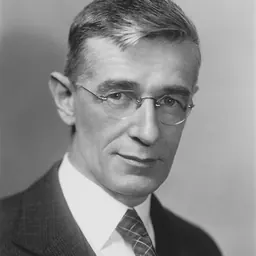
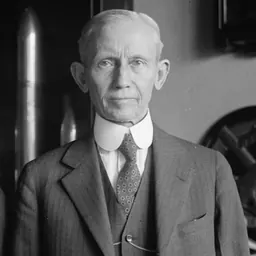


Related people
Same field, nearest in time



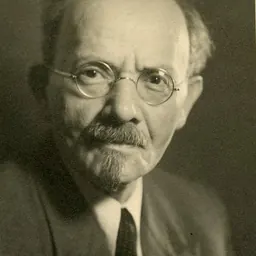
Contemporaries
People whose lives overlapped William Frederick Durand's

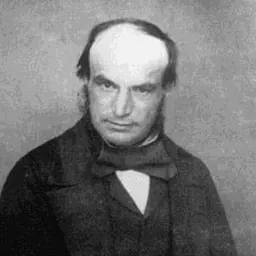
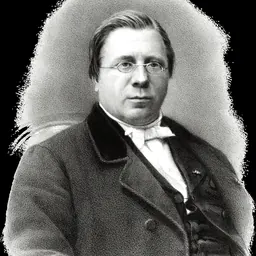
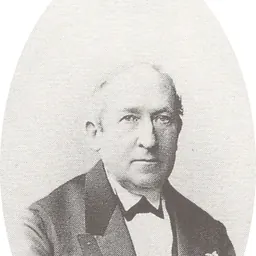


Frequently asked questions
Who was William Frederick Durand?
American naval officer and engineering instructor
When was William Frederick Durand born?
William Frederick Durand was born on 5 March 1859 in Beacon Falls.
When did William Frederick Durand die?
William Frederick Durand died on 9 August 1958 in Brooklyn.
What was William Frederick Durand's occupation?
William Frederick Durand was a scientist.
What nationality was William Frederick Durand?
William Frederick Durand was American.
Sources & further reading
· Wikipedia: William Frederick Durand
Cite this page
APA: Biography.guide. (2026). William Frederick Durand. https://biography.guide/william-frederick-durand/
MLA: "William Frederick Durand." Biography.guide, https://biography.guide/william-frederick-durand/.
Chicago: "William Frederick Durand." Biography.guide. https://biography.guide/william-frederick-durand/.
Data last updated: 2026-09-20 · Spot an error? Report a correction.
Page generated 2026-09-27 05:27 UTC