
About William Frederick Deacon
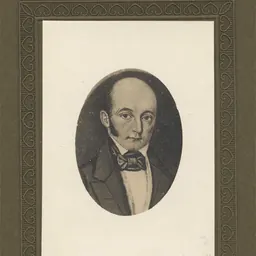
Lived 1799 – 1844 (aged 44–45). William Frederick Deacon was a British journalist and writer.
William Frederick Deacon (1799–1845) was an English author and journalist.
Early life William Frederick Deacon was the first child of six born to a fairly prosperous merchant of Tavistock Square, London. After attending Reading School, where his contemporary was Thomas Noon Talfourd, Deacon studied at St Catharine's College, Cambridge, where his studies seem to have been desultory. He left without a degree but while at college published a poem: "Hacho; or the Spell of St. Wilten", an imitation of Sir Walter Scott.
Recognition Encouraged by the positive reviews of his debut work, Deacon embarked on a prolific literary career. In 1820 and 1821 he was writing under a number of aliases for Gold and Northhouse's London Magazine and Monthly Critical and Dramatic Review, which had been set up as a rival to the more celebrated London Magazine published by Robert Baldwin, and whose other contributors included George Soane and Cornelius Webb. In October 1820 he added to his already taxing work load by editing, and almost wholly writing, a lively daily paper, The Déjeuné, or Companion for the Breakfast Table, extracts from which were frequently featured in Gold's. Unsurprisingly, this latter, rather demanding venture folded in December, and in June 1821 Gold's was itself bought out by the rival London Magazine. Deacon, exhausted by his literary efforts, retired for a while to a cottage in Llangadog, south Wales, from where he wrote to his mentor, Walter Scott, asking for advice on whether to continue as a writer. Scott advised him to pursue a steadier career outside literature, but Deacon ignored this advice and worked up some of the parodic material published in Gold's into his masterpiece, Warreniana, a compendious parodic survey of contemporary writing which imagines a world where the leading writers of the day become hirelings of the blacking (boot polish) manufacturer Robert Warren. The book was generally well received and there were several positive reviews. The Monthly Review praised the "considerable vivacity and success" of the volume, whilst the London Literary Gazette labelled it a "cleverly done" . His later books include November Nights or Tales for Winter Evenings (1826). He spent much of the last two decades of his relatively short life as a journalist for the True Sun.
Works Volume I and volume II.
Don’t just read it —
keep it.
Full-length biographies made to live with: read them, listen on the way to work, watch them tonight.
- E-book
- Audio
- Video
Instant download · yours to keep · every purchase keeps this site free
Important facts
People in William Frederick Deacon's life
Named in this biography and alive at the same time
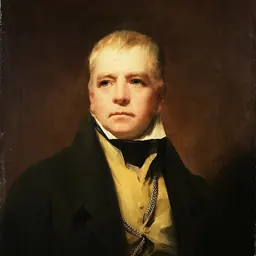

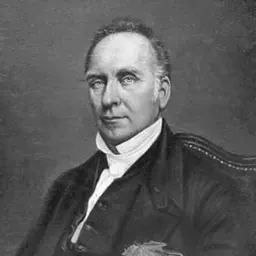


Related people
Same field, nearest in time
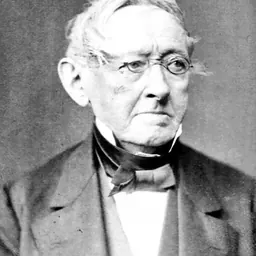

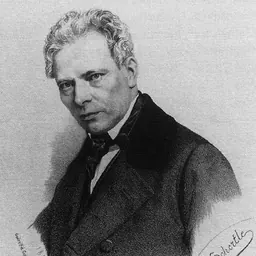
Contemporaries
People whose lives overlapped William Frederick Deacon's





Frequently asked questions
Who was William Frederick Deacon?
English author and journalist
When was William Frederick Deacon born?
William Frederick Deacon was born in 1799.
When did William Frederick Deacon die?
William Frederick Deacon died in 1844.
What was William Frederick Deacon's occupation?
William Frederick Deacon was a journalist and writer.
What nationality was William Frederick Deacon?
William Frederick Deacon was British.
Sources & further reading
· Wikipedia: William Frederick Deacon
· DBpedia: William Frederick Deacon
Cite this page
APA: Biography.guide. (2026). William Frederick Deacon. https://biography.guide/william-frederick-deacon/
MLA: "William Frederick Deacon." Biography.guide, https://biography.guide/william-frederick-deacon/.
Chicago: "William Frederick Deacon." Biography.guide. https://biography.guide/william-frederick-deacon/.
Data last updated: 2026-09-20 · Spot an error? Report a correction.
Page generated 2026-09-27 05:33 UTC