
About William Fogg Osgood
Lived 1864 – 1943 (aged 79). William Fogg Osgood was an American mathematician, known for Calculus of variations, Complex analysis and Conformal mapping.
William Fogg Osgood (March 10, 1864 – July 22, 1943) was an American mathematician.
Education and career
William Fogg Osgood was born in Boston on March 10, 1864. In 1886, he graduated from Harvard, where, after studying at the universities of Göttingen (1887–1889) and Erlangen (Ph.D., 1890), he was instructor (1890–1893), assistant professor (1893–1903), and thenceforth professor of mathematics. From 1918 to 1922, he was chairman of the department of mathematics at Harvard. He became professor emeritus in 1933. From 1934 to 1936, he was visiting professor of mathematics at Peking University.
From 1899 to 1902, he served as editor of the Annals of Mathematics, and in 1905–1906 was president of the American Mathematical Society, whose Transactions he edited in 1909–1910.
Contributions The works of Osgood dealt with complex analysis, in particular conformal mapping and uniformization of analytic functions, and calculus of variations. He was invited by Felix Klein to write an article on complex analysis in the Enzyklopädie der mathematischen Wissenschaften, which was later expanded in the book Lehrbuch der Funktionentheorie.
Osgood curves – Jordan curves with positive area – are named after Osgood, who published a paper proving their existence in 1903.
Besides his research on analysis, Osgood was also interested in mathematical physics and wrote on the theory of the gyroscope.
Awards and honors Osgood was elected to the American Academy of Arts and Sciences in 1899. In 1904, he was elected to the National Academy of Sciences. He was elected to the American Philosophical Society in 1915.
Personal life Osgood's cousin, Louise Osgood, was the mother of Bernard Koopman.
William Fogg Osgood died at his home in Belmont, Massachusetts on July 22, 1943.
Selected publications Osgood's books include:
Introduction to Infinite Series (Harvard University Press 1897; third edition, 1906) Lehrbuch der Funktionentheorie (Teubner, Berlin, 1907; second edition, 1912) First Course in Differential and Integral Calculus (1907; revised edition, 1909) (with W. C. Graustein) Plane and Solid Analytic Geometry (Macmillan, NY, 1921) Elementary Calculus (MacMillan, NY, 1921) Advanced Calculus (MacMillan, NY, 1925) Mechanics (MacMillan, NY, 1937)
Don’t just read it —
keep it.
Full-length biographies made to live with: read them, listen on the way to work, watch them tonight.
- E-book
- Audio
- Video
Instant download · yours to keep · every purchase keeps this site free
Important facts
People in William Fogg Osgood's life
Named in this biography and alive at the same time


Related people
Same field, nearest in time

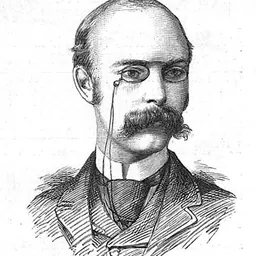
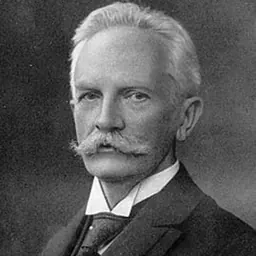
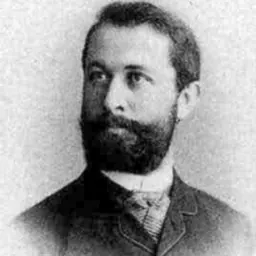
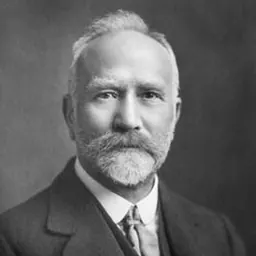
Contemporaries
People whose lives overlapped William Fogg Osgood's



Frequently asked questions
Who was William Fogg Osgood?
American mathematician (1864–1943)
When was William Fogg Osgood born?
William Fogg Osgood was born on 10 March 1864 in Boston.
When did William Fogg Osgood die?
William Fogg Osgood died on 22 July 1943 in Belmont.
What was William Fogg Osgood's occupation?
William Fogg Osgood was a mathematician.
What was William Fogg Osgood known for?
William Fogg Osgood was known for Calculus of variations, Complex analysis and Conformal mapping.
What nationality was William Fogg Osgood?
William Fogg Osgood was American.
Sources & further reading
· Wikipedia: William Fogg Osgood
· DBpedia: William Fogg Osgood
Cite this page
APA: Biography.guide. (2026). William Fogg Osgood. https://biography.guide/william-fogg-osgood/
MLA: "William Fogg Osgood." Biography.guide, https://biography.guide/william-fogg-osgood/.
Chicago: "William Fogg Osgood." Biography.guide. https://biography.guide/william-fogg-osgood/.
Data last updated: 2026-09-20 · Spot an error? Report a correction.
Page generated 2026-09-27 05:24 UTC