
About William Fleetwood
Lived 1525 – 1594 (aged 68–69). William Fleetwood was a lawyer, politician and jurist.
William Fleetwood (1535?1594) was an English lawyer and politician. He was Member of Parliament for Marlborough in 1558, Lancaster in 1559 and 1567, St Mawes in 1571, and for the City of London several times between 1572 and 1592, but his most significant position was as Recorder of London from 1571 to 1591. A lawyer of the Middle Temple, he was a Queen's Serjeant in 1592.
Early life
Fleetwood was born about 1535, the (possibly illegitimate) son of Robert Fleetwood, in turn the third son of William Fleetwood of Heskin in Lancashire. He was educated at Brasenose College, Oxford, which he left without a degree, and the Middle Temple, from where he was called to the bar. He became a freeman by patrimony of the -Worshipful Company of Merchant Taylors of the City of London on 21 June 1557; autumn reader of his inn on 21 May 1563; steward of the company's manor of Rushbrook in 1564, and counsel in their suit against the Clothworkers in 1565.
Career
In 1558, Fleetwood was elected to the House of Commons as one of the members for Marlborough, thus sitting in the last of Queen Mary's parliaments, and later was a member for Lancaster in the first two parliaments of Elizabeth's reign (1559 and 1563). In 1559 he was one of the commissioners to visit the dioceses of Oxford, Lincoln, Peterborough, Coventry, and Lichfield, and in 1568 he became "double reader in Lent" to the Middle Temple.
By the Earl of Leicester's influence, on 26 April 1571 Fleetwood was appointed as Recorder of London, an important position which he held for twenty years, and in the same year was made a commissioner to inquire into the customs, and elected as MP for St Mawes. On 8 May 1572 he was returned to Parliament for the City of London. As Recorder of London he was famous for rigorously and successfully enforcing the laws against vagrants, mass-priests, and other papists.
In 1576 Fleetwood was committed to the Fleet prison for a short time for breaking into the Portuguese ambassador's chapel under colour of the law against popish recusants. His own account of his action, dated 9 Nov, is printed in John Strype's Annals.
In 1580, he was made a Serjeant-at-law, and in 1583 a commissioner for the reformation of abuses in printing. In the same year he drafted a scheme for housing the poor and preventing the plague in London by maintaining open spaces. On 27 April 1586 he was promised, but did not receive, the post of Baron of the Exchequer. He was elected again as a member of parliament for London in 1584, 1586, and 1588. In 1588 he reported, with the solicitor-general, as to proceedings to be taken against the Jesuits, and in 1589 on the right of sanctuary for criminals attaching to St. Paul's churchyard. In 1591 the common council voted him a pension of 100 pounds, whereupon he resigned his office of Recorder.
He was made Queen's Serjeant in 1592 and died at his house in Noble Street, Aldersgate, on 28 February 1593/4. He had formerly lived at Bacon House, Foster Lane, and at his death owned an estate at Great Missenden, Buckinghamshire, where he was buried.
Private life Fleetwood was a hard-working judge, and was disappointed at not receiving higher preferment. His connection with Leicester was insisted on by Leicester's enemies, and he is called "Leicester's mad Recorder" in Leicester's Commonwealth, but he was at the same time assiduous in cultivating Lord Burghley's favour. He was noted for wit, and his eloquence is eulogised by Thomas Newton in his Encomia, 1589.
He married Mariana, daughter of John Barley of Kingsey, Buckinghamshire, by whom he left a family of six sons and two daughters. His elder son, Sir William, succeeded to Missenden, and a younger son, Sir Thomas, of the Middle Temple, was attorney to Henry Frederick, Prince of Wales. One daughter (Cordelia) married Sir David Foulis, 1st Baronet, and the other (Elizabeth) Sir Thomas Chaloner. In this final section of the work, the characters use verbatim (though in English) sections from the Reports of Edmund Plowden, to support the concept of queen regnant.
Don’t just read it —
keep it.
Full-length biographies made to live with: read them, listen on the way to work, watch them tonight.
- E-book
- Audio
- Video
Instant download · yours to keep · every purchase keeps this site free
Important facts
People in William Fleetwood's life
Named in this biography and alive at the same time

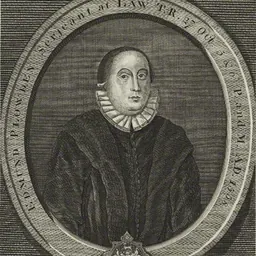
Related people
Same field, nearest in time
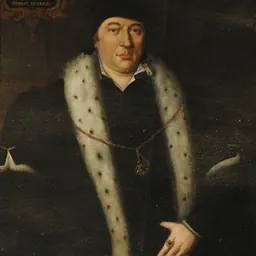


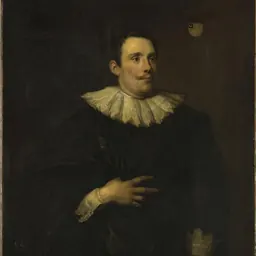


Contemporaries
People whose lives overlapped William Fleetwood's
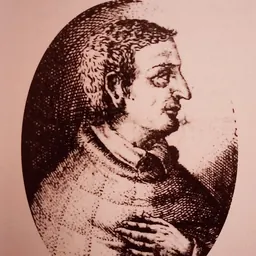
Frequently asked questions
Who was William Fleetwood?
English lawyer and politician; (1525-1594)
When was William Fleetwood born?
William Fleetwood was born in 1525.
When did William Fleetwood die?
William Fleetwood died in 1594 in London.
What was William Fleetwood's occupation?
William Fleetwood was a lawyer, politician and jurist.
Sources & further reading
· Wikipedia: William Fleetwood
· DBpedia: William Fleetwood (judge)
Cite this page
APA: Biography.guide. (2026). William Fleetwood. https://biography.guide/william-fleetwood-lawyer/
MLA: "William Fleetwood." Biography.guide, https://biography.guide/william-fleetwood-lawyer/.
Chicago: "William Fleetwood." Biography.guide. https://biography.guide/william-fleetwood-lawyer/.
Data last updated: 2026-09-20 · Spot an error? Report a correction.
Page generated 2026-09-27 05:10 UTC