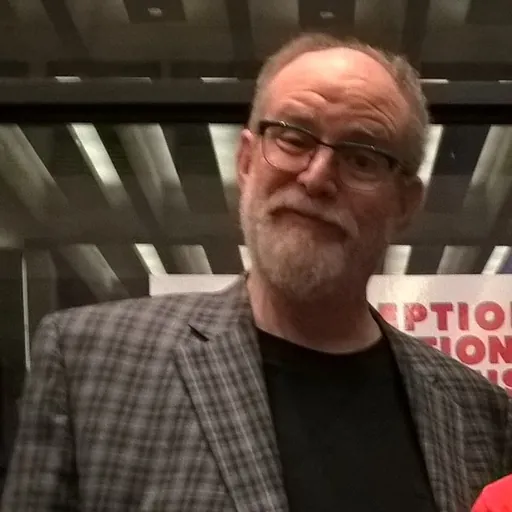
About William Finn
Lived 1952 – 2025 (aged 73). William Finn was an American composer, songwriter and lyricist.
William Alan Finn (February 28, 1952 – April 7, 2025) was an American composer, lyricist, and book writer for musical theatre. He was best known for Falsettos, for which he won the Tony Awards for Best Original Score and Best Book of a Musical (the latter shared with James Lapine); A New Brain (1998), a semi-autobiographical musical drawn from his own medical crisis; and The 25th Annual Putnam County Spelling Bee (2005), which received six Tony nominations and won two, for Best Book and Best Featured Actor. Although Falsettos is often described as his Broadway debut, Finn had first reached Broadway three years earlier as lyricist for the short-lived Dangerous Games (1989). Over his career Finn also received a Guggenheim Fellowship, two Los Angeles Drama Critics Circle Awards, and two Outer Critics Circle Awards, for Falsettoland (1991) and A New Brain (1999), and in 2024 was inducted into the American Theater Hall of Fame.
Finn's work frequently drew on his own life as a gay, Jewish man, and on themes of family, illness, and loss. He was a longtime faculty member of New York University's Graduate Musical Theatre Writing Program, serving as an adjunct assistant professor there from 1999 to 2019, and, from 2006, artistic head of the Musical Theatre Lab at the Barrington Stage Company in Pittsfield, Massachusetts, where he mentored a generation of younger musical theatre writers.
Early life
Finn was born in Boston, Massachusetts, on February 28, 1952, and grew up in Natick in a Conservative Jewish household. His Irish-sounding surname had been given to his Russian-Jewish grandfather at Ellis Island: the grandfather had been searching for a friend named Fein, and a confused immigration official registered him as Finn instead. His father, Jason Finn, worked for a paper products company; his mother, Barbara (Cohen) Finn, held a variety of jobs and at one point owned a consignment store. Finn was the eldest of three children, with two younger siblings, Michael and Nancy. Finn's parents divorced in the late 1980s.
In Hebrew school, Finn wrote his first play, in Hebrew, which he later said was "horrible." Around age eight, he played Nicely-Nicely Johnson in a summer-camp production of Guys and Dolls; he later recalled that because he was several years younger than the other leads, "they thought I was an adorable little tyke, which I was." He also appeared in a camp production of Hello, Dolly!, singing "Put on Your Sunday Clothes."
Finn attended Williams College, entering in 1970, where he began writing songs in earnest despite flunking the two basic harmony courses he took there. As a student, Finn wrote a freshman-year revue that caught the attention of upperclassman Charlie Rubin, who proposed they collaborate; the result was Sizzle (1971), which Finn later described as "a musical based on the Rosenbergs," with a coming-of-age plot that ended, unusually, with its protagonist's execution in the electric chair.
Career
Early New York career
After moving to New York, Finn worked as a script reader for the Public Theater and wrote history plays for junior-high-school reading programs, while also staging his own musical works in his apartment, drawing on performers including Mary Testa and Craig Lucas. Before his long association with Playwrights Horizons began, Finn contributed music and songs to Benny Leonard and the Brooklyn Bridge, a play by Paul Leavin staged at The Open Space in Soho in April 1977 and directed by Edward M. Cohen; the cast included Mary Testa and Alison Fraser, both of whom would go on to become frequent Finn collaborators.
In Trousers (1978–1985)
In Trousers began as a set of songs Finn performed with three women—Mary Testa, Kay Passick, and Alison Fraser—in his apartment, cooking dinner together as he wrote; this is why the finished piece has one man and three women as its only characters. Ira Weitzman and André Bishop were among those who saw these apartment performances; Bishop arranged to see one directly, at a staging where chairs had been set up as in a small theater and Finn's mother served the audience scrambled eggs, and later recalled being struck by "an overpowering talent."
A revised version of In Trousers opened at the Second Stage Theatre (then at 23 West 73rd Street) on February 22, 1981, playing 15 performances, directed by Judith Swift, with choreography by Marta Renzi and Sharon Kinney and orchestrations again by Michael Starobin; the cast featured Jay O. Sanders as Marvin, with Kate Dezina, Alaina Reed, and Karen Jablons as the three women in his life. Reviewing it for The New York Times, John Corry found the show's individual songs and performances stronger than its structure, admiring Dezina's "I'm Breaking Down"—a song later added to Falsettos—and Reed's rendition of "Set Those Sails" while judging Marvin himself insufficiently engaging to sustain the piece.
The show was rewritten again for its Off-Broadway revival at the Promenade Theatre, transferring from an earlier Los Angeles production, staged by Catalina Productions at the Callboard Theater in 1984, which received L.A. Weekly Theater Awards including for Finn's book, music, and lyrics. It opened in New York on March 26, 1985, directed, as in Los Angeles, by Matt Casella, with a cast including Tony Cummings, Catherine Cox, Sherry Hursey, and Kathy Garrick, orchestrations again by Michael Starobin. Miss Goldberg, Marvin's teacher and a holdover character from In Trousers, was played by Zora Rasmussen rather than Mary Testa, who had originated the role but was busy making her Broadway debut that same month in Barnum; this strained her relationship with Finn but the two friends reconciled about a year later. It then transferred to the Cheryl Crawford Theatre (later known as the Westside Theatre), where it played 128 performances from October 13, 1981, to January 31, 1982, for a total run of 340 performances. In Trousers and March of the Falsettos together won Finn a Guggenheim Fellowship in 1984.
Romance in Hard Times, Dangerous Games, and other 1980s work
Throughout much of the 1980s, Finn worked on a separate project, initially developed at Playwrights Horizons in 1982 as America Kicks Up Its Heels, with a book by his old Williams collaborator Charlie Rubin, set partly in the contemporary 1980s and partly during the Great Depression; it gave preview performances in March 1983, directed by Mary Kyte and Ben Levit and choreographed by Kyte, with an original cast including Patti LuPone and Dick Latessa, and Alix Korey as Zoe, a role she would continue to play across the show's later incarnations.
Finn spent the next several years reworking the piece with Joseph Papp and the Public Theater's New York Shakespeare Festival, through readings staged in 1986 (as Famous Moms of History), 1987 (as Topsy-Turvy, also known as A Better World), and 1988, by which point it had taken its final title, Romance in Hard Times; the setting was narrowed to a Depression-era soup kitchen with no contemporary framing story, and the cast shifted from predominantly white to predominantly Black. The cast included Lillias White as Hennie, Cleavant Derricks as Boris, and Korey again as Zoe, with Peggy Hewett reprising her role as Eleanor Roosevelt, which she had played since the original 1983 staging of America Kicks Up Its Heels.
A benefit concert of the show's songs was presented by Amas Musical Theatre on April 4, 2011, at the Baruch Performing Arts Center, as part of a gala marking the centennial of Amas founder Rosetta LeNoire and honoring director George C. Wolfe with the company's Rosie Award; White again headed the cast, alongside J. Bernard Calloway, Victor Trent Cook, Carmen Ruby Floyd, and Korey, among others, directed by Michael Bush with musical direction by Matt Castle. Finn revisited the show again in 2014, with a new book by Rachel Sheinkin, in a Barrington Stage Musical Theatre Lab workshop production directed by Joe Calarco, with Korey once more returning to the role. Dangerous Games closed after four performances at the Nederlander Theatre, but it was in fact Finn's actual Broadway debut, a distinction commonly and mistakenly given to Falsettos.
Falsettoland (1990)
The Marvin Trilogy's final installment, Falsettoland, premiered at Playwrights Horizons on June 28, 1990, again directed by Lapine, with Rupert, Bogardus, and Zien reprising their roles from March of the Falsettos, joined by Faith Prince as Trina and Danny Gerard as Jason; the show also introduced two new characters, Marvin's lesbian neighbors, the doctor Charlotte (Heather MacRae) and her partner, the caterer Cordelia (Janet Metz). The story follows Marvin, Trina, Jason, Mendel, and Whizzer as Whizzer becomes ill with a then-unnamed disease during the onset of the AIDS crisis. The production won the 1991 Outer Critics Circle Award for Outstanding New Off-Broadway Musical, the 1991 Lucille Lortel Award for Outstanding Musical, and the 1991 Drama Desk Award for Outstanding Lyrics. In January 1993, Mandy Patinkin succeeded Rupert in the role of Marvin for the remainder of the Broadway run.
In a 2016 interview, Finn described Falsettos as "the least autobiographical" of his works, saying its events were not drawn directly from his own life, while in the same conversation characterizing the trilogy's preoccupations with a gay, Jewish family reckoning with unconventional love, and later AIDS, as inseparable from his own life and community, saying he wrote it at a time when he could not write about anything else.
A revival directed by Lapine began previews at the Walter Kerr Theatre on September 29, 2016, and officially opened on October 27, 2016, starring Christian Borle, Andrew Rannells, Stephanie J. Block, Anthony Rosenthal, Tracie Thoms, Betsy Wolfe, and Brandon Uranowitz; it closed on January 8, 2017, after 84 performances, and received five Tony nominations, including Best Revival of a Musical. The production was later broadcast on PBS's Live from Lincoln Center, and a national tour of the revival, produced by Jordan Roth, launched in 2019, running through cities including San Francisco and Los Angeles.
A New Brain (1992–1998)
Finn was already unsteady on his feet when he collected his two Tony Awards in June 1992, and about three weeks later was rushed to the hospital suffering deteriorating vision, dizziness, and partial paralysis.
The musical premiered on June 18, 1998, at Lincoln Center Theater's Mitzi E. Newhouse Theater, after previews from May 14, and ran through October 11; directed by Daniele, with orchestrations by Michael Starobin, music direction and additional vocal arrangements by Ted Sperling, and vocal arrangements by Jason Robert Brown, the original cast starred Malcolm Gets as Gordon, Christopher Innvar as Roger, and Penny Fuller as Gordon's mother, Mimi, with Mary Testa, Kristin Chenoweth, and Chip Zien. (During the run, Gets was succeeded as Gordon by Lewis Cleale beginning August 4, 1998, who played the role through the production's October 11 closing, and Innvar was replaced as Roger by Norm Lewis, who is the performer heard in the role on the original cast recording.)
Among its subsequent stagings, notable productions include a 2001 production at Washington, D.C.'s Studio Theatre, directed by Serge Seiden, with Michael Rupert, who had originated the role of Marvin in March of the Falsettos two decades earlier, now playing Gordon; in 2015 at City Center Encores! Off-Center, directed by Lapine in a staging with substantial revisions, starring Jonathan Groff as Gordon, Ana Gasteyer as Mimi, Aaron Lazar as Roger, and Dan Fogler as Mr. Bungee; and in 2023 at Barrington Stage Company, in association with the Williamstown Theatre Festival, directed by Joe Calarco, with Testa now playing Mimi. Finn attended the 2023 opening night and was brought to his feet in applause by the audience after being pointed out from the stage; it proved to be the last time one of his musicals was staged in the Berkshires during his lifetime. Finn, who wrote only the music, finished 17 songs in eighteen months, calling the experience, freed from writing lyrics, "like a vacation." An invitation-only workshop directed by Lapine was staged in 1995, produced by the Shubert Organization with musical direction by John McDaniel, and featured a cast including Jessica Walter, Karen Ziemba, Norm Lewis, Chuck Cooper, and Kevin Chamberlin; the show later received a full production at Chicago's Pegasus Players in 2001.
Elegies: A Song Cycle (2002–2005)
In 2003, Finn premiered Elegies: A Song Cycle at Lincoln Center's Mitzi E. Newhouse Theater, running March 2 to April 19; directed by Daniele, it starred Christian Borle, Betty Buckley, Carolee Carmello, Keith Byron Kirk, and Michael Rupert in a set of songs mourning friends who had died, including from AIDS, and responding to the September 11 attacks. Finn had been developing the piece since at least August 2002, at the time uncertain whether he was writing songs or, as he put it, "remembrances of people"; as late as January 2003, weeks before opening, it was still being announced under the title Looking Up. Among the cycle's songs were "14 Dwight Ave., Natick, Massachusetts" and "When the Earth Stopped Turning," both written in memory of Finn's mother, and "Mark's All-Male Thanksgiving," which addressed the AIDS crisis. The piece was staged again by Barrington Stage Company at the Mahaiwe Performing Arts Center in Great Barrington, Massachusetts, from August 14 to 28, 2005, directed by Rob Ruggiero; the production introduced a new song, "I Do, I Do, I Do," written in tribute to the playwright James Goldman. It was also presented as a limited concert engagement in Beverly Hills, California, in March 2004, at the historic Canon Theatre—the venue's final production before its closure and demolition—and had its London premiere that November, directed by Jamie Lloyd and starring John Barrowman. A Philadelphia production followed in March 2005, presented by the Philadelphia Theatre Company and directed by Calarco, reuniting original cast members Rupert and Kirk alongside Sherri Edelen, Will Gartshore, and Donna Migliaccio.
The 25th Annual Putnam County Spelling Bee (2004–2008)
Finn's connection to the Barrington Stage Company began in 2002, when the company staged Falsettos, directed by Rob Ruggiero with Vadim Feichtner as musical director, in a converted school cafeteria in Sheffield, Massachusetts; Finn, who was renting a house about a half hour away and initially unfamiliar with the company, called Feichtner to ask how the production was going, and, upon learning Finn was in the area, the production's team invited him to a rehearsal. The idea for The 25th Annual Putnam County Spelling Bee originated separately, when the playwright Wendy Wasserstein, a close friend of Finn's for decades, sent him a video of C-R-E-P-U-S-C-U-L-E, an improvised spelling-bee show staged by Rebecca Feldman's company, The Farm, in which Wasserstein's nanny had performed. Finn contacted Feldman, and, deciding the concept needed a book writer, recruited his former NYU student Rachel Sheinkin, with whom he developed songs and a script over several months at his apartment. Second Stage Theatre then presented it Off-Broadway beginning in January 2005, with Lapine brought in for further development, before it transferred to Broadway at the Circle in the Square Theatre, opening May 2, 2005, after previews from April 15; the process took a year and a half from workshop to Broadway.
The Broadway production received six Tony Award nominations, including Best Musical, and won two: Best Book, for Sheinkin, and Best Featured Actor in a Musical, for cast member Dan Fogler. A distinctive feature of the show is that four real audience members are selected before each performance, through a brief interview process in the lobby, to join the six scripted spellers on stage and compete alongside them. The Broadway production ran until January 20, 2008. The show was revived at the Kennedy Center in 2024 and, that November, in a further Off-Broadway revival directed by Danny Mefford at New World Stages, staged shortly after Finn's death.
Spelling Bee proved to be Finn's most commercially successful work by far: over the sixteen years following its Broadway run, it was staged more than 7,000 times in professional, community, and school productions, according to Drew Cohen, president and chief executive of Music Theatre International, which licenses the show.
In 2006, Finn founded the Musical Theatre Lab at Barrington Stage, serving as its artistic head and mentoring younger writers. The Lab's 2008 season also included a workshop of the English-language My Scary Girl, adapted from a hit South Korean film, with a score by Will Aronson and a book by Kyoung-ae Kang and Mark St. Germain, to which Finn contributed additional lyrics. That same season, at Finn's invitation, Mary Testa and orchestrator Michael Starobin presented Sleepless Variations, a song cycle of their own devising directed by Michael Schiralli, whose set list mixed songs by writers including Björk, Rodgers and Hammerstein, Michael John LaChiusa, Ricky Ian Gordon, and William Bolcom with a new song by Finn.
The Lab also became known for an annual concert, Songs by Ridiculously Talented Composers and Lyricists You Probably Don't Know But Should, which began with the Lab's first season in 2006, closing out a summer that also included workshops of The Burnt Part Boys, Scott Frankel and Michael Korie's Meet Mister Future, and the song cycle Dogs That Wear Hats; the inaugural concert, September 1–2, was narrated by Finn and directed by Dana Harrel. Billed as "a reprise" of the first year's hit, a second edition followed August 31–September 1, 2007, directed by Michael Perreca, following that summer's Lab premiere of The Mysteries of Harris Burdick by Miller and Tysen. It became an annual fixture usually staged over Labor Day weekend at Barrington Stage, with Finn narrating the evening and explaining to the audience what made each young writer's song work, while their lyrics were projected on a screen behind the performers. its 2010 edition, billed as the fifth annual and featuring 30 writers, included Aronson, Lee, Sheinkin, and Redler, as well as Michael R. Jackson, who would later win the Pulitzer Prize for Drama and the Tony Award for Best Book of a Musical for A Strange Loop and who returned as a featured writer in the eighth annual edition, held August 30–31, 2013, at Barrington Stage. That December, the concert also had its first New York outing, presented at 54 Below and produced and directed by Nayfack; a second 54 Below edition followed the following March under her newly founded Musical Theatre Factory. The series continued at Barrington's Mainstage through at least 2017, and by 2018 had been absorbed into the venue's broader "Mr. Finn's Cabaret" series as a retrospective "Best of" program rather than a concert of new work.
Little Miss Sunshine (2011–2019)
With Lapine, Finn adapted the 2006 film Little Miss Sunshine into a musical, which premiered at the La Jolla Playhouse in February 2011 and, after substantial revision, opened Off-Broadway at Second Stage Theatre in November 2013; its cast included Stephanie J. Block and Will Swenson. Reviewing the La Jolla premiere, Charles Isherwood of The New York Times found the show "chipper and polished but oppressively cute." A production at the Arcola Theatre marked its European premiere in 2019.
The Royal Family of Broadway (2000–2018)
Finn's last original work to reach production, The Royal Family of Broadway, based on the 1927 play The Royal Family by George S. Kaufman and Edna Ferber, had a two-decade path to the stage. An initial industry reading, directed by Jerry Zaks, was held in December 1998, with Eileen Heckart as Fanny and Donna Murphy as her daughter Julia. A February 2000 workshop, again directed by Zaks with a book by Richard Greenberg, was led by Elaine Stritch as Fanny, alongside Carolee Carmello, Laura Benanti, and Tovah Feldshuh. With roughly 60 percent of the score written, Finn lost the adaptation rights to the underlying play, which the Kaufman estate granted to another party; the project was shelved until Finn regained the rights in August 2012, at which point Rachel Sheinkin took over the book. The reworked musical received its world premiere at Barrington Stage Company in June 2018, directed by John Rando, with a cast that included Harriet Harris, Laura Michelle Kelly, Will Swenson, and Chip Zien. Several of its songs were later folded into Elegies: A Song Cycle, indicating that at least some of that later piece's material had already been written by 2000, well before Finn began conceiving of it as a unified cycle in 2002. The revue was revived at Joe's Pub in November 2008 with a cast including Carmello, Testa, Malcolm Gets, and DeRosa. Two further concerts under related titles followed at the Kaufman Center's Merkin Concert Hall: More Infinite Joy: The Music of William Finn on March 29, 2004, featuring Betty Buckley, Stephen DeRosa, Raúl Esparza, Jesse Tyler Ferguson, and Janet Metz performing songs from Spelling Bee, Elegies, Falsettos, and A New Brain; and Even More Infinite Joy, presented by the Kaufman Center on October 31, 2005, and featuring Finn himself performing songs from Songs of Innocence and Experience.
A separate revue, Make Me a Song: The Music of William Finn, was conceived and directed by Rob Ruggiero.
Television, film, and other writing
Beginning in the early 1990s, Finn also wrote songs for a number of animated children's television specials and films, including the Ace Award-winning HBO special Ira Sleeps Over (1993), The Poky Little Puppy's First Christmas (1992), The Adventures of Tom Thumb and Thumbelina (2002, a direct-to-video Disney release written by Willard Carroll and directed by Glenn Chaika, with Finn contributing six songs to a voice cast including Elijah Wood, Jennifer Love Hewitt, and Peter Gallagher), and, with lyricist Ellen Fitzhugh and arranger Jason Robert Brown, two Brave Little Toaster films; in 2018, he wrote songs for the animated HBO special The Emperor's Newest Clothes, produced by Starburns Industries and directed by Simón Wilches-Castro, arranged by Danny Ursetti and Michael Starobin, with a voice cast including Alan Alda, Jeff Daniels, and Alison Pill. Around 1992, Finn also wrote songs for a planned animated Thumbelina at Paramount Pictures, a project that was ultimately canceled. The piece was first presented in August 2021 at the Rotunda Room in Belleville, Massachusetts, then again in July 2024 at Williams College, on the occasion of Finn's 50th class reunion. and Frank Rich noted that a single melodic phrase could recur across a score, fractured, to mark a turn from comedy toward loss. His songs favored emotionally direct, plainspoken statement over conventional rhyme schemes, and he described his own process as usually beginning with a lyric, sometimes a single line, from which the music followed; he cited the opening line of "My Father's a Homo" as one such starting point. He considered "Unlikely Lovers," from Falsettoland, an exception to this pattern, since it was the rare instance where he wrote the music before any lyric.
Much of Finn's work was directly autobiographical, drawing on his identity as a gay, Jewish man and on episodes from his own life, including his medical crisis in A New Brain and the deaths of friends and family in Elegies. Writing in 2006, the critic Edward Guthmann noted that The Washington Post had dubbed Finn "the composer laureate of loss," reflecting a body of work that returned repeatedly to family, belonging, sickness, healing, and loss alongside its gay and Jewish subject matter.
His recurring subject, across the Marvin trilogy in particular, was the redefinition of "family" beyond its traditional form, a theme he returned to explicitly in interviews throughout his career. Michael Rupert, who originated Marvin, recalled that Finn and Lapine were insistent the show not be understood as simply a "gay play," but rather the story of a flawed, loving family whose members happened, in part, to be gay. Finn acknowledged sharing traits with Marvin, the self-absorbed protagonist of the trilogy: he had found the character unbelievably charming while writing him, and only recognized "what a fart he was" once he saw him performed onstage. Several critics and scholars also noted his tendency to use Jewish characters and settings for comic effect even within otherwise serious material, a pattern examined at length in later academic writing about Falsettoland.
Finn's most significant creative partnership was with the director and writer James Lapine, who collaborated with him on shaping loosely structured songs and characters into coherent narratives on March of the Falsettos, Falsettoland, A New Brain, and Little Miss Sunshine; Finn referred to this editing process as "lapinizing."
Critical reception and legacy
General critical reception
Critics consistently praised Finn for a distinctive combination of verbally dense, intricate lyrics with melodies capable of shifting from comedy to heartbreak within a single song; reviewing Falsettos in 1992, Frank Rich wrote that the show's "heaven-sent gift" was making audiences believe love could persist beyond loss. André Bishop, the longtime Lincoln Center Theater producing artistic director who presented seven of Finn's shows beginning at Playwrights Horizons in the late 1970s, said after Finn's death that Finn had been thoroughly singular among composer-lyricists, and that beneath his reputation for witty, complicated wordplay lay real warmth and emotional generosity. Reflecting on the 2016 revival nearly 25 years later, Charles Isherwood wrote a personal essay describing how a scene of Whizzer's collapse unexpectedly returned him to what he called the "constant state of mortal anxiety" he had lived through as a gay man during the AIDS epidemic, arguing that the show's power lay in ambushing audiences with tragedy inside what otherwise plays as a conventional musical comedy. Finn himself later reflected that he had chosen the word "falsettos" because it described voices working outside their normal range, much as his characters lived outside the range of family life recognized in their era, and suggested that as the culture's definition of family broadened in subsequent decades, those same characters had come to seem unremarkable.
Later work and career arc
Finn's later work extended this candor into progressively darker territory: A New Brain and Elegies confronted illness, death, and mourning directly, and, writing in The New York Times in 2005, critic Jesse Green observed that as Finn's work had grown more somber, its audience had correspondingly narrowed.
Teaching and mentorship
Beyond his own shows, Finn's influence extended through two decades of teaching at NYU and through the Musical Theatre Lab at Barrington Stage Company, which he used to mentor younger musical theatre writers early in their careers.
Personal life
Finn was gay and Jewish, and both identities were central to his life and to his work, which repeatedly returned to gay and Jewish characters and experience. He was a member of Congregation Beit Simchat Torah, a synagogue in Greenwich Village serving New York's LGBTQ Jewish community, which later presented the New York premiere of his song cycle Songs of Innocence and Experience. Salvadore, a businessman, was the basis for the character Roger Delli-Bovi in A New Brain.
Finn lived for many years on the Upper West Side of Manhattan and later spent summers at a corner Victorian house in Pittsfield, Massachusetts, near Barrington Stage Company, painted a shade of wasabi green, which he and Salvadore nicknamed "Wasabi Gables," playing on Anne of Green Gables. That August, Barrington Stage Company held a benefit celebration of Finn's life and work, and dedicated its 2025 season to him.
English-language version at Barrington Stage Company; music by Will Aronson, book by Kyoung-ae Kang and Mark St. Germain; Finn contributed additional lyrics
Awards and honors
Year Award Category Work Result 1982 Los Angeles Drama Critics Circle Award Music and Lyrics March of the Falsettos 1984 Musical Score In Trousers 1991 Outer Critics Circle Award Outstanding New Off-Broadway Musical Falsettoland 1991 Lucille Lortel Award Outstanding Musical 1991 Drama Desk Award Outstanding Lyrics 1992 Tony Award Best Original Score Falsettos Best Book of a Musical 1999 Outer Critics Circle Award Outstanding New Off-Broadway Musical A New Brain 1999 Drama Desk Award Outstanding Musical Outstanding Music 2005 Tony Award Best Original Score The 25th Annual Putnam County Spelling Bee 2005 Drama Desk Award Outstanding Music Outstanding Lyrics
Finn also received several honors outside the competitive-award process: a Guggenheim Fellowship in playwriting (1984, for In Trousers and March of the Falsettos), Williams College's Bicentennial Medal (1998), an honorary degree from Williams (2006), the college's Kellogg Award (2009), and induction into the American Theater Hall of Fame (November 2024).
Don’t just read it —
keep it.
Full-length biographies made to live with: read them, listen on the way to work, watch them tonight.
- E-book
- Audio
- Video
Instant download · yours to keep · every purchase keeps this site free
Important facts
People in William Finn's life
Named in this biography and alive at the same time
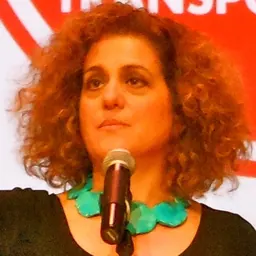


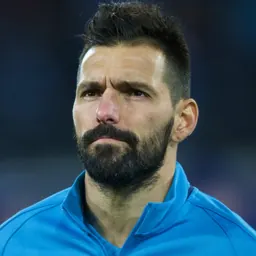

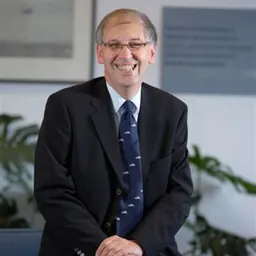
Related people
Same field, nearest in time




Contemporaries
People whose lives overlapped William Finn's


Frequently asked questions
Who was William Finn?
American composer
When was William Finn born?
William Finn was born on 28 February 1952 in Boston.
When did William Finn die?
William Finn died on 7 April 2025 in Bennington.
What was William Finn's occupation?
William Finn was a composer, songwriter and lyricist.
What nationality was William Finn?
William Finn was American.
Sources & further reading
Cite this page
APA: Biography.guide. (2026). William Finn. https://biography.guide/william-finn/
MLA: "William Finn." Biography.guide, https://biography.guide/william-finn/.
Chicago: "William Finn." Biography.guide. https://biography.guide/william-finn/.
Data last updated: 2026-09-21 · Spot an error? Report a correction.
Portrait: Wikimedia Commons · author & licence
Page generated 2026-09-27 04:59 UTC