
William Farrar Jr.
Virginia planter and politician (born c.1632)
About William Farrar Jr.
Lived 1627 – 1678 (aged 50–51).
William Farrar Jr. ( – January 1678) was a Virginia planter and politician who represented Henrico County in the House of Burgesses (1660–1676).
Early life The eldest son of William Farrar, who had married the widow Cecily (a/k/a Cisley) Jordan. His father had emigrated from England and became a planter and member of the Virginia Governor's Council, but died in 1637 when both his sons were boys. His parents also had another son (John) and daughter (Cicely Jr.) who survived infancy. The latter session became known as the "Long Assembly", because economic discontent due to very low tobacco prices after the English Civil War, as well as increased taxation and conflicts with displaced Native Americans led governors to not call for new elections colony-wide elections for fifteen years, which ended with elections in 1676 during Bacon's Rebellion).
Personal life
William Farrar married a woman named Mary, who bore three sons (William Farrar III, Thomas Farrar and John Farrar, all of whom would reach adulthood, marry and have children) and daughters Martha (who would marry sometime sub-sheriff of Charles City County Walter Shipley) and Cicely.
Farrar was probably buried on his land, which included a mainland section as well as Farrar's Island, but subsequent floods would have obliterated the gravesite. His younger brother John would be elected a burgess after suppression of Bacon's Rebellion, and may have supervised the education of his three nephews alongside the widow (who did not remarry), since John never married and bequeathed most of his property to this man's sons. Thomas, the middle son, may have been the most economically successful, owning 1444 acres in Henrico County in 1704, although his brother, the eldest son William Farrar III followed his father's and grandfather's career path into public service and politics. The youngest son, another John Farrar, married Temperance Brown Batte, widow of Thomas Batte and daughter of John Brown and his widow (the remarried) Sarah Woodson, who bequeathed land to her grandchildren. That John Farrar owned 600 acres in Henrico County in 1704 and was named administrator for his late wife Temperance in February 1721. This man's heir William Farrar IV would sell 686 acres of Farrar's Island to Thomas Randolph of Tuckahoe in 1727, within months of his uncle (this man's brother Thomas) selling another 550 acres of the island to the same man. Thomas Farrar had married Mary Ligon and was already living in the part of Henrico County known as St. James Parish which become Goochland County that year, and would later split into further counties).
In modern times, Farrar's Island is part of the Dutch Gap Conservation Area and Henricus Historical Park, both administered by Chesterfield County, Virginia.
Don’t just read it —
keep it.
Full-length biographies made to live with: read them, listen on the way to work, watch them tonight.
- E-book
- Audio
- Video
Instant download · yours to keep · every purchase keeps this site free
Important facts
People in William Farrar Jr.'s life
Named in this biography and alive at the same time
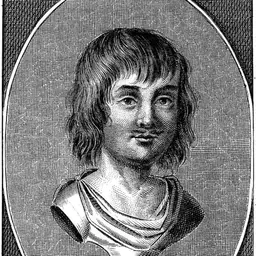
Contemporaries
People whose lives overlapped William Farrar Jr.'s






Frequently asked questions
Who was William Farrar Jr.?
Virginia planter and politician (born c.1632)
When was William Farrar Jr. born?
William Farrar Jr. was born in 1627.
When did William Farrar Jr. die?
William Farrar Jr. died in 1678.
Sources & further reading
· Wikipedia: William Farrar Jr.
Cite this page
APA: Biography.guide. (2026). William Farrar Jr.. https://biography.guide/william-farrar-jr/
MLA: "William Farrar Jr.." Biography.guide, https://biography.guide/william-farrar-jr/.
Chicago: "William Farrar Jr.." Biography.guide. https://biography.guide/william-farrar-jr/.
Data last updated: 2026-09-20 · Spot an error? Report a correction.
Page generated 2026-09-27 05:13 UTC