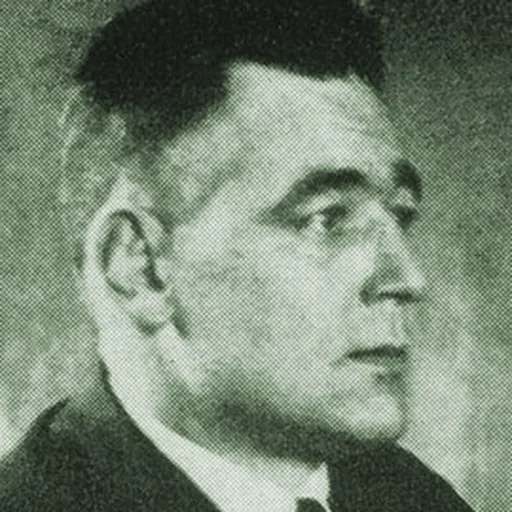
William F. Dunne
American trade unionist and political activist
About William F. Dunne
Lived 1887 – 1953 (aged 65). William F. Dunne was an American politician, editor and trade unionist.
William Francis Dunne (October 15, 1887 – September 23, 1953) was an American Marxist political activist, newspaper editor and trade unionist. He is best remembered as the editor of the radical Butte Bulletin around the turn of the 1920s, and as an editor of the Daily Worker, the daily newspaper of the Communist Party USA, from the middle-1920s through the 1930s. Dunne was a founding member of the Communist Labor Party of America which merged with the CPUSA, but was removed from the national leadership of the latter party in 1934 and expelled in 1946 on charges of factionalism.
Early life William F. Dunne, known to his friends as "Bill," was born October 15, 1887, in Kansas City, Missouri, the son of William Dunne, an Irish immigrant, and Adella (née Raymond) Dunne, a French-Canadian. Soon after his birth, his family moved to Minnesota, where his father was a railroad worker.
After graduating high school, Dunne attended the College of St. Thomas in St. Paul, a private, Roman Catholic institution. The Panic of 1907 forced Dunne to drop out and help support his family. Dunne went to work on the Northern Pacific Railroad as an electrician and joined the International Brotherhood of Electrical Workers (IBEW). Dunne later joined the United Brotherhood of Carpenters and Joiners of America. He wandered from job to job, traveling around the Pacific Northwest and working for railroads and once for a telephone company in Montana. Dunne joined the Socialist Party of America in 1910. Eventually, he made a home in Vancouver, British Columbia, Canada. He gave up boxing to become business agent for the Vancouver IBEW local.
In 1914, Dunne married Marguerite Walsh. The couple had one son, killed by an automobile in 1925.
Career Union organizer Dunne was promoted in the IBEW to vice president in charge of organizing for the Pacific District, which included Washington, Oregon, Idaho, and British Columbia. He served on a committee to draft British Columbia's first Workers' compensation law. When World War I broke out in Europe, Dunne saw it as an imperialist conspiracy to take over the world's economy. He vocally opposed Canadian involvement in the war. He also joined the left-wing McNamara-Mooney Defense Committee as its northwestern representative. These activities led to his expulsion from Canada as an undesirable alien in 1916.
After leaving Canada, Dunne settled in Butte, Montana. In August 1917, Dunne delivered the eulogy at the funeral service for IWW leader Frank Little, who was murdered in Butte.
Butte Bulletin
After the strike faded in September 1917, Dunne transformed the strike bulletin into a socialist weekly newspaper called the Butte Bulletin. Dunne set a radical left-wing editorial policy for the Bulletin. He published admiring editorials and political cartoons about the Bolshevik Revolution and reprinted reports from Russia by John Reed. The newsroom featured portraits of Karl Marx and Vladimir Lenin. Dunne's editorials regularly attacked the "insane system of capitalist production," infuriating conservatives.
In February 1918, the Montana legislature passed a series of bills designed to bolster the war effort and squelch opposition. Among these was a sedition act that made it a crime to speak, write, or publish anything "disloyal, profane, violent, scurrilous, contemptuous, slurring or abusive" about the U.S. government, soldiers, or symbols. The Montana Council of Defense, which had been established to coordinate county war efforts, took it upon itself to enforce the sedition act. Dunne was summoned for rounds of questioning by the Council from May 31 to June 2. On the heels of a national order that banned the establishment of any new newspapers, the council issued its own order banning any existing weeklies or monthlies from upgrading to dailies. Ostensibly, these measures were meant to conserve paper, but the council used them to try to silence Dunne. Dunne promptly defied the council and upgraded the Bulletin to a daily. For this infraction, Dunne faced another round of questioning by the council, after which Dunne wrote an editorial pointing out that the council had no legal standing. On September 13, 1918, soldiers raided the offices of the Butte Daily Bulletin searching for posters that Dunne had allegedly printed in support of a national strike. They found none, but they arrested Dunne anyway on the charge of carrying a concealed weapon without a permit. Upon this verdict, the legislature considered expelling Dunne but waited for him to appeal his case. Dunne won his appeal; the Montana Supreme Court acquitted him in May 1920 on the grounds of judicial error. The judge in the case had not allowed the defense to ask prospective jurors whether they could vote for acquittal if they should entertain a reasonable doubt that Dunne's editorial was "calculated to incite or inflame resistance" to the Montana state council of defense.
In February 1920, Dunne entered the race for mayor of Butte. Dunne's sedition trial had earned him popular local support, and he won the primary. The mayor and city council cited "irregularities," which they did not specify, and recounted the votes. They claimed to discover an error and declared Dunne's opponent the winner by a margin of 108 votes. Dunne announced that he would run as an independent in the election, and at the same time he demanded a recount. These actions cancelled each other out destroyed his chance of victory. Dunne ran for another term in the state legislature in the fall of 1920, but he lost his bid.
Communist Party The injustice and fraud that Dunne experienced pushed him to the radical left. He gave up hope that change could be effected within the system. In the fall of 1919, with the split of the Socialist Party into socialist and communist factions, Ella Reeve Bloor recruited Dunne to join the Communist Labor Party of America. Dunne joined nine other members of the Silver Bow County Socialist Party to found the Montana branch of the Communist Party, bringing his Butte local with him into the new organization. Dunne moved away from Montana after losing the 1920 legislative election.
Despite his long tenure, Dunne was always regarded as a bit of a loose cannon in the Communist movement, as historian Theodore Draper recounts:
"Unlike most of the other former Socialists, Dunne was never completely housebroken in the Communist movement. It seems that he tried to get to Moscow in 1921 by working his way across on a boat bound for Stettin, Germany [now part of Poland]. There he went on a spree with some shipmates, invited the attention of the German police, and never reached his destination. He returned to New York to add one more radical trade-unionist to the new Communist leadership." He was arrested when the gathering was raided by state and federal authorities for alleged violation of the Michigan state Criminal Syndicalism law. Released on bail, Dunne was never brought to trial on these charges. During the underground period of American communism, Dunne used the pseudonyms "Driscoll" and "Donovan."
At the end of 1921, when the underground CPA established its overground sibling, the Workers Party of America (WPA), Bill Dunne was elected one of three editors of the organization's weekly newspaper, The Worker. Dunne served as the "Labor Editor" of that paper.
Dunne was elected to the central executive committee of the WPA and its executive council in 1923 and was re-elected by the convention in 1924.
In 1923, Dunne was expelled from the American Federation of Labor for his communist political views and activity in organizing the so-called "left wing" of the labor movement through the Communist Party's trade union affiliate, the Trade Union Educational League. In 1934 he went so far as to author a polemic pamphlet for the Communist Party against his brothers and their comrades entitled Permanent Counter-Revolution: The Role of the Trotzkyites in the Minneapolis Strikes.
In 1937, Dunne returned to the Western United States as the organizer of Communist Party district 33, which included Idaho, Montana, Wyoming, and Utah. With the goal of creating a Popular front movement in the region, Dunne worked to build front groups controlled by the Communist Party that could attract non-party members. He also worked to place Communist Party members in leadership roles within unions and civic organizations.
In 1939, Dunne worked to oppose U.S. entry into World War II on behalf of the Communist Party until 1941 when Germany invaded the Soviet Union. Thereafter, the Communist Party changed its policy to support U.S. intervention in the war, and Dunne followed suit. He worked in the Navy shipyards, joined the merchant marine, and eventually took a job as a cook at a base in the Aleutian Islands.
In 1946, Dunne was accused of having promoted a leftist faction in the Communist Party and was expelled for "left sectarianism". He appealed the decision to Cominform, but was rejected.
In 1947, Dunne published a book, The Struggle Against Opportunism in the Labor Movement – For a Socialist United States, deriding the leadership of the CPUSA for abandoning the principles and methods of Marxism-Leninism in favor of collaborating with the Democratic Party.
Dunne spent his remaining years working in ethnic Irish politics.
Death and legacy Bill Dunne died on September 23, 1953. He was 65 years old at the time of his death.
Works William F. Dunne's Speech at the A.F. of L. Convention, Portland, 1923. Chicago: Trade Union Educational League, n.d. . Labor Herald Library #9. Worker Correspondents: What? When? Where? Why? How? Chicago: Daily Worker Publishing Co., n.d. . Little Red Library #4. The British Strike: Its Background, Its Lessons. Chicago: Daily Worker Publishing Co., n.d. . Our Heritage from 1776: A Working Class View of the First American Revolution. With Wolfe, Bertram D. and Jay Lovestone New York: The Workers School, n.d. The Threat to the Labor Movement: The Conspiracy against the Trade Unions: Efficiency Unions for the Bosses or Effective Unions for the Workers. n.c.: n.p., 1927. Gastonia, Citadel of the Class Struggle in the New South. New York: Workers Library Publishers, 1929. Permanent Counter-Revolution: The Role of the Trotzkyites in the Minneapolis Strikes. New York: Workers Library Publishers, 1934. The Great San Francisco General Strike: The Story of the West Coast Strike — The Bay Counties' General Strike and the Maritime Workers' Strike. New York: Workers Library Publishers, 1934. The Supreme Court's Challenge to Labor: The N.I.R.A. Decision a Signal for Intensified Attacks on the Workers. New York: Workers Library Publishers, 1935. Why Hearst Lies about Communism: Three Open Letters to William Randolph Hearst. New York: Workers Library Publishers, 1935. The Struggle against Opportunism in the Labor Movement: For a Socialist United States. New York: New York Communications Committee, 1947.
Footnotes
Don’t just read it —
keep it.
Full-length biographies made to live with: read them, listen on the way to work, watch them tonight.
- E-book
- Audio
- Video
Instant download · yours to keep · every purchase keeps this site free
Important facts
People in William F. Dunne's life
Named in this biography and alive at the same time
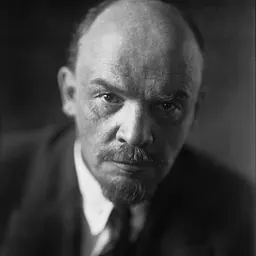






Related people
Same field, nearest in time




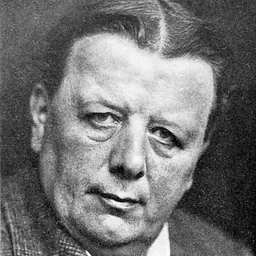
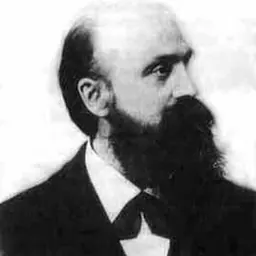
Contemporaries
People whose lives overlapped William F. Dunne's



Frequently asked questions
Who was William F. Dunne?
American trade unionist and political activist (1887–1953)
When was William F. Dunne born?
William F. Dunne was born on 15 October 1887 in Kansas City.
When did William F. Dunne die?
William F. Dunne died on 23 September 1953.
What was William F. Dunne's occupation?
William F. Dunne was a politician, editor and trade unionist.
What nationality was William F. Dunne?
William F. Dunne was American.
Sources & further reading
Cite this page
APA: Biography.guide. (2026). William F. Dunne. https://biography.guide/william-f-dunne/
MLA: "William F. Dunne." Biography.guide, https://biography.guide/william-f-dunne/.
Chicago: "William F. Dunne." Biography.guide. https://biography.guide/william-f-dunne/.
Data last updated: 2026-09-23 · Spot an error? Report a correction.
Portrait: Wikimedia Commons · author & licence
Page generated 2026-09-27 05:06 UTC