
About William Ernst Ehrich
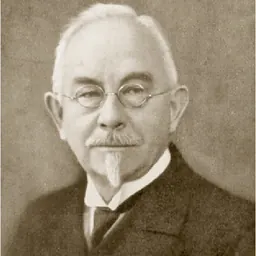
Lived 1897 – 1960 (aged 63). William Ernst Ehrich was an American military personnel and sculptor.
William Ernst Ehrich (12 July 1897 Königsberg, East Prussia – 10 August 1960 Rochester, New York) was an American sculptor, ceramicist, public monument artist, educator, and Work Progress Administration (WPA) supervisor.
Ehrich created decorative art work at the Buffalo Zoo and Buffalo City Hall. An exhibiting and award-winning regional artist, Ehrich later moved to Rochester to teach sculpture at the Memorial Art Gallery and the University of Rochester until his death in 1960.
Ehrich was noted by Harold Olmsted of the Albright-Knox Gallery’ for “attain[ing] a modest national reputation for his figurative sculpture…”.
Early life in Germany
William Ehrich was born in Königsberg, German Empire. Ehrich had three sisters and four brothers, of whom three became architects. Ehrich became a woodcarver’s apprentice and later studied sculpture and ceramics as a scholarship student at the State Art School (Kunst- und Gewerkschule). He studied there under the direction of Hermann Brachert, Franz Andreas Threyne, and Erich Schmidt-Kestner, In 1920, he returned to art school. During his studies at the State Art School, Ehrich was hired by his senior professors to execute works for them. In 1929 Ehrich collaborated with his professor, Erich Schmidt-Kestner to carve the reliefs around the entrances of the Hauptbahnhof (main train station) in Königsberg. The travertine reliefs above the doors representing travel by water, land, and air and arrival and departure were executed by Ehrich. The relief are considered incorrectly attributed to Schmidt-Kestner a claim corroborated in the German art history text by Mühlpfordt, Herbert M. (Holzner Verlag, Würzburg 1970, pp. 67, entry 3). He taught at the school from 1933 to 1938. In 1937, He sculpted a bronze tablet honoring Mayor Charles E. Roesch for the foyer of Buffalo City Hall in 1937. Also in 1937, she started commuting to Rochester to teach a one-day class at the Memorial Art Gallery.
In 1938, he was appointed project manager of the Buffalo Zoo expansion (1938–1939).
In 1950 Erlich created the Goethe monument for the City of Rochester in Highland Park. With John Rothwell Slater of the University of Rochester he also created the Eastman Centennial Monument located on the University campus.
Around 1950, Ehrich introduced copper enameling as a new class at the MAG. In 1954 he created a large sunflower from individually enameled copper petals, the University symbol, now mounted on the Hajm Gymnasium at the University.
In 1955, Ehrich received a new studio and sculpture classrooms at the University of Rochester after advancing his position and was experimenting with lost wax bronze casting. His new foundry was built at the university in 1959 and produced a number of works that year. Erlich studied for it in Munich with the sculptor Heinrich Kirchner.
Erlich continued to make commemorative bronze tablets.a. He would hand carve inverse text in plaster blanks in his own font to produce a desired inscription. Then a plaster positive was made from the carved blank for the bronze foundries.
William Ehrich died in 1960
Professional career
In addition to public works and works in private collections, Ehrich’s sculptures and drawings can be found in the permanent collections the Albright-Knox Gallery and Burchfield Penney Art Center. His works are also part of the MAG icollection.
In Ehrich’s first one-man show in New York City in 1941, his work had “favorable notices from critics” and his work was “likened … [to] Barlach”. This marks what would continue as the critical establishment of Ehrich’s “modest national reputation for his figurative sculpture under the considerable stylistic influence of Barlach”, although Ehrich himself did not in fact study with Barlach. Ehrich was known for his carved and polished fieldstone and abstract expressionist style.
Ehrich won awards while exhibiting his work throughout western and central New York and New York City, including ceramics, drawings and especially sculpture. This included a Patteran Prize in 1938 at the Albright-Knox Gallery. Ehrich also won The Menno Alexander Reeb Memorial Prize several times for sculpture and drawing.
Don’t just read it —
keep it.
Full-length biographies made to live with: read them, listen on the way to work, watch them tonight.
- E-book
- Audio
- Video
Instant download · yours to keep · every purchase keeps this site free
Important facts
People in William Ernst Ehrich's life
Named in this biography and alive at the same time

Related people
Same field, nearest in time





Contemporaries
People whose lives overlapped William Ernst Ehrich's


Frequently asked questions
Who was William Ernst Ehrich?
New York sculptor (1897–1960)
When was William Ernst Ehrich born?
William Ernst Ehrich was born on 12 July 1897.
When did William Ernst Ehrich die?
William Ernst Ehrich died on 10 August 1960.
What was William Ernst Ehrich's occupation?
William Ernst Ehrich was a military personnel and sculptor.
What nationality was William Ernst Ehrich?
William Ernst Ehrich was American.
Sources & further reading
· Wikipedia: William Ernst Ehrich
· DBpedia: William Ernst Ehrich
Cite this page
APA: Biography.guide. (2026). William Ernst Ehrich. https://biography.guide/william-ernst-ehrich/
MLA: "William Ernst Ehrich." Biography.guide, https://biography.guide/william-ernst-ehrich/.
Chicago: "William Ernst Ehrich." Biography.guide. https://biography.guide/william-ernst-ehrich/.
Data last updated: 2026-09-20 · Spot an error? Report a correction.
Page generated 2026-09-27 05:09 UTC