
About William Eggleston
Born 1939. William Eggleston is an American photographer.
William Eggleston (born July 27, 1939) is an American photographer. He is widely credited with increasing recognition of color photography as a legitimate artistic medium. Eggleston's books include William Eggleston's Guide and The Democratic Forest (1989).
Eggleston received a Guggenheim Fellowship in 1974, the Hasselblad Award in 1998, and Honorary Fellowship of the Royal Photographic Society in 2003.
Early life and education
William Eggleston was born in Memphis, Tennessee and raised in Sumner, Mississippi. His father was an engineer and his mother was the daughter of a prominent local judge. As a boy, Eggleston was introverted; he enjoyed playing the piano, drawing, and working with electronics. From an early age, he was also drawn to visual media and reportedly enjoyed buying postcards and cutting out pictures from magazines.
At the age of 15, Eggleston was sent to the boarding school, the Webb School. Eggleston later recalled few fond memories of the school, telling a reporter, "It had a kind of Spartan routine to 'build character'. I never knew what that was supposed to mean. It was so callous and dumb. It was the kind of place where it was considered effeminate to like music and painting." Eggleston was unusual among his peers in eschewing the traditional Southern male pursuits of hunting and sports, in favour of artistic pursuits and observation of the world. Nevertheless, Eggleston noted that he never felt like an outsider, telling a reported that " I never had the feeling that I didn't fit in...But probably I didn't."
Eggleston attended Vanderbilt University for a year, Delta State College for a semester, and the University of Mississippi for about five years, but did not complete any degree. Nonetheless, his interest in photography took root when a friend at Vanderbilt gave Eggleston a Leica camera. He was introduced to abstract expressionism at the university by visiting painter Tom Young.
Photographic work
1960s - discovering color photography Eggleston's early photographic efforts were inspired by the work of Swiss-born photographer Robert Frank, and by French photographer Henri Cartier-Bresson's book, The Decisive Moment. The dye-transfer process resulted in some of Eggleston's most striking and famous work, such as his 1973 photograph The Red Ceiling, of which Eggleston said, "The Red Ceiling is so powerful, that in fact, I've never seen it reproduced on the page to my satisfaction. When you look at the dye it is like red blood that's wet on the wall... A little red is usually enough, but to work with an entire red surface was a challenge." the tale that the Eggleston exhibition was MoMA's first exhibition of color photography is frequently repeated,and the 1976 show is regarded as a watershed moment in the history of photography, by marking "the acceptance of colour photography by the highest validating institution".
Some of his early series were not shown until the late 2000s. For example, The Nightclub Portraits (1973), a series of large black-and-white portraits in bars and clubs around Memphis was, for the most part, not shown until 2005. Lost and Found, part of Eggleston's Los Alamos series, is a body of photographs that have remained unseen for decades because until 2008 no one knew that they belonged to Walter Hopps. The works from this series chronicle road trips the artist took with Hopps, leaving from Memphis and traveling as far as the West Coast. Eggleston's Election Eve photographs were not editioned until 2011.
Experimentation with video In the 1970s, Eggleston also experimented with video, producing several hours of roughly edited footage Eggleston called Stranded in Canton. Writer Richard Woodward called this footage a "demented home movie", mixing tender shots of his children at home with shots of drunken parties, public urination, and a man biting off a chicken's head before a cheering crowd in New Orleans. Woodward suggested that the film is reflective of Eggleston's "fearless naturalism—a belief that by looking patiently at what others ignore or look away from, interesting things can be seen."
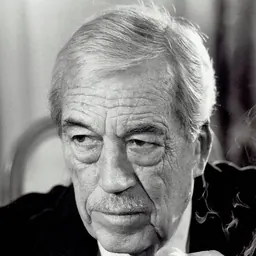
1980s Eggleston also worked with filmmakers, photographing the set of John Huston's film Annie (1982) and documenting the making of David Byrne's film True Stories (1986).
1990s - present
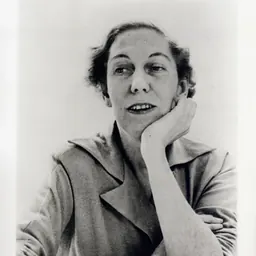
Eggleston's mature work is characterized by its ordinary subject matter. As Eudora Welty noted in her introduction to The Democratic Forest, an Eggleston photograph might include "old tires, Dr. Pepper machines, discarded air-conditioners, vending machines, empty and dirty Coca-Cola bottles, torn posters, power poles and power wires, street barricades, one-way signs, detour signs, No Parking signs, parking meters, and palm trees crowding the same curb."
Eudora Welty suggests that Eggleston sees the complexity and beauty of the mundane world: "The extraordinary, compelling, honest, beautiful and unsparing photographs all have to do with the quality of our lives in the everyday world: they succeed in showing us the grain of the present, like the cross-section of a tree... They focus on the mundane world. But no subject is fuller of implications than the mundane world!" Mark Holborn, in his introduction to Ancient and Modern, writes about the dark undercurrent of these mundane scenes as viewed through Eggleston's lens: "[Eggleston's] subjects are, on the surface, the ordinary inhabitants and environs of suburban Memphis and Mississippi—friends, family, barbecues, back yards, a tricycle and the clutter of the mundane. The normality of these subjects is deceptive, for behind the images there is a sense of lurking danger." Musik was made entirely on a 1980s Korg synthesiser, and recorded to floppy disks. The album was produced by Tom Lunt, and released on Secretly Canadian. In 2018, Áine O'Dwyer performed the music on a pipe organ at the Big Ears music festival in Knoxville, Tennessee.
He released two albums in total: Musik (Secretly Canadian, 2017) – produced by Tom Lunt 512 (Secretly Canadian, 2023) – produced by Tom Lunt
Art market In 2012, 39 of Eggleston's larger-format prints – instead of the original format of – sold for $5.9 million in an auction at Christie's to benefit the Eggleston Artistic Trust, an organisation dedicated to the preservation of the artist's work. The top lot, Untitled 1970, set a world auction record for a single print by the photographer at $578,000. New York art collector Jonathan Sobel subsequently filed a lawsuit in United States District Court for the Southern District of New York against Eggleston, alleging that the artist's decision to print and sell oversized versions of some of his famous images in an auction has diluted the rarity—and therefore the resale value—of the originals. The court dismissed the lawsuit. Big Star: Nothing Can Hurt Me (2013), directed by Drew DeNicola and Olivia Mori.
Movie and series appearances Great Balls of Fire (1989), directed by Jim McBride – Eggleston plays Jerry Lee Lewis's father, Elmo Lewis.
Fondation Cartier Paris Hayward Gallery London 2002 documenta 11 Kassel, Germany
Museum Ludwig Cologne, Germany Serralves Foundation Portugal Norwegian Museum of Contemporary Art Oslo, Norway Louisiana Museum of Modern Art Humlebaek, Denmark Albertina Vienna, Austria San Francisco Museum of Modern Art San Francisco, California Dallas Museum of Art Dallas, Texas 2008 William Eggleston: Democratic Camera, Photographs and Video 1961–2008 Whitney Museum of American Art New York 2012 New Dyes Rose Gallery Santa Monica, California
William Eggleston: Selections from the Wilson Centre for Photography Portland Art Museum Portland William Eggleston Portraits National Portrait Gallery London 2017
Foam Fotografiemuseum Amsterdam Amsterdam 2018 Metropolitan Museum of Art 2023 William Eggleston: Mystery of the Ordinary C/O Berlin Berlin, Germany 2024/2025 William Eggleston The Last Dyes David Zwirner Gallery Los Angeles Awards 1974: Guggenheim Fellowship 1978: Survey Grant, National Endowment for the Arts, for a survey of Mississippi cotton farms using photography and color video 1989: "54 Master Photographers of 1960-1979" Award, Photographic Society of Japan 1995: Distinguished Achievement Award, University of Memphis 1998: Hasselblad Award, Hasselblad Foundation, Gothenburg, Sweden
Collections Eggleston's work is held in the following public collections: Art Institute of Chicago, Chicago, IL J. Paul Getty Museum, Los Angeles, CA Museum of Modern Art, New York City Pier 24 Photography, San Francisco San Francisco Museum of Modern Art, San Francisco, CA Whitney Museum of American Art, New York City International Photography Hall of Fame, St.Louis, MO
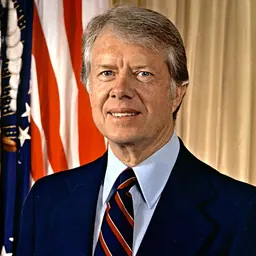
Publications William Eggleston's Guide. New York: Museum of Modern Art, 1976. . Wedgwood Blue (1979) Seven (1979) Election Eve. New York City: Caldecot Chubb, 1977. Artist book. Two volumes. Edition of five copies. (a portfolio of photographs taken around Plains, Georgia, the rural seat of Jimmy Carter before the 1976 presidential election) Göttingen: Steidl; 2017. . One volume. Morals of Vision. New York City: Caldecot Chubb, 1978. Artist book. Edition of fifteen copies. Göttingen: Steidl; 2018. . Flowers. New York City: Caldecot Chubb, 1978. Artist book. Edition of fifteen copies. Göttingen: Steidl; 2019. . Troubled Waters (1980) The Louisiana Project (1980) The Democratic Forest. London: Secker & Warburg, 1989. With an introduction by Eudora Welty and an afterword by Eggleston and Mark Holborn. New York: Doubleday, 1989. . With an introduction by Welty and an afterword by Eggleston and Mark Holborn. Expanded edition. Göttingen: Steidl, 2015. . Ten volume set, 1328 pages, 1010 photographs. The Democratic Forest: Selected Works. New York: David Zwirner; Göttingen: Steidl, 2016. . 68 photographs. William Eggleston's Graceland (1984) (a series of commissioned photographs of Elvis Presley's Graceland, depicting the singer's home as an airless, windowless tomb in custom-made bad taste) The Outlands. Steidl, 2021. The Outlands, Selected Works. David Zwirner Books, 2022. Mystery of the Ordinary. Steidl, 2023.
Don’t just read it —
keep it.
Full-length biographies made to live with: read them, listen on the way to work, watch them tonight.
- E-book
- Audio
- Video
Instant download · yours to keep · every purchase keeps this site free
Important facts
People in William Eggleston's life
Named in this biography and alive at the same time





Related people
Same field, nearest in time


Contemporaries
People whose lives overlapped William Eggleston's





Frequently asked questions
Who is William Eggleston?
American photographer (born 1939)
When was William Eggleston born?
William Eggleston was born on 27 July 1939 in Memphis.
What is William Eggleston's occupation?
William Eggleston is a photographer.
What nationality is William Eggleston?
William Eggleston is American.
Sources & further reading
· Wikipedia: William Eggleston
Cite this page
APA: Biography.guide. (2026). William Eggleston. https://biography.guide/william-eggleston/
MLA: "William Eggleston." Biography.guide, https://biography.guide/william-eggleston/.
Chicago: "William Eggleston." Biography.guide. https://biography.guide/william-eggleston/.
Data last updated: 2026-09-20 · Spot an error? Report a correction.
Page generated 2026-09-27 05:12 UTC