
About William Christenberry
Lived 1936 – 2016 (aged 80). William Christenberry was an American photographer, painter and sculptor.
William Andrew Christenberry Jr. (November 5, 1936 – November 28, 2016) was an American photographer, painter, sculptor, and teacher who drew inspiration from his childhood in Hale County, Alabama. Christenberry focused on architecture, abandoned structures, nature, and studied the psychology and effects of place and memory. He is best known for his haunting compositions of landscapes, signs, and abandoned buildings in his home state. Christenberry is also considered a pioneer of color photography as an art form; he was especially encouraged in the medium by the likes of Walker Evans and William Eggleston.
Early life William Andrew Christenberry Jr. was born on November 5, 1936, in Tuscaloosa, Alabama, the oldest of three children. His father tried to attend college but found it too expensive and spent his life working as a delivery man for a bakery and a salesman of dairy and insurance. His mother, Ruby Willard Smith, was a tax assessor and homemaker; she also created textiles which went on to become family heirlooms. Christenberry's grandparents on both sides operated farms in Hale County, which was where his childhood summers were spent. In 1944, Christenberry and his sister received a Brownie camera as a joint Christmas gift, a gift which would remain important throughout his career. He studied painting and sculpture at the University of Alabama in Tuscaloosa and earned his B.F.A. in 1958 and an M.F.A. in 1959. Christenberry was originally influenced by Abstract expressionism and his studies under Melville Price, but later found himself more attracted to the type of realism attributed to Jasper Johns and Robert Rauschenberg. After receiving his degrees Christenberry stayed at the University of Alabama for a few years as a teacher and in 1961 he encountered James Agee and Walker Evans' book, "Let Us Now Praise Famous Men", which brought inspiration to the work Christenberry was already completing – namely his direct-address photographs of Hale County which he had started taking in 1958 with his Brownie camera (from 1944). camera given to him as a child, while he would later move on to a large format view camera to capture more detail, he continued to use the Brownie throughout his career. On one occasion in 1973, Walker Evans, who had encouraged Christenberry to take his photographs seriously, accompanied him. This was Evans's first and only return to Hale County since 1936.
One of the results of this pilgrimage was a series of photographs documenting the decay of individual structures, which are photographed as nearly isolated objects. In 1974, Christenberry began translating some of these photographed buildings into detailed sculptures that accurately reproduce their state of decay and patina. Although detailed and properly proportioned, Christenberry did not refer to these creations as models, as he says they are not based on precise measurements, and he preferred that they be called sculptures. The bases for these sculptures often are set in soil taken from these places. On many of these trips, Christenberry collected old advertising signs and other found objects which inspired him. Some of these are incorporated into his work, while others hung in his studio.
Another series of works was provoked by an incident when, out of curiosity, he tried to attend a meeting of the Ku Klux Klan. Confronted at the door by a glaring masked figure, Christenberry fled. Although he destroyed his first two Klan paintings, the subject occupied him for many years, resulting in a dense multi-medium construction adjacent to his studio that came to be known as the "Klan Room," which was burgled mysteriously in 1979. Christenberry largely reconstructed the room, which is filled with paintings, found objects, drawings, sculptures, dioramas, and a series of fabric dolls of Klansmen in their hooded robes.
Christenberry was diagnosed with Alzheimer's disease in 2011. Christenberry died in Washington, D.C., on November 28, 2016, from complications of the disease. Whitney Museum of American Art, New York Smithsonian American Art Museum, Washington D.C. J. Paul Getty Museum, Los Angeles, CA
Don’t just read it —
keep it.
Full-length biographies made to live with: read them, listen on the way to work, watch them tonight.
- E-book
- Audio
- Video
Instant download · yours to keep · every purchase keeps this site free
Important facts
People in William Christenberry's life
Named in this biography and alive at the same time
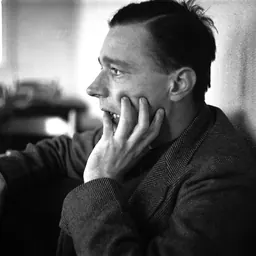


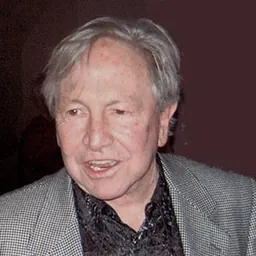


Related people
Same field, nearest in time

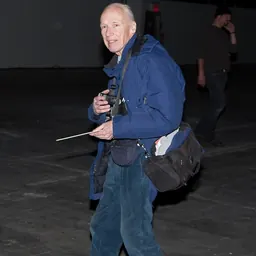

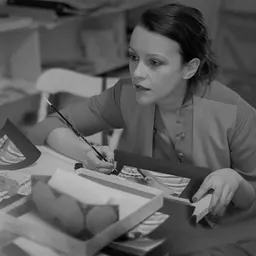
Contemporaries
People whose lives overlapped William Christenberry's




Frequently asked questions
Who was William Christenberry?
American artist (1936-2016)
When was William Christenberry born?
William Christenberry was born on 5 November 1936 in Tuscaloosa.
When did William Christenberry die?
William Christenberry died on 28 November 2016 in Washington, D.C..
What was William Christenberry's occupation?
William Christenberry was a photographer, painter and sculptor.
What nationality was William Christenberry?
William Christenberry was American.
Sources & further reading
· Wikipedia: William Christenberry
· DBpedia: William Christenberry
Cite this page
APA: Biography.guide. (2026). William Christenberry. https://biography.guide/william-christenberry/
MLA: "William Christenberry." Biography.guide, https://biography.guide/william-christenberry/.
Chicago: "William Christenberry." Biography.guide. https://biography.guide/william-christenberry/.
Data last updated: 2026-09-25 · Spot an error? Report a correction.
Page generated 2026-09-27 05:11 UTC