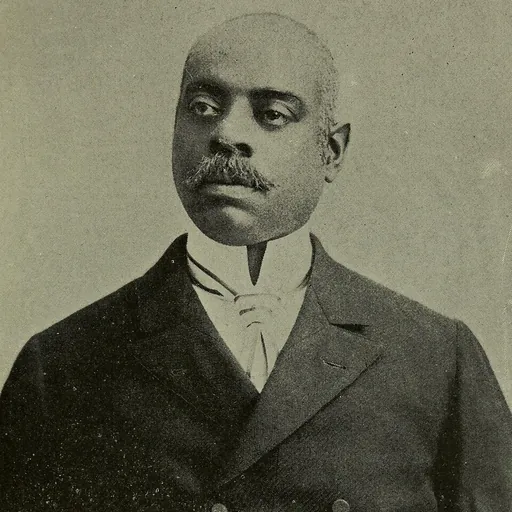
About William Calvin Chase
Lived 1854 – 1921 (aged 66). William Calvin Chase was an American lawyer and publisher, known for Newspaper editor and Newspaper publisher.
William Calvin Chase (February 2, 1854 – January 3, 1921) was an American lawyer and newspaper editor. A native of Washington, D.C., he attended Howard University. As well as gaining admission to the bar, he edited the Washington Bee, a weekly newspaper, from 1882 until his death.
Personal life and education
Chase was born to free African-American parents in Washington, D.C. on February 2, 1854. He had five siblings. His Maryland-born father, William H. Chase, an expert blacksmith, was shot and killed in his shop in 1863. Before his father's death, William attended the private school of John F. Cook. Thereafter, young Chase was raised by his Virginia-born mother, Lucinda Seaton. He was forced to leave school and began to sell newspapers, and he became known among many newspaper offices in Washington. At age eleven he was hired to sell hats for Holley & Brother in Methuen, Massachusetts, where he attended more school. He soon moved back to Washington and returned to work as a newsboy. He left public schools and entered the Howard University Model School, "B" class and then went to Howard University. A boy during the administration of Abraham Lincoln, he became a lifelong member of the Republican Party. but the pair eventually reconciled and became close friends. Chase then was a writer at the Argus edited by Charles N. Otey. When Otey retired, Chase was made editor and G. W. Graham the papers business manager. Graham changed its name to the Free Lance but Chase was chased out when the paper was sold to a group whom Chase had criticized.
As editor
Chase's 1882–1921 editorial leadership of the Washington Bee was "superb ... [and] eventually turned the Bee into one of the most influential African American newspapers in the country."
Libel conviction In 1895, Chase published information in The Washington Bee about the misdoings of C. H. J. Taylor, appointed by President Grover Cleveland as the recorder of deeds for Washington, D.C. Taylor sued Chase for libel. Chase argued that information about the character of a public officer was relevant to the public. When instructing the jury, the judge stated:
In addressing Chase's motives, the judge said that only the president could remove Taylor from his appointed office. The jury convicted Chase of libel, and the judge sentenced him to three months in jail. From jail, Chase petitioned Cleveland for executive clemency, which Cleveland denied.
Dispute with R. W. Thompson Chase was not always fond of R. W. Thompson. In 1909 Thompson founded the National Negro Press Association. In 1910, Chase attacked the organization, calling it "fake" and, writing in the Washington Bee, called Thompson "an editor without a paper", to which Thompson replied from the Indianapolis Freeman that Chase's Bee was "a paper without an editor". Thompson and Chase later reconciled. At the time of Thompson's death, Chase supported Thompson and his daughter in a bitter battle to remove Roscoe Conkling Bruce from his position as assistant superintendent of DC schools in charge of colored schools.
Later life As a 1912 Republican National Convention delegate, Chase helped renominate William Howard Taft as the Republican candidate for president. His support was not successful, as the Southern-born Democratic candidate Woodrow Wilson was elected. Wilson's entry into the White House marked the extension of Redeemer policy to Washington, D.C. and the federal government, with the new administration ruthlessly re-segregating Washington offices and other places of life and work. This harmed Chase's subscriber base, and the newspaper's financial troubles continued and worsened. The struggling newspaper survived him by little more than a year.
Further study A scholarly biography of Chase, Honey for Friends, Stings for Enemies, appeared in 1973. Published by the University of Pennsylvania Press, the examination of the fighting editor's life is an expanded Ph.D dissertation. A second dissertation, which also focuses closely on Chase's life, work, and standing in Washington, D.C., is Marya Annette McQuirter's Claiming the City: African Americans, Urbanization and Leisure in Washington, D.C., 1902–1954 (2000).
Don’t just read it —
keep it.
Full-length biographies made to live with: read them, listen on the way to work, watch them tonight.
- E-book
- Audio
- Video
Instant download · yours to keep · every purchase keeps this site free
Important facts
People in William Calvin Chase's life
Named in this biography and alive at the same time

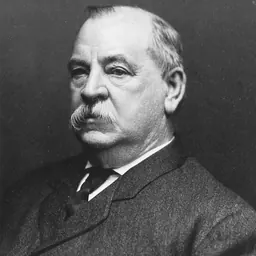

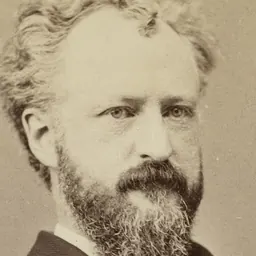
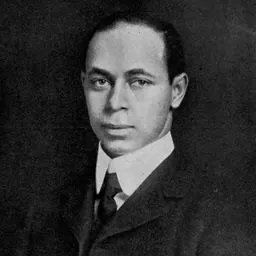
Related people
Same field, nearest in time


Contemporaries
People whose lives overlapped William Calvin Chase's



Frequently asked questions
Who was William Calvin Chase?
African American editor (1854–1921)
When was William Calvin Chase born?
William Calvin Chase was born on 2 February 1854 in Washington, D.C..
When did William Calvin Chase die?
William Calvin Chase died on 3 January 1921 in Washington, D.C..
What was William Calvin Chase's occupation?
William Calvin Chase was a lawyer and publisher.
What was William Calvin Chase known for?
William Calvin Chase was known for Newspaper editor and Newspaper publisher.
What nationality was William Calvin Chase?
William Calvin Chase was American.
Sources & further reading
· Wikipedia: William Calvin Chase
· DBpedia: William Calvin Chase
Cite this page
APA: Biography.guide. (2026). William Calvin Chase. https://biography.guide/william-calvin-chase/
MLA: "William Calvin Chase." Biography.guide, https://biography.guide/william-calvin-chase/.
Chicago: "William Calvin Chase." Biography.guide. https://biography.guide/william-calvin-chase/.
Data last updated: 2026-09-23 · Spot an error? Report a correction.
Portrait: Wikimedia Commons · author & licence
Page generated 2026-09-27 05:04 UTC