
About William Butler
Lived 1535 – 1618 (aged 82–83). William Butler was an English physician.
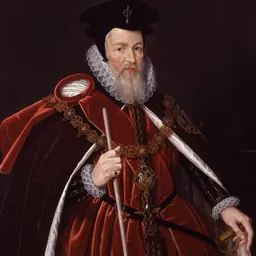
William Butler (1535–29 January 1618) was an English academic and physician. A Fellow of Clare College, Cambridge, he gained a reputation as an eccentric, a drunkard, and "the greatest physician of his time".
Life Butler was born at Ipswich in Suffolk and matriculated as a sizar at Peterhouse, Cambridge, in 1558 (BA 1561, MA 1564). In 1572 he was elected a Fellow of Clare Hall, Cambridge (later Clare College), and granted a licence to practise physic by the university. According to the 17th-century antiquary John Aubrey, he lived at an apothecary's shop at Cambridge with a servant, an "old mayd" named Nell whose job it was to fetch him home each night from a tavern.
He first came to notice, Aubrey writes, in 1603 when he revived a local clergyman from an opium-induced coma by the unorthodox method of slaughtering a cow and placing the senseless parson inside the "cowes warme belly". Although he had no medical degree, Butler was appointed a court physician by King James VI and I and attended the King's eldest son Henry Frederick, Prince of Wales, during his fatal illness of November 1612. Butler is believed to have been neither a Galenist nor a Paracelsian, but rather an "empiric" physician, who based his treatments not on any theory but purely on reasoning and experience. He opposed the common practice of blood-letting (phlebotomy or venesection) and the then novel use of dangerous chemical remedies. Some of Butler's papers are preserved at Clare College and show that he sometimes gave medical advice by letter. One begins with a reference to King Henry VIII:
"Moste honest and righte honorable Thomas, in the time of Graunde Harrye that vaste and Rumbleduste Gyaunte, that had better skill of a Butcher’s axe, then of a secretaries penne, (though he once confuted Luther) it fortuned that a Laureate poëte of his Courte fell Sike and departed his life." Another begins with a reference to a patient's drinking habits: "My lord, potton & Reelingworthe towne are not farre a sondere. The nearest way ys by tipplestall Grannge, whyche will brynge yowe to staggerington, and so to downfall in the vale."
Butler is credited with inventing a medicinal drink, Dr Butler’s purging ale, that was popular in 17th-century England. Shortly before his death he bequeathed £260 to Clare College for the purchase of "finest gold," from which a chalice and a paten were made. sware, He now a days did want of many a fare. They all conspire, and found, at last, that it Was skillfull Butler, who mens lives could knit. All most untried, they kill’d him, and yet fear’d That he from death by death would ghosts have rear’d.
Butler is buried in the chancel of the Church of St Mary the Great, Cambridge, where he has a monument and a Latin funerary plaque. He also has a pub sign in the City of London, The Old Doctor Butler's Head.
Don’t just read it —
keep it.
Full-length biographies made to live with: read them, listen on the way to work, watch them tonight.
- E-book
- Audio
- Video
Instant download · yours to keep · every purchase keeps this site free
Important facts
Related people
Same field, nearest in time


Contemporaries
People whose lives overlapped William Butler's





Frequently asked questions
Who was William Butler?
English physician, born 1535
When was William Butler born?
William Butler was born in 1535.
When did William Butler die?
William Butler died in 1618.
What was William Butler's occupation?
William Butler was a physician.
What nationality was William Butler?
William Butler was English.
Sources & further reading
· DBpedia: William Butler (physician)
Cite this page
APA: Biography.guide. (2026). William Butler. https://biography.guide/william-butler-physician/
MLA: "William Butler." Biography.guide, https://biography.guide/william-butler-physician/.
Chicago: "William Butler." Biography.guide. https://biography.guide/william-butler-physician/.
Data last updated: 2026-09-20 · Spot an error? Report a correction.
Page generated 2026-09-27 05:25 UTC