
About William Bowles
Lived 1780 – 1869 (aged 88–89). William Bowles was a British politician and naval officer.
Admiral of the Fleet Sir William Bowles, KCB (25 May 1780 – 2 July 1869) was a senior Royal Navy officer and Conservative Party politician. After serving as a junior officer in the French Revolutionary Wars, he became commanding officer of the sloop HMS Zebra and took part in the bombardment of Copenhagen in September 1807 during the Napoleonic Wars. As commanding officer of the fifth-rate HMS Medusa, he took part in operations off the north coast of Spain and led a naval brigade in a raid on Santoña.
Bowles went on to be Commander-in-Chief, South America Station before becoming Third Naval Lord in the Second Peel ministry as well as Member of Parliament (MP) for Launceston in Cornwall. He published a number of papers arguing for innovations in naval warfare and naval administration before becoming Commander-in-Chief, Portsmouth.
Early career
Born the son of William Bowles and Dinah Bowles (daughter of Admiral Sir Thomas Frankland), Bowles joined the Royal Navy in September 1796. He was assigned to the third-rate HMS Theseus in the Channel Squadron and saw action off Cádiz during the French Revolutionary Wars. Promoted to midshipman, he transferred to the third-rate HMS Captain in June 1797, to the corvette HMS Daphne in the North Sea early in 1798 and to the fifth-rate HMS Hydra in November 1800. He served on trade protection duties off the Río de la Plata during 1813. In a paper published in 1830 entitled Remarks on the Conduct of the Naval Administration of Great Britain he argued for the introduction of steam warships and the creation of a gunnery school: the latter ambition was realised with the formation of HMS Excellent later that year.
Senior command
Promoted to rear admiral on 23 November 1841, Bowles became Commander of the Squadron of Evolution (formerly known as the Experimental Squadron), with his flag in the first-rate HMS Caledonia in May 1843 and was instructed to test various innovations in naval warfare. following a by-election brought about by the resignation of Field Marshal Sir Henry Hardinge that same month. When the Government fell in July 1846 Bowles resigned from office. Bowles published a paper entitled Considerations on the Late Naval War in 1856 and, having been promoted to full admiral on 28 November 1857, he published another paper entitled A Recommendation for Abolishing the Rank of Commander in the Royal Navy in 1858. appointed Rear-Admiral of the United Kingdom on 23 September 1865 and appointed Vice-Admiral of the United Kingdom on 26 November 1866. Promoted to Admiral of the Fleet on 15 January 1869, he died at his home at 8 Hill Street, London on 2 July 1869.
Family On 9 August 1820, Bowles married The Hon. Frances Temple, daughter of the late Henry Temple, 2nd Viscount Palmerston and sister of the Henry John Temple, 3rd Viscount Palmerston who became Secretary at War and later Prime Minister; they had no children.
Don’t just read it —
keep it.
Full-length biographies made to live with: read them, listen on the way to work, watch them tonight.
- E-book
- Audio
- Video
Instant download · yours to keep · every purchase keeps this site free
Important facts
People in William Bowles's life
Named in this biography and alive at the same time
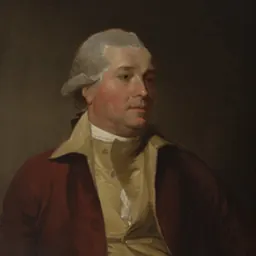

Related people
Same field, nearest in time
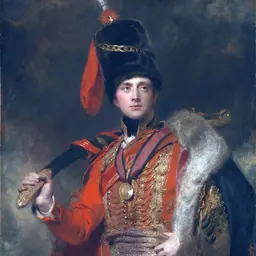


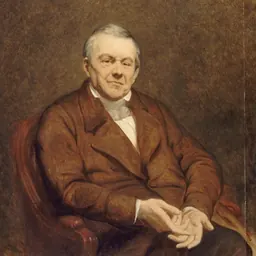

Contemporaries
People whose lives overlapped William Bowles's



Frequently asked questions
Who was William Bowles?
British politician (1780-1869)
When was William Bowles born?
William Bowles was born in 1780 in Gibraltar.
When did William Bowles die?
William Bowles died on 2 July 1869 in Cheltenham.
What was William Bowles's occupation?
William Bowles was a politician and naval officer.
What nationality was William Bowles?
William Bowles was British.
Sources & further reading
· DBpedia: William Bowles (Royal Navy officer)
Cite this page
APA: Biography.guide. (2026). William Bowles. https://biography.guide/william-bowles-politician/
MLA: "William Bowles." Biography.guide, https://biography.guide/william-bowles-politician/.
Chicago: "William Bowles." Biography.guide. https://biography.guide/william-bowles-politician/.
Data last updated: 2026-09-26 · Spot an error? Report a correction.
Page generated 2026-09-27 05:16 UTC