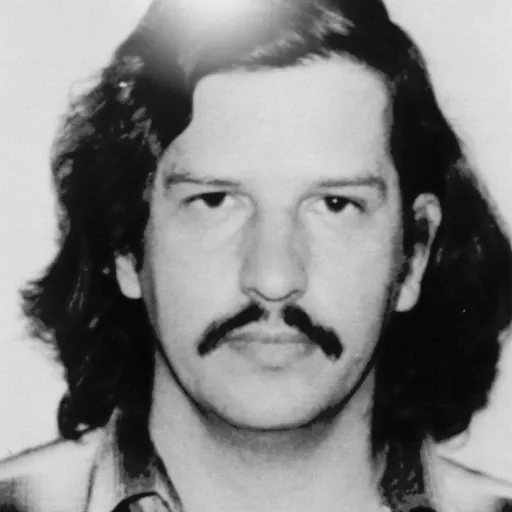
About William Bonin
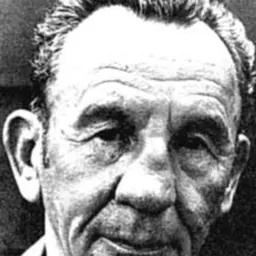
Lived 1947 – 1996 (aged 49). William Bonin was an American truck driver and serial killer.
William George Bonin (January 8, 1947 – February 23, 1996), also called the Freeway Killer and the Freeway Strangler, was an American serial killer and sex offender. Bonin attacked numerous boys and men between 1968 and 1980, in southern California, and briefly, Vietnam. He was convicted of 14 murders, but confessed to 21, and is a suspect in additional cases.
Born in Connecticut, Bonin moved to California as a child. He fought in the Vietnam War in 1967 and 1968. Returning to California, he was held at prison psychiatric facilities from 1969 to 1974. His first known murder was in May 1979.
Bonin's typical modus operandi in murdering was luring victims into his van by offering them sex, before binding, torturing, raping, then strangling or stabbing them. He would drive their bodies to other counties in California to obscure his movements, leaving them beside freeways. The crime scenes pointed to a gay male perpetrator, which led gay rights activists to put up a $50,000 reward for information leading to his conviction. Bonin was often aided in his murders by one of four known accomplices. Prosecutors accused Vernon Butts of partaking in twelve murders; he died before his trial.
Bonin was caught by police raping a boy in June 1980, which led to him being tied to the murders. His defense in his first trial argued that child abuse had made Bonin insane, and thus not responsible for his actions; the prosecution labeled him "the most arch-evil person who ever existed", but not legally insane. Bonin was convicted in both of his trials. He spent 14 years on death row, during which he spoke against capital punishment, and maintained his trial lawyer's insanity defense. In 1996, at San Quentin State Prison, Bonin became the first person to be executed via lethal injection in California.
Early life William George Bonin was born in Willimantic, Connecticut, on January 8, 1947, the second of three sons to Robert Leonard Bonin Sr., a World War II veteran, and Alice Dorothy Cote. Both parents were alcoholics. His father physically abused his wife and children, while his mother had severe mood swings, and frequented a bingo parlor while her sons remained unattended. His older brother, Robert Jr., received the brunt of their father's abuse. Bonin and his younger brother Paul were also left with Robert Jr., who belittled and beat them. Bonin and his brothers were actively raised Catholic. They attended St. Mary's Catholic School, where staff complained that Bonin was misbehaving, being truant, and aggressive toward other students. after returning home, he was reportedly more uncooperative toward his parents than before. The convent enforced harsh discipline by staff, with extreme assault being commonplace. Records indicate he was observed to function well in this structured environment. and once, sexually assaulted by an older boy in 1955. According to Bonin, in the latter incident the older boy approached Bonin for sex, and Bonin asked the boy to tie his hands behind his back, so he could feel "secure and less frightened". During this time at the convent, neither parent visited Bonin or his brother, and Bonin became worried they had died. There, Bonin attended Annie Vinton Elementary School, where he was bullied. Neighbors later failed to recollect his parents spending time with Bonin and Paul, and one worried neighbor provided them meals and clean clothes out of concern. In 1957 he was placed in a juvenile detention center for these and other petty crimes. While incarcerated, Bonin was molested by an adult counselor. refn Contemporary records from this juvenile detention center indicate Bonin also functioned well under the disciplinary structure of the detention home. after six months, Paul informed their mother of this and Bonin was forced to sleep in a separate bedroom. thumb Paul later recalled Bonin as a well-behaved teenager. Bonin attended North High School in Torrance, where he was an outcast. He was uncomfortable around his peers, and is not known to have any friends in this time. By his teenage years, Bonin had increasing pedophilic urges, but kept this a secret. His mother was aware, and this led to frequent arguments between them. Bonin rarely interacted with girls, but once reluctantly dated a girl named Linda to please his mother. After dropping out of high school in 1966, Bonin molested several neighborhood children. Eventually, she evicted him from their house, for undisclosed reasons. He is known to have risked his own life on one occasion while under enemy fire to save a wounded fellow airman. For this act, Bonin received a medal in recognition of his gallantry, among other medals. Bonin later claimed that he had consensual sex with women and men in Vietnam, and once, a man in Hong Kong. He also later confessed to sexually assaulting two soldiers under his command at gunpoint, around the 1968 Tet Offensive. Bonin served nearly three years, before receiving an honorable discharge on October 25, 1968, at age 21. Several family members noted differences in his behavior after his military service, although Bonin refused to explain these changes. In response to Bonin repeatedly asking him questions about homosexuality, Jones attempted to flee the vehicle, but failed. Bonin drove him to a shopping center, then handcuffed, beat, and raped him. He then left Jones at a park. Returning home, Jones told his mother what had happened, and she promptly reported Bonin to police.
On November 26, Bonin picked up 17-year-old hitchhiker John Treadwell of Torrance. Bonin began asking him about "fags" and homosexuality before accelerating the vehicle and producing a handgun. Bonin parked in a secluded area. He then raped Treadwell, and bludgeoned him with a tire iron. Bonin threatened to harm Treadwell if he notified authorities. In May, Bonin recounted to a probation officer his recent stressful separation and admitted his guilt in molesting male youths, although he also expressed desire to start a family and become a pilot upon his release. He said that his Vietnam service contributed to his criminal behavior, emphasizing his difficulties in seducing female partners since his return. He was evaluated to be "seriously lacking insight and responsibility" for crimes committed since his childhood. He pleaded guilty to molestation and forced oral copulation, and was sentenced to the Atascadero State Hospital in June 1969 as a mentally disordered sex offender considered amenable to treatment.
1969–1974: Incarceration in Atascadero and Vacaville
Bonin arrived at the Atascadero State Hospital on June 17, 1969. There, he was subjected to a battery of psychiatric examinations They also noted the psychological and emotional implications of Bonin's relationship with his mother, upon whom he remained emotionally dependent, in spite of her low opinion of him (she considered him "worthless as a human being"). He was classified as an extreme sociopath with a high probability of recidivistic behavior under periods of psychotic breakdown. He was regarded as "extremely disturbed" and his poor social skills with others were also viewed as hindering his own treatment. Despite this, Bonin willingly participated in experimental programs and was generally considered a non-violent, helpful, and conscientious patient by staff. One psychiatrist wrote of Bonin that he "wanted to straighten himself out, but doesn't know how to go about it."
In 1971, Bonin was sent to the California Medical Facility, having been declared unsuitable for further treatment due to repeated sexual engagement with inmates (two of whom were mentally challenged). For this, and irritating fellow patients, Bonin was beaten on several occasions. He was subject to further psychiatric examination, which dealt with hostility toward his father and older brother. It was noted that his sexual behaviors were compulsive in response to stress. He also sought to raise money for the family of another prisoner and reportedly applied willingly for at least one treatment program. and then became a truck driver for a Montebello delivery firm named Dependable Drive-Away in December 1974. He was fired from the job in February 1975 for wrecking a trailer. In March 1975, Bonin attended community college for two semesters. Around this time, he would pick up hitchhikers, intending to have sex with them.
While driving around on the night of September 8, 1975, he encountered 14-year-old David McVicker hitchhiking in Garden Grove. McVicker then phoned his mother, who reported the incident to Garden Grove police. He was charged with the rape and forcible oral copulation of a minor (McVicker), and attempted abduction (the second boy).
Bonin pleaded guilty to both charges and on December 31, 1975, he was sentenced to serve one to fifteen years at the California Men's Facility in San Luis Obispo. In 1977, Bonin was subject to further psychiatric examination. It was theorized that his sexual involvement with young boys stemmed from his mother's treatment of him. In prison, Bonin completed mathematics courses and training as a machinist in order to secure employment. He also showed significant progress in individual therapy sessions.
1978–1979: Life after release On November 1, 1978, Bonin moved to an apartment in the Kingswood Village complex, located approximately one mile from his parents' house. He soon became acquainted with his 43-year-old neighbor, Everett Scott Fraser. He would take trips to Anaheim with her and her kids.
In April 1979, Bonin's parole supervision concluded. Later, Bonin and his brother Paul relocated to Silverado, and ran a bar called the Alpine Inn. It was continually under scrutiny for noise violations. An incident occurred involving Bonin reportedly locking a 16-year-old runaway in a room of the building, threatening at knife-point to bury his body in the hills. Unable to obtain a permanent liquor license due to Bonin's criminal record, the business venture was short-lived. Later, Bonin purchased a Ford Econoline van while working at his older brother's plumbing business. and 18-year-old Gregory Matthews Miley. Raised in Norwalk, Butts was nine years old when his father died, and reportedly hailed from a broken home. Described by acquaintances as "shy and easily led" by others, Butts attempted suicide on three occasions prior to meeting Bonin. Butts frequently abused drugs and alcohol. By then, he was a vagrant, and had been imprisoned for burglary and arson. Butts claimed to have been both enamored with and terrified of Bonin, Bonin later recalled: "He had it all together. Everybody liked him; it was cool having him like me... made me feel real important. I never had no friends." Raised in Lakewood, California, Miley was severely neglected by his mother, who reportedly had a series of dysfunctional marriages.
1979–1980: Murders When Bonin murdered numerous men and boys in 1979 and 1980, he usually selected young male hitchhikers, schoolboys, and male prostitutes as his victims. Aged 12 to 19, they were predominantly Caucasian or Latino, slender, pale, and long-haired. He either enticed or forced them into his Ford van, where they were overpowered, then bound with handcuffs, wires, cords, or a mix of those. Bonin then sexually assaulted, beat, and tortured the victims, before typically killing them by strangling them with their own T-shirts and a tire iron. In order to minimize their chances of escaping from the van, Bonin removed the handles from the passenger-side front and rear doors. He stowed knives, pliers, ligatures, wire coat hangers, and similar instruments in his vehicle to restrain and torture them. They were usually killed inside his van, before their bodies were discarded near freeways. In an apparent effort to mislead investigators, Bonin often discarded them in counties far from their abduction. In a minimum of twelve of the murders, he was assisted by one or more of his four known accomplices. Bonin later confessed that he felt a sense of social belonging with his accomplices that never occurred with anyone else. (Bonin would later claim he murdered Markus Grabs in self-defense to Fraser.) He would also tell people, "this guy is giving good gays like us a bad name."
Throughout Bonin's trials, and years on death row, experts devoted much speculation and debate as to whether the root cause of his crimes lay in his upbringing. Bonin told both his defense attorneys and several people with whom he corresponded that Butts had been the actual ringleader behind the murders, and that he had simply been Butts' accomplice. the first such execution in California.
Appeals Bonin filed numerous appeals against his convictions and sentencing, citing issues such as jury prejudice, the potential of jury inflammation via listening to numerous victim impact statements (to which his defense counsel had offered to stipulate), and inadequate defense. For these appeals, Bonin hired new lawyers, who submitted contentions that Charvet had provided inadequate defense by failing to place sufficient emphasis upon Bonin's bipolar disorder and childhood sexual abuse, which would have "humanized" Bonin to the jury. Each successive appeal proved unsuccessful. Merit was given to Bonin's contention that his defense should have been allowed to stipulate to the testimony of the victims' parents, rather than their being allowed to identify photographs of their sons in both life and death at his trials. Despite this ruling, this finding was also deemed not to have affected the overall verdict.
1996: Execution
On February 23, 1996, near midnight before the following day, Bonin (age 49) was executed by lethal injection inside the gas chamber at San Quentin State Prison. He had been on death row for fourteen years, and was the first person ever executed by lethal injection in California. Governor Pete Wilson, who had rejected a submitted plea for clemency from Bonin's attorneys three days before the execution, He also said that he thought the death penalty is wrong. He denied responsibility for his actions, saying that he had no control over them.
At 6 p.m. on the 23rd, Bonin was moved from his cell to a death-watch cell, where he ordered his last meal. His last hours were spent with five people he had chosen, including his attorney and chaplain. His attorney later said that he had not detected any remorse in Bonin then. Around one hour prior to the scheduled execution, the Supreme Court refused to hear his final plea to overturn his death sentence, deciding that his attorneys had given him adequate representation. The Court of Appeals ruled that his attorneys should not have waited until the last minute to submit arguments for overturning or postponing the execution. They also rejected Bonin's claim that he had a right to choose between the gas chamber and lethal injection for the execution method. and was executed at midnight.
Bonin was pronounced dead at 12:13 a.m on February 24. The execution passed without complications. Three weeks after his execution, authorities discovered that his mother had exploited an administrative error to receive Bonin's social security disability payments, which he had gotten since 1972 for his mental illness, and should have terminated upon his 1982 imprisonment. His mother used the payments—about $79,424—for her house bills.
David McVicker, who witnessed Bonin's execution, was traumatized by his experiences with Bonin. He had nightmares, He later advocated for Miley and Munro to remain incarcerated. Munro was sentenced to 15 years to life for the murder of Wells in 1981. He has repeatedly appealed the sentence, claiming he had not known Bonin was the Freeway Killer until after Wells' murder, and that he had been tricked into accepting a plea bargain whereby he pleaded guilty to murder. He is incarcerated at Mule Creek State Prison. Miley was sentenced to a term of 25 years to life for the first-degree murder of Miranda in 1982. He was later sentenced to a concurrent term of 25 years to life for the abduction and murder of Macabe. In 2016, Miley died from being attacked by another inmate at Mule Creek State Prison. Pugh was sentenced to six years in prison for the voluntary manslaughter of Harry Turner in 1982.
Media depictions Besides Bonin's own Doing Time, his murder spree has been covered in many books: Angel of Darkness (1991) by Dennis McDougal, William Bonin (2015) by Jack Rosewood, and Without Redemption (2022) by Michael Butler and Vonda Pelto.
It has also been covered in multiple TV documentaries, including episodes of History Channel's Infamous Murders in 2001, Sky Mix's World's Most Evil Killers in 2021, and A&E's I Survived A Serial Killer in 2022. Investigation Discovery broadcast the documentary The Freeway Killer in 2014, and the American ABC News released a six-part documentary titled City of Angels, City of Death in 2021.
The film Freeway Killer was released by Image Entertainment in 2010. This film is directly based upon the murders committed by Bonin and his accomplices. The film cast Scott Anthony Leet as Bonin and Dusty Sorg as Butts.
Don’t just read it —
keep it.
Full-length biographies made to live with: read them, listen on the way to work, watch them tonight.
- E-book
- Audio
- Video
Instant download · yours to keep · every purchase keeps this site free
Important facts
People in William Bonin's life
Named in this biography and alive at the same time





Related people
Same field, nearest in time


Contemporaries
People whose lives overlapped William Bonin's


Frequently asked questions
Who was William Bonin?
American serial killer (1947–1996)
When was William Bonin born?
William Bonin was born on 8 January 1947 in Willimantic.
When did William Bonin die?
William Bonin died on 23 February 1996 in San Quentin Rehabilitation Center.
What was William Bonin's occupation?
William Bonin was a truck driver and serial killer.
What nationality was William Bonin?
William Bonin was American.
Sources & further reading
Cite this page
APA: Biography.guide. (2026). William Bonin. https://biography.guide/william-bonin/
MLA: "William Bonin." Biography.guide, https://biography.guide/william-bonin/.
Chicago: "William Bonin." Biography.guide. https://biography.guide/william-bonin/.
Data last updated: 2026-09-23 · Spot an error? Report a correction.
Portrait: Wikimedia Commons · author & licence
Page generated 2026-09-27 05:06 UTC