
William Bell Dinsmoor
American architectural historian and professor
About William Bell Dinsmoor
Lived 1886 – 1973 (aged 86). William Bell Dinsmoor was an American anthropologist, archaeologist, architect, university teacher and art historian.
William Bell Dinsmoor Sr. (July 29, 1886 – July 2, 1973) was an American architectural historian of classical Greece and a Columbia University professor of art and archaeology. During the years in Athens, he wrote his magnum opus, a rewritten edition of the Architecture of Ancient Greece by William James Anderson (1844–1900) and Richard Phené Spiers (1838–1916); it first appeared in 1927 and would go to three editions and be a mainstay for the teaching of Greek architecture through the twentieth century. Dinsmoor was elected to the American Philosophical Society in 1933. In 1934, following the resignation of S. Butler Murray, the Department of Fine Arts at Columbia was reorganized, and Dinsmoor became chairman. He held this position until 1955. During the mid-1930s, Dinsmoor engaged in a celebrated debate on the configuration of the three phases of the Parthenon with the eminent Acropolis scholar Wilhelm Dörpfeld. In 1935, he was named professor of archaeology at Columbia University. Between 1936 and 1946, he was president of the Archaeological Institute of America. During World War II, President Franklin Delano Roosevelt appointed Dinsmoor chair of the Committee for the Protection of Cultural Treasures in War Areas. Dinsmoor was elected to the American Academy of Arts and Sciences in 1944. For much of his career he taught at the American School of Classical Studies in Athens. He retired from Columbia University in 1963. In 1969, he was awarded the gold medal for his archaeological achievements by the Archaeological Institute of America. He died of a stroke while in Athens on July 2, 1973.
Legacy Dinsmoor's full bibliography is collected in the journal Hesperia.
Dinsmoor is best known for two major works. The first of these is his complete rewriting of The Architecture of Ancient Greece (1927). Although Dinsmoor always allowed much credit for the work to Anderson and Spiers, the revision of the book was essentially a unique accomplishment. The second book is The Archons of Athens in the Hellenistic Age (1931), which attempted to assign absolute dates to the eponymous archons of Hellenistic Athens. The book is fundamental for Athenian chronology.
His son, William Bell Dinsmoor Jr., was also a classical architectural historian.
Don’t just read it —
keep it.
Full-length biographies made to live with: read them, listen on the way to work, watch them tonight.
- E-book
- Audio
- Video
Instant download · yours to keep · every purchase keeps this site free
Important facts
Family & relationships
People in William Bell Dinsmoor's life
Named in this biography and alive at the same time

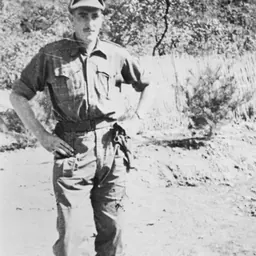



Related people
Same field, nearest in time
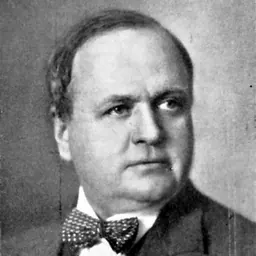

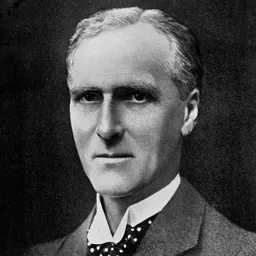
Contemporaries
People whose lives overlapped William Bell Dinsmoor's
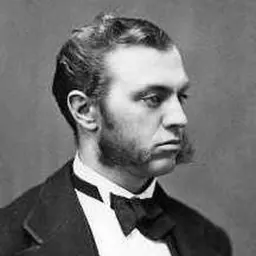





Frequently asked questions
Who was William Bell Dinsmoor?
American architectural historian and professor (1886–1973)
When was William Bell Dinsmoor born?
William Bell Dinsmoor was born on 29 July 1886 in Windham.
When did William Bell Dinsmoor die?
William Bell Dinsmoor died on 2 July 1973 in Athens.
What was William Bell Dinsmoor's occupation?
William Bell Dinsmoor was an anthropologist, archaeologist, architect, university teacher and art historian.
What nationality was William Bell Dinsmoor?
William Bell Dinsmoor was American.
Sources & further reading
· Wikipedia: William Bell Dinsmoor
· DBpedia: William Bell Dinsmoor
Cite this page
APA: Biography.guide. (2026). William Bell Dinsmoor. https://biography.guide/william-bell-dinsmoor/
MLA: "William Bell Dinsmoor." Biography.guide, https://biography.guide/william-bell-dinsmoor/.
Chicago: "William Bell Dinsmoor." Biography.guide. https://biography.guide/william-bell-dinsmoor/.
Data last updated: 2026-09-20 · Spot an error? Report a correction.
Page generated 2026-09-27 05:21 UTC