
About William Allingham
Lived 1824 – 1889 (aged 65). William Allingham was an Irish and British poet and writer.
William Allingham (19 March 1824 – 18 November 1889) was an Irish poet, diarist and editor. He wrote several volumes of lyric verse, and his poem "The Faeries" was much anthologised. But he is better known for his posthumously published Diary, in which he records his lively encounters with Tennyson, Carlyle and other writers and artists. His wife, Helen Allingham, was a well-known artist, watercolourist and illustrator.
Biography William Allingham was born on 19 March 1824 in Ballyshannon, a small town in the south of County Donegal in Ulster in the north of Ireland, which is now in the Republic of Ireland. He was the son of William Allingham, the manager of a local bank who was of English descent. His younger brothers and sisters were Catherine (born 1826), John (born 1827), Jane (born 1829), Edward (born 1831, and lived only a few months) and a still-born brother (born 1833). During his childhood, his parents moved twice within the town, where the boy enjoyed the country sights and gardens, learned to paint and listened to his mother's piano-playing. When he was nine, his mother died.
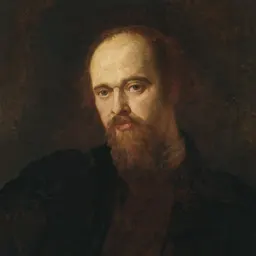
Early broadsheet version of Allingham's "Adieu to Ballyshannon" He was educated at the Royal Belfast Academical Institution until the age of 14, when he obtained a post in the custom-house of his native town, and held several similar posts in Ireland and England until 1870. During this period were published his Poems (1850; which included his well-known poem, "The Fairies") and Day and Night Songs (1855; illustrated by Dante Gabriel Rossetti and others). Rossetti's Letters to Allingham (1854–1870), edited by Birkbeck Hill, were published in 1897. Laurence Bloomfield in Ireland, his most ambitious, though not his most successful work, a narrative poem illustrative of Irish social questions, appeared in 1864.
In April 1870 Allingham retired from the customs service, moved to London and became sub-editor of Fraser's Magazine, eventually becoming editor in succession to James Froude in June 1874, a post he would hold till 1879. It triggered William Allingham to write the poem The Eviction.
In 1888, because of Allingham's declining health, they moved back to the capital, to the heights of Hampstead village. But on 18 November 1889, he died at Hampstead. According to his wishes, he was cremated. His ashes are interred at St. Anne's church in his native Ballyshannon.
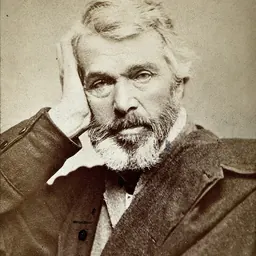
Posthumously, Allingham's Varieties in Prose were published in 1893. William Allingham. A Diary, edited by Helen Allingham and Dollie Radford, was published in 1907. It contains Allingham's reminiscences of Alfred Tennyson, Thomas Carlyle and other writers and artists.
Assessment and influence Allingham produced much lyrical and descriptive poetry, and the best of his pieces are thoroughly national in spirit and local colouring.
Allingham had a substantial influence on W. B. Yeats;
Later influences The Allingham Arms Hotel in Bundoran, County Donegal is named after him.
We daren't go a-hunting / For fear of little men […] was quoted by the character of The Tinker near the beginning of the movie Willy Wonka & the Chocolate Factory, as well as in Mike Mignola's comic book short story Hellboy: The Corpse, plus the 1973 horror film Don't Look in the Basement. The lines Up the airy mountain / Down the rushy glen […] form part of the character Magrat's internal monologue in the Discworld novel Lords and Ladies. Several lines of the poem are quoted by Henry Flyte, a character in issue No. 65 of the Supergirl comic book, August 2011. This same poem was quoted in Andre Norton's 1990 science fiction novel Dare to Go A-Hunting .
Up the Airy Mountain is the title of a short story by Debra Doyle and James D. Macdonald; while the working title of Terry Pratchett's The Wee Free Men was "For Fear of Little Men".
Don’t just read it —
keep it.
Full-length biographies made to live with: read them, listen on the way to work, watch them tonight.
- E-book
- Audio
- Video
Instant download · yours to keep · every purchase keeps this site free
Important facts
Family & relationships
People in William Allingham's life
Named in this biography and alive at the same time



Related people
Same field, nearest in time
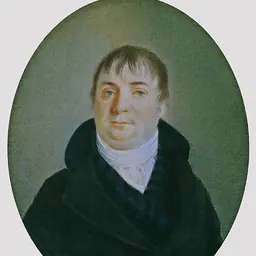
Contemporaries
People whose lives overlapped William Allingham's

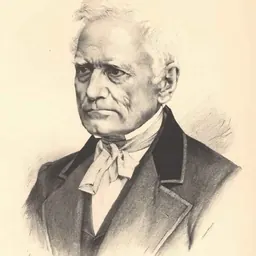
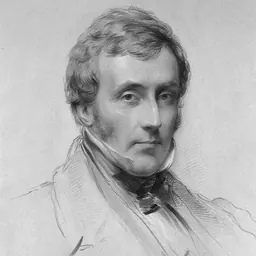
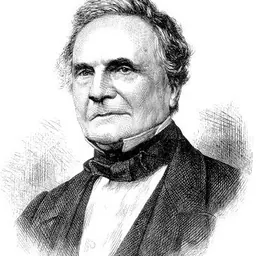
Frequently asked questions
Who was William Allingham?
Irish man of letters and poet (1824-1889)
When was William Allingham born?
William Allingham was born on 19 March 1824 in Ballyshannon.
When did William Allingham die?
William Allingham died on 18 November 1889 in Hampstead.
What was William Allingham's occupation?
William Allingham was a poet and writer.
What nationality was William Allingham?
William Allingham was Irish and British.
Sources & further reading
· Wikipedia: William Allingham
Cite this page
APA: Biography.guide. (2026). William Allingham. https://biography.guide/william-allingham/
MLA: "William Allingham." Biography.guide, https://biography.guide/william-allingham/.
Chicago: "William Allingham." Biography.guide. https://biography.guide/william-allingham/.
Data last updated: 2026-09-25 · Spot an error? Report a correction.
Page generated 2026-09-27 05:11 UTC