
William Aglionby
English physician, art historian, translator and diplomat
About William Aglionby
Lived 1642 – 1705 (aged 62–63). William Aglionby was an art historian, diplomat, translator and physician.
William Aglionby (c. 1642–1705) was an English physician, known also as an art historian, translator and diplomat.
Life It has been inferred that he was the son of George Aglionby, who was tutor to William Cavendish, 3rd Earl of Devonshire from 1629, and who married Sibella Smith in 1635, dying in 1643. He had an M.D. degree from the University of Bordeaux. Fluency in French later caused him trouble when claiming to be English in France.
Aglionby was elected Fellow of the Royal Society in 1667. From 1669 to 1671 he acted as tutor for Sir Andrew Henley, 1st Baronet and then for Robert Paston, 1st Earl of Yarmouth. In 1679 he was secretary to Sir William Temple at The Hague.
Aglionby's associates included James Brydges, Abraham Hill, and Matthew Prior.
Works Aglionby's major work was Painting Illustrated in Three Diallogues (1685). it contained eleven biographies of Italian painters.
Aglionby used Giorgio Vasari's Lives, but selectively, and imposing his own views. He began with lives of Cimabue and Giotto, interpolating in the series then a dialogue on the history of painting. There followed: Leonardo da Vinci, Andrea del Sarto, Raphael, Giorgione, Michelangelo, Giulio Romano, Pierino del Vaga, Titian and Donatello. Other sources used include Gian Pietro Bellori and Carlo Cesare Malvasia. Dismissive of Nicolas Poussin, Aglionby mentions favourably if not at length four artists from northern Europe: Dürer, Holbein, Rubens, Van Dyck. The two latter were among the 12 Vite of Bellori, from which he borrows heavily.
From a nationalistic point of view, Aglionby pointed to a revival of the arts at the Restoration of 1660, and promoted the painter John Riley, and the sculptor Grinling Gibbons. As apologetics for English art, which had not contributed to history painting, he argued for its success in portrait painting.
Works Art of Chymistry: As it is now Practiced (1668), translation from Cours de Chymie by Pierre Thibaut Based on Les Délices de la Hollande (1651) by Jean de Parival. Whole Art of the Stage (1684), translation from François Hedelin Painting Illustrated in Three Diallogues (1685) on archive.org
Don’t just read it —
keep it.
Full-length biographies made to live with: read them, listen on the way to work, watch them tonight.
- E-book
- Audio
- Video
Instant download · yours to keep · every purchase keeps this site free
Important facts
People in William Aglionby's life
Named in this biography and alive at the same time
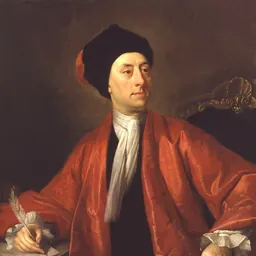


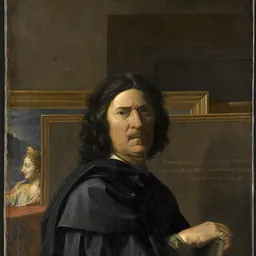
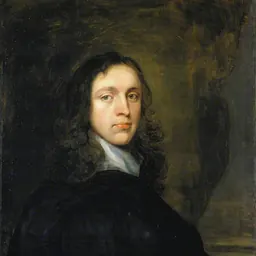

Related people
Same field, nearest in time
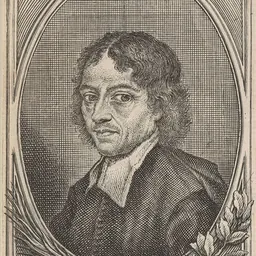

Contemporaries
People whose lives overlapped William Aglionby's



Frequently asked questions
Who was William Aglionby?
English physician, art historian, translator and diplomat
When was William Aglionby born?
William Aglionby was born in 1642.
When did William Aglionby die?
William Aglionby died on 28 November 1705.
What was William Aglionby's occupation?
William Aglionby was an art historian, diplomat, translator and physician.
Sources & further reading
Cite this page
APA: Biography.guide. (2026). William Aglionby. https://biography.guide/william-aglionby/
MLA: "William Aglionby." Biography.guide, https://biography.guide/william-aglionby/.
Chicago: "William Aglionby." Biography.guide. https://biography.guide/william-aglionby/.
Data last updated: 2026-09-20 · Spot an error? Report a correction.
Page generated 2026-09-27 05:17 UTC