
About William A. Glasgow Jr.
Lived 1865 – 1930 (aged 64). William A. Glasgow Jr. was a lawyer.
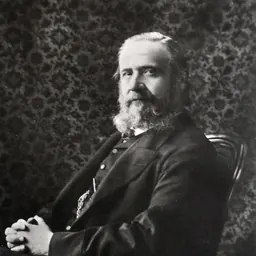
William Anderson Glasgow Jr. (April 29, 1865 – March 14, 1930) was an American lawyer, federal government official, and Democratic Party official. During the First World War, he served under Herbert Hoover as chief counsel of the United States Food Administration, and as a member of the Sugar Equalization Board. He subsequently became chief counsel for the United Mine Workers of America (UMWA), succeeding Charles Evans Hughes when he became secretary of state. Glasgow also served as the chairman of the rules committee for the Democratic National Committee in 1916.
Glasgow practiced law in Virginia and Philadelphia and participated in major litigation involving railroads, coal companies, federal economic regulation, and organized labor. As counsel for the UMWA, he appeared before the Supreme Court of the United States in Coronado Coal Co. v. United Mine Workers and represented the union in other significant federal cases.
Early life and education Glasgow was born on April 29, 1865, in Fincastle, Virginia, the son of lawyer and former Virginia state senator William Anderson Glasgow Sr. and his second wife, Grace Ellen Shanks Glasgow. His brothers included Virginia judge Joseph Anderson Glasgow and physician Samuel McPheeters Glasgow.
He attended Washington and Lee University, where he was initiated into the Virginia Sigma chapter of Sigma Alpha Epsilon in May 1883. He received an orator's medal and graduated from the university's law school with a Bachelor of Laws degree in 1886.
Legal career Practice in Virginia Glasgow was admitted to the Virginia bar in 1886. He initially practiced in Fincastle and later moved his practice to Roanoke. By 1889, he was practicing with his father under the name Glasgow & Glasgow. The firm advertised that it practiced in the courts of Botetourt and adjoining counties. He subsequently moved his office to the Terry Building in Roanoke while continuing to practice in the courts of Botetourt County.
On July 11, 1893, the Roanoke City Council elected Glasgow as city solicitor on the sixth ballot. He received 15 of the council's 20 votes. His term commenced on August 1, when the term of incumbent Eston Randolph expired.
Glasgow was subsequently reelected by a newly organized council in July 1896. He remained in the position until his resignation in May 1898 and was succeeded by Cephas B. Moomaw. His work for Virginia business interests attracted the attention of Philadelphia clients, and in 1904 he relocated to Philadelphia and was admitted to the Pennsylvania bar.
Philadelphia practice and railroad litigation In Philadelphia, Glasgow joined Samuel Dickson and others in the firm of Dickson, Glasgow & McCouch. He withdrew from the partnership in 1906 because Dickson represented anthracite coal and railroad interests that Glasgow had been called upon to prosecute on behalf of the Interstate Commerce Commission. Because his law partner Samuel Dickson represented anthracite-coal and railroad interests affected by the investigation, Glasgow withdrew from Dickson, Glasgow & McCouch and established an independent practice.
His practice encompassed the representation of coal and railroad interests as well as government bodies challenging freight rates. The City of Philadelphia appointed him special counsel to conduct municipal rate cases before the ICC. The litigation concerned alleged freight-rate disparities that city officials believed placed Philadelphia at a disadvantage relative to competing ports and commercial centers. Glasgow also developed expertise in federal postal legislation. In 1906 and 1907, he presented a historical analysis of laws governing newspapers and other second-class mail to a federal postal commission. His statement, subsequently published in a congressional document, traced postal legislation from the early republic and examined the preferential rates traditionally granted to newspapers and periodicals. In its 1913 decision in Lewis Publishing Co. v. Morgan, the Supreme Court of the United States expressly cited Glasgow's analysis while reviewing the history and constitutionality of federal mail classifications.
Glasgow subsequently appeared in a number of transportation and coal-industry cases before the Supreme Court of the United States. He represented the International Coal Mining Company in Pennsylvania Railroad Co. v. International Coal Mining Co. (1913), concerning discriminatory freight rebates, and represented coal producers challenging allegedly discriminatory allocations of railroad coal cars in Morrisdale Coal Co. v. Pennsylvania Railroad Co. (1913) and Pennsylvania Railroad Co. v. W. F. Jacoby & Co. (1916).
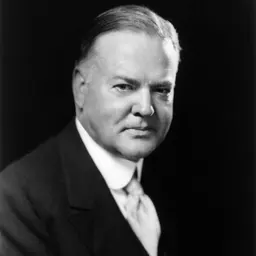
Federal service During the First World War, Glasgow became chief counsel of the United States Food Administration, the federal agency headed by Herbert Hoover that managed and regulated the wartime production, distribution, and conservation of food. Glasgow's appointment to the Food Administration followed a recommendation from Edward M. House, President Wilson's principal political adviser. Hoover also appointed Glasgow to represent him at official meetings when Hoover was unable to attend, indicating Glasgow's position of trust within the agency.
Glasgow also served on the board of the Sugar Equalization Board, a government-sponsored corporation organized in 1918 to purchase, distribute, and regulate sugar during the wartime shortage. The board included Hoover, president George M. Rolph, and representatives of the Food Administration, War Trade Board, and United States Tariff Commission. After the war, Glasgow assisted with legislation concerning the continuation of federal authority over sugar. In 1919, at the request of Senator Charles L. McNary, Gelasgow prepared a bill that would have extended the president's power to arrange contracts with sugar producers and refiners.
In January 1919, Glasgow publicly clarified that lawyers for the Food Administration had drafted proposed legislation implementing the federal wheat-price guarantee at the request of the chairman of the House Committee on Agriculture. He denied reports that the administration was advocating the continuation of its wartime organization or powers.
As the Food Administration's chief legal officer, Glasgow also appeared before congressional committees to explain and defend the agency's policies. In early 1919, he denied allegations before the House Committee on Interstate and Foreign Commerce that Hoover had administered wartime food policy for the benefit of the major meat-packing companies. Testifying before the Senate Committee on Agriculture, Glasgow likewise stated that Hoover's postwar mission to Europe concerned international food relief rather than the promotion of American meat exports.
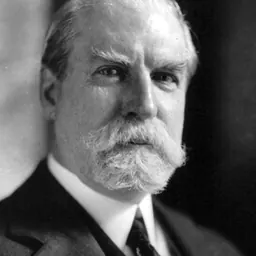
Counsel for the United Mine Workers In 1921, Glasgow succeeded Charles Evans Hughes as chief counsel of the United Mine Workers of America after Hughes entered the cabinet of President Warren G. Harding. Glasgow represented the union during a period of extensive litigation concerning labor organizing, antitrust law, injunctions, and the legal status of unincorporated labor unions.
Among his most prominent cases was United Mine Workers of America v. Coronado Coal Co. In the 1922 proceeding, Glasgow appeared with Hughes, Henry Warrum, G. L. Grant, and Allen S. Hubbard on behalf of the union and its members. He again represented the union when the litigation returned to the Supreme Court in 1925.
Glasgow also represented the UMWA in International Organization, United Mine Workers of America v. Red Jacket Consolidated Coal & Coke Co., a series of cases concerning union organizing and alleged interference with interstate commerce in the West Virginia coalfields. The Fourth Circuit's decision against the union in the Red Jacket litigation later became an important issue in organized labor's opposition to Judge John J. Parker when President Hoover nominated Parker to the Supreme Court in 1930.
During the nationwide coal disputes of 1922, Glasgow participated in efforts to reopen negotiations between anthracite miners and operators. He conferred with UMWA president John L. Lewis, American Federation of Labor president Samuel Gompers, Pennsylvania governor William Cameron Sproul, and United States senator George Wharton Pepper concerning a possible settlement. At an August meeting, Pepper presented a letter from President Harding warning that continued interruption of coal production threatened a national emergency. Glasgow subsequently helped arrange renewed negotiations between the union and anthracite operators in Philadelphia. Glasgow and attorney Ralph Crews also proposed new negotiating machinery through which miners and operators could settle the 1922 strike and negotiate future collective-bargaining agreements. Their proposal contemplated a continuing institutional process rather than negotiations conducted only after a strike had begun.
In 1924, former secretary of the interior Albert B. Fall, then implicated in the Teapot Dome scandal, sought to retain Glasgow as his attorney. Glasgow declined the representation and reportedly refused to discuss the matter with Fall.
In 1912, he served as temporary chairman of the Pennsylvania Democratic State Convention and declined an opportunity to seek the Democratic nomination for a seat on the United States House of Representatives. Various newspaper reports listed Glascow among possible members of Wilson's incoming cabinet, on the shortlist as potential U.S. Attorney General, and described him as "one of the greatest lawyers in the country." He formally presented the rules allowing Wilson and Vice President Thomas R. Marshall to be renominated by acclamation.
In 1928, Glasgow was a Pennsylvania delegate to the 1928 Democratic National Convention, which nominated Al Smith. He remained involved in party affairs throughout the 1920s and was described at his death as a prominent figure in national Democratic politics. He also received an honorary Doctor of Laws degree from Temple University.
Selected works
Don’t just read it —
keep it.
Full-length biographies made to live with: read them, listen on the way to work, watch them tonight.
- E-book
- Audio
- Video
Instant download · yours to keep · every purchase keeps this site free
Important facts
People in William A. Glasgow Jr.'s life
Named in this biography and alive at the same time






Related people
Same field, nearest in time

Contemporaries
People whose lives overlapped William A. Glasgow Jr.'s


Frequently asked questions
Who was William A. Glasgow Jr.?
American lawyer and government official (1865–1930)
When was William A. Glasgow Jr. born?
William A. Glasgow Jr. was born on 29 April 1865.
When did William A. Glasgow Jr. die?
William A. Glasgow Jr. died on 14 March 1930.
What was William A. Glasgow Jr.'s occupation?
William A. Glasgow Jr. was a lawyer.
Sources & further reading
· Wikipedia: William A. Glasgow Jr.
· DBpedia: William A. Glasgow Jr.
Cite this page
APA: Biography.guide. (2026). William A. Glasgow Jr.. https://biography.guide/william-a-glasgow-jr/
MLA: "William A. Glasgow Jr.." Biography.guide, https://biography.guide/william-a-glasgow-jr/.
Chicago: "William A. Glasgow Jr.." Biography.guide. https://biography.guide/william-a-glasgow-jr/.
Data last updated: 2026-09-20 · Spot an error? Report a correction.
Page generated 2026-09-27 05:31 UTC