
About Willem de Clercq
Lived 1795 – 1844 (aged 49). Willem de Clercq was a Dutch writer, poet, diarist and merchant.
Willem de Clercq (15 January 1795 – 4 February 1844) was a poet and leader of the Réveil, the Protestant Church Revival in the Netherlands. He is known for his diary entries, which contain extensive reports of the events he witnessed. He was also a secretary (1824-1831) and later a director (1831–1844) of the Netherlands Trading Society (Nederlandsche Handel-Maatschappij or NHM).
Personal life Willem de Clercq was born in Amsterdam to a wealthy Amsterdam Mennonite family of grain merchants. His father was Gerrit de Clercq and his mother was Maria de Vos. In 1801, he began to write notes about various events he encountered in his life, which later formed a diary, Dagboek (autobiography), with a total of 36,000 pages that he kept from the year 1811 until his death. Planning to be a preacher in the Netherlands, he learned German, French, and Greek. However, due to Napoleon's invasion of 1813, he was displaced - events which are described in Dagboek.
In 1816, De Clercq traveled to Saint Petersburg to report on the landscape and the social and cultural life in the northern German and Baltic ports. After the death of his father in 1817, he returned home to manage the family business. De Clercq married Caroline Boissevain (1799–1879) in 1817, and they had several children, including Gerrit de Clercq, who later became the editor of De Gids. Around 1820, the business suffered from a grain shortage crisis from which it never fully recovered.
Around that time, De Clercq met Jewish convert Isaäc da Costa, and there began a deep friendship. De Clercq converted to Orthodox Calvinism under Da Costa's influence. Together with Willem Bilderdijk, Abraham Capadose, Guillaume Groen van Prinsterer, Samuel Iperusz Wiselius, and others, they became the leaders of the Réveil.
De Clercq left the failing family business and traveled to The Hague to become secretary of the Netherlands Trading Society (NHM) in 1824. There he began attending the Reformed-Walloon churches. As a manager of the NHM, he had a large influence on the growing textile industry in Twente. Influenced by Thomas Ainsworth, he became involved in establishing industries in the town of Nijverdal. He wanted his work to reflect his beliefs such as employing small-scale industries rather than large factories as the latter caused harm to the workers. De Clercq was a supporter of the NHM, dividing organisational orders evenly across as many producers as possible in order to accomplish the work at a low price.
In the last years of his life, De Clercq's views diverged from those of Da Costa and were increasingly influenced by Hermann Friedrich Kohlbrugge. As a result, he withdrew more and more from social and cultural life, as opposed to Da Costa's active involvement in city life.
De Clercq died suddenly after months of severe depression. Some historians blame Kohlbrugge's dominating views for De Clercq's death, whilst others blame De Clercq's own idealistic and emotional character.
As a poet, De Clercq was especially well known for improvising. He was able to recite a poem without preparation at a moment's notice.
In both Amsterdam and Twente, there are streets named after him. His grandson Daniel de Clercq became an advocate of labor and educational reform.
Works Verzameling De Clercq (onder andere Particuliere aantekeningen/Dagboek) in: Réveil-Archief, Universiteitsbibliotheek, Universiteit van Amsterdam Woelige weken. November–December 1813 – Amsterdam 1988 (uitgegeven dagboekaantekeningen) Graan en reizen. Willem de Clercq in 1814 – Amsterdam 1995 (uitgegeven dagboekaantekeningen) Per karos naar Sint-Petersburg – Lochem 1962 (uitgegeven dagboekaantekeningen) Opvoeding. Verschillende byzonderheden over de opvoeding van Gerrit, Daan, Steven en Gideon – 1831 Rapport eener reize naar de Fabrieken van Overijssel – 1832 Briefwisseling tusschen Willem de Clercq en Isaäc da Costa. Bloemlezing uit onuitgegeven brieven berustende in het Réveil-archief te Amsterdam – Baarn 1938 Willem de Clercq naar zijn dagboek – Amsterdam 1888
Don’t just read it —
keep it.
Full-length biographies made to live with: read them, listen on the way to work, watch them tonight.
- E-book
- Audio
- Video
Instant download · yours to keep · every purchase keeps this site free
Important facts
People in Willem de Clercq's life
Named in this biography and alive at the same time


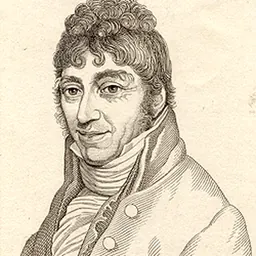

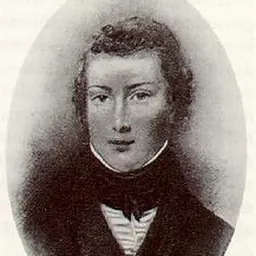
Related people
Same field, nearest in time

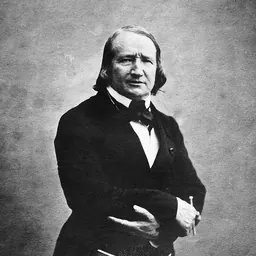


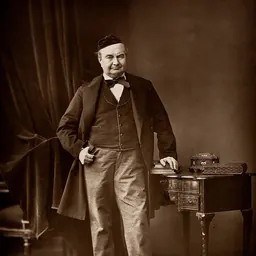
Contemporaries
People whose lives overlapped Willem de Clercq's
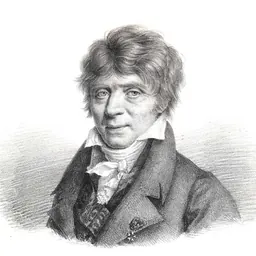




Frequently asked questions
Who was Willem de Clercq?
Dutch writer and businessman (1795-1844)
When was Willem de Clercq born?
Willem de Clercq was born on 15 January 1795 in Amsterdam.
When did Willem de Clercq die?
Willem de Clercq died on 4 February 1844 in Amsterdam.
What was Willem de Clercq's occupation?
Willem de Clercq was a writer, poet, diarist and merchant.
What nationality was Willem de Clercq?
Willem de Clercq was Dutch.
Sources & further reading
Cite this page
APA: Biography.guide. (2026). Willem de Clercq. https://biography.guide/willem-de-clercq/
MLA: "Willem de Clercq." Biography.guide, https://biography.guide/willem-de-clercq/.
Chicago: "Willem de Clercq." Biography.guide. https://biography.guide/willem-de-clercq/.
Data last updated: 2026-09-20 · Spot an error? Report a correction.
Page generated 2026-09-27 05:26 UTC