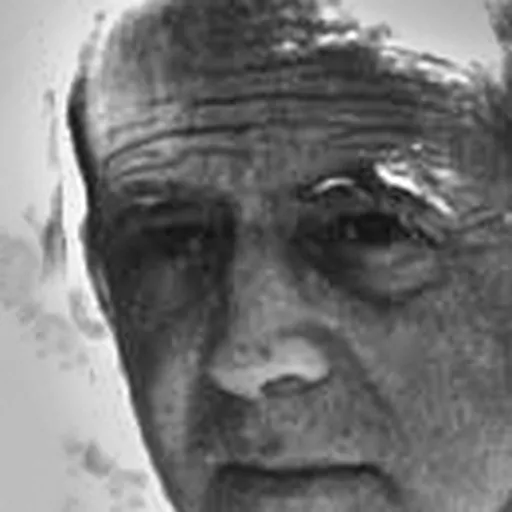
Willard Van Dyke
American filmmaker and photographer
About Willard Van Dyke
Lived 1906 – 1986 (aged 79). Willard Van Dyke was an American photographer, film director, cinematographer, filmmaker and director.
Willard Ames Van Dyke
Early life Van Dyke went to the University of California, Berkeley, circa 1927 dropping out for a time to avoid taking an ROTC course, left in 1929 and did not graduate.
"I had been playing around with a camera and developing my own pictures since I was 12 years of age"
Photography Funnels, exhibited at the M. H. De Young Memorial Museum. November 15, 1932–December 31, 1932 Death Valley Dunes, exhibited at the M. H. De Young Memorial Museum. November 15, 1932–December 31, 1932 Bone and Sky, exhibited at the M. H. De Young Memorial Museum. November 15, 1932–December 31, 1932 Barbed Wire and Fence Post, exhibited at the M. H. De Young Memorial Museum. November 15, 1932–December 31, 1932 In 1928, he went to see a photographic exhibition at the Palace of the Legion of Honor in San Francisco, where he not only saw some Edward Weston’s work but met him. It was a life-changing experience.
In 1928, he apprenticed with Edward Weston and by 1932 co-founded Group f/64, with Imogen Cunningham, Ansel Adams, and Weston. The group’s approach emphasized both sharp and deep focus (sometimes called straight photography) in contrast with the painterly approach of many other photographers.
Van Dyke soon abandoned still photography, saying in a 1982 documentary based on his life that he did not want to compete with his closest friend, Weston.
Film Van Dyke's photographs were marked by a tendency to address social issues, as in portraits of migrant workers, as well as purely formal subjects. This interest apparently led him to documentary films. "The effects of the Depression were very disturbing to me, and I felt anxious to promote change," he once said to an interviewer. "I was young and impatient, and felt that the documentary film would more effectively communicate issues to more people than would still photography." (New York Times)
In 1935, Van Dyke moved to New York City and began making documentary films. He served as a cameraman on The River In 1945, Van Dyke was commissioned to make an official film called San Francisco about the conference that created the United Nations Organization.
From 1946 to 1965, he was a producer/director of films for television and in the field of adult education. He directed films for the CBS Television programs, The Twentieth Century and The Twenty-First Century. In 1948, Van Dyke made the documentary film The Photographer about Edward Weston. In 1960, he was nominated with Shirley Clarke and Irving Jacoby for an Academy Award for the short documentary film Skyscraper (1959).
Arts administrator and teacher
Van Dyke was director of the Department of Film at the Museum of Modern Art from 1965 to 1974, overseeing the expansion of the department's archives and exhibitions, and he started two programs for showing the work of avant-garde and documentary film makers. He introduced the work of modern and fellow documentary photographers and was credited with enhancing photography's position as a serious art form. While director of the Department of Film, Mr. Van Dyke served as president of the Robert Flaherty International Film Seminars, as chairman of the faculty at the first cinema session of the Salzburg Seminar in American Studies, and as vice-president of the International Federation of Film Archives (FIAF). From 1976 he was a trustee and chairman of the Film Advisory Committee of the American Federation of Arts. of a heart attack, driving from his home in Santa Fe, N.M. to Cambridge, Massachusetts, where he had recently been named laureate artist in residence at Harvard. He and his wife stopped for the night when he became ill, was taken to a hospital, and died. He was 79 years old.
Van Dyke was survived by his wife, Barbara (née Millikin), a daughter, Alison, three sons, Peter, Murray, and Neil, and grandchildren. 1953 Broken Appointment (short) 1953 American Frontier (short) 1953 Working and Playing to Health 1968 Shape of Films to Come
Don’t just read it —
keep it.
Full-length biographies made to live with: read them, listen on the way to work, watch them tonight.
- E-book
- Audio
- Video
Instant download · yours to keep · every purchase keeps this site free
Important facts
People in Willard Van Dyke's life
Named in this biography and alive at the same time



Related people
Same field, nearest in time



Contemporaries
People whose lives overlapped Willard Van Dyke's


Frequently asked questions
Who was Willard Van Dyke?
American filmmaker and photographer (1906-1986)
When was Willard Van Dyke born?
Willard Van Dyke was born on 5 December 1906 in Denver.
When did Willard Van Dyke die?
Willard Van Dyke died on 23 January 1986 in Jackson.
What was Willard Van Dyke's occupation?
Willard Van Dyke was a photographer, film director, cinematographer, filmmaker and director.
What nationality was Willard Van Dyke?
Willard Van Dyke was American.
Sources & further reading
Cite this page
APA: Biography.guide. (2026). Willard Van Dyke. https://biography.guide/willard-van-dyke/
MLA: "Willard Van Dyke." Biography.guide, https://biography.guide/willard-van-dyke/.
Chicago: "Willard Van Dyke." Biography.guide. https://biography.guide/willard-van-dyke/.
Data last updated: 2026-09-22 · Spot an error? Report a correction.
Portrait: Wikimedia Commons · author & licence
Page generated 2026-09-27 05:04 UTC