
About Wilhelm Stenhammar
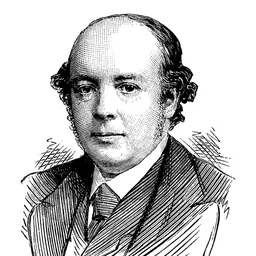
Lived 1871 – 1927 (aged 56). Wilhelm Stenhammar was a Swedish conductor, composer, pianist and musician.
Carl Wilhelm Eugen Stenhammar (February 7, 1871 – November 20, 1927) was a Swedish composer, conductor and pianist. He is considered to be one of Sweden's most important composers at the turn of the 20th century, and one of the finest Swedish pianists of his time, with a reputation as a fine interpreter of the piano music of Beethoven.
Biography Wilhelm Stenhammar was born in Stockholm to and . His older brother was the architect Ernst Stenhammar. He demonstrated a talent for music at an early age, both as pianist and composer, writing piano sonatas and songs during his teenage years. The resultant critical acclaim led to invitations for concert performances in Denmark, England and Germany, effectively launching Stenhammar's career as an internationally renowned concert pianist. He subsequently recorded five piano rolls for Welte-Mignon on 21 September 1905.
As a composer, Stenhammar was initially influenced by German and Austrian music, especially that of Richard Wagner and Anton Bruckner. Stenhammar himself described the style of his First Symphony in F major as "idyllic Bruckner". He subsequently sought to liberate himself from this influence, with the goal of writing in a more "Nordic" style, looking to Carl Nielsen and Jean Sibelius for guidance. The latter's Symphony No. 2, especially, had a great effect on him, leading him to change his style and withdraw his own First Symphony from performance. Also in 2008, the Swedish Art Music Society published the world premiere edition of the Allegro Brillante for piano quartet composed in 1891 and the Allegro non tanto for piano trio composed in 1895.
Stenhammar's string quartets were composed over a 22-year period from 1894 to 1916. Seven such works were completed; however, one of them (in F minor, 1897) was withdrawn by the composer immediately after its first performance, although it has since been revived and recorded. Writing in The Chamber Music Journal, Raymond Silvertrust argues that Stenhammar's cycle of six (numbered) quartets is the most important to be written between those of Johannes Brahms and Béla Bartók. Silvertrust notes that, tonally, they range from the middle-late Romantics to a style akin to mature Sibelius, exhibiting a fine grasp of instrumental timbre and technique, with part writing that is idiomatic and appropriate to the instruments. Stenhammar's interest in chamber music, and his skill as a composer in this genre, may have been influenced by his partnership with the Aulin Quartet, the leading Swedish string quartet of his day and one of the best then performing in Europe. Stenhammar worked closely and toured extensively throughout Europe with this quartet for many years, with a piano quintet typically featured in their programs. Stenhammar would also partner with Tor Aulin, first violinist of the eponymous quartet, to perform sonatas for violin and piano. Though not unknown by the Swedish chamber music public, Stenhammar's string quartets have tended to be neglected elsewhere.
List of compositions Opera The Feast at Solhaug , opera in three acts for soloists, mixed chorus, and orchestra; libretto by Henrik Ibsen (Op. 6; 1892–1896) Tirfing, "Norse mythological music drama" in two acts (plus a prelude and postlude) for soloists, mixed chorus, female chorus, and orchestra; libretto by Anna Boberg (1897–1898)
Symphonies Symphony No. 1 in F major, for orchestra (1902–1903, withdrawn) Symphony No. 2 in G minor, for orchestra (Op. 34, 1911–1915) Symphony No. 3 in C major (1918–1919, fragmentary)
Concertante Piano Concerto No. 1 in B-flat minor, for piano and orchestra (Op. 1; 1893) Piano Concerto No. 2 in D minor, for piano and orchestra (Op. 23; 1904–1907) Two Sentimental Romances, for violin and orchestra (Op. 28; 1910)
Other orchestral works Excelsior!, concert overture for orchestra (Op. 13; 1896) Serenade in F major, for orchestra (Op. 31; 1908–1913, 1919)
Vocal works Florez and Blanzeflor , ballad for baritone and orchestra; text by Oscar Levertin (Op. 3; 1891) , for soprano, mezzo-soprano, tenor, mixed chorus, and orchestra; text by Viktor Rydberg (Op. 5; 1891) Ithaca , ballad for baritone and orchestra; text by Oscar Levertin (Op. 21; 1904) One People , cantata for baritone, mixed chorus, and orchestra; text by Verner von Heidenstam (Op. 22; 1904–1905) Midwinter , rhapsody for mixed chorus and orchestra (Op. 24; 1907) The Song , symphonic cantata for soprano, contralto, tenor, baritone, mixed chorus, children's chorus, and orchestra (Op. 44; 1921) Around 60 songs
Chamber music Allegro brillante in E-flat major, for piano quartet (1891) String Quartet No. 1 in C major, Op. 2 (1894) Allegro ma non tanto in A major, for piano trio (1895) String Quartet No. 2 in C minor (Op. 14; 1896) String Quartet in F minor (1897; Withdrawn) String Quartet No. 3 in F major (Op. 18; 1897–1900) Violin Sonata in A minor, for violin and piano (Op. 19; 1899–1900) String Quartet No. 4 in A minor (Op. 25; 1904–1909) String Quartet No. 5 in C major (Op. 29; 1910) String Quartet No. 6 in D minor (Op. 35; 1916)
Piano music Piano Sonata No. 1 in C major (1880) Piano Sonata No. 2 in C minor (1881) Piano Sonata No. 3 in A-flat major (1885) Piano Sonata No. 4 in G minor (1890) Three Fantasies (Op. 11; 1895) Piano Sonata in A-flat major (Op. 12; 1895) Late Summer , five piano pieces (Op. 33; 1914)
Stage A Dream Play , a drama by August Strindberg (1916) Lodolezzi Sings , a drama by Hjalmar Bergman; directed by Per Lindberg, Op. 39 (1919) As You Like It , a drama by William Shakespeare; directed by Lindberg (1920) Hamlet, a drama by Shakespeare; directed by Lindberg (1920) Turandot, incidental music for chamber ensemble to a drama by Carlo Gozzi; directed by Lindberg (Op. 42; 1920) Chitra, a drama by Rabindranath Tagore; directed by Lindberg (1921) Romeo and Juliet, a drama by Shakespeare; directed by Lindberg (1922)
Don’t just read it —
keep it.
Full-length biographies made to live with: read them, listen on the way to work, watch them tonight.
- E-book
- Audio
- Video
Instant download · yours to keep · every purchase keeps this site free
Important facts
People in Wilhelm Stenhammar's life
Named in this biography and alive at the same time




Related people
Same field, nearest in time

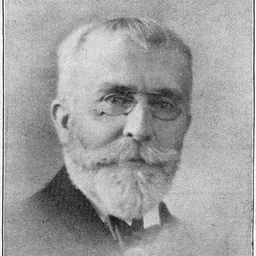
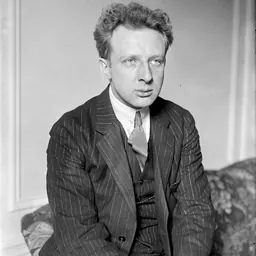

Contemporaries
People whose lives overlapped Wilhelm Stenhammar's
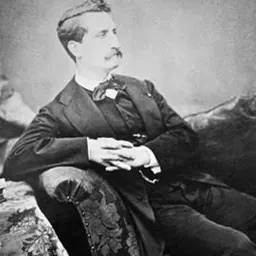


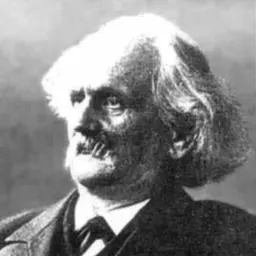
Frequently asked questions
Who was Wilhelm Stenhammar?
Swedish composer, pianist and conductor (1871–1927)
When was Wilhelm Stenhammar born?
Wilhelm Stenhammar was born on 7 February 1871 in Stockholm, Adolf Fredriks parish.
When did Wilhelm Stenhammar die?
Wilhelm Stenhammar died on 20 November 1927 in Jonsered.
What was Wilhelm Stenhammar's occupation?
Wilhelm Stenhammar was a conductor, composer, pianist and musician.
What nationality was Wilhelm Stenhammar?
Wilhelm Stenhammar was Swedish.
Sources & further reading
· Wikipedia: Wilhelm Stenhammar
Cite this page
APA: Biography.guide. (2026). Wilhelm Stenhammar. https://biography.guide/wilhelm-stenhammar/
MLA: "Wilhelm Stenhammar." Biography.guide, https://biography.guide/wilhelm-stenhammar/.
Chicago: "Wilhelm Stenhammar." Biography.guide. https://biography.guide/wilhelm-stenhammar/.
Data last updated: 2026-09-20 · Spot an error? Report a correction.
Page generated 2026-09-27 05:23 UTC