
About Wilhelm Malte I
Lived 1783 – 1854 (aged 71). Wilhelm Malte I was a German and Swedish politician and military personnel.
Wilhelm Malte I Fürst und Herr zu Putbus (1783 – 1854) was a German prince (Fürst) from the old Slavic-Rügen noble family of the lords of Putbus. He acted as a Swedish governor in Swedish Pomerania and later, under Prussian rule, as the chairman of the regional council (Kommunallandtag) of Pomerania and Rügen.
As a result of his extensive building activity, Wilhelm Malte left many traces of the first half of the 19th century on the island of Rügen. Under his rule, his home town of Putbus was greatly expanded in the classical style and is still known today as "The White Town".
Life Wilhelm Malte was born on 1 August 1783 in Putbus, when Rügen still belonged to Sweden as a result of the Thirty Years' War. He was the son of the Swedish Marshal of the Court, Malte Friedrich of Putbus and his wife Sophie Wilhelmine, née Countess von der Schulenburg. After studying at the University of Greifswald and Göttingen, he entered military service in Sweden on 21 July 1800 with the Stockholm Life Hussars. After becoming a Swedish chamberlain on 14 September 1802, Wilhelm Malte was elevated on 25 May 1807 by King Gustav IV Adolf of Sweden to the rank of a prince (Fürst).
After the end of French occupation, he was nominated in 1813 by the Swedish Crown Prince and Regent, later Charles XIV John Bernadotte, as Governor-general of Swedish Pomerania. This office was traditionally linked to the office of Chancellor of the University of Greifswald.
As a result of the Treaty of Kiel, Rügen became Danish for a short time in 1814 and then went to Prussia in 1815 in exchange for its support in the cession of Norway to Sweden, not least because of the involvement of the prince. In 1817, Wilhelm Malte's princely rank was confirmed by Frederick William III of Prussia, and so was his position as Governor-general. The office of university chancellor was approved and the honour of a hereditary Lord Marshal (Erblandmarschall) of the House of Putbus was bestowed on the prince. This also gave him the right to preside over the regional council (Kommunallandtag) for Neuvorpommern and Rügen. and an individual vote (Virilstimme) in the Pomeranian provincial parliament.
In the same year, he acquired the lordship of Spyker from Count Magnus Fredrik Brahe. He held the title of a governor-general as well as the corresponding salary, because an appointment as the President (Regierungspräsident) of the government district of Stralsund would have been tantamount to a curb of his powers.
Under his rule, there was a building boom that has left an indelible mark on the island of Rügen, and he also presided over economic and cultural development. In 1832, Putbus Palace, originally a castle complex from the 14th century, extended in the Renaissance and Baroque periods, was redesigned in a neoclassical style according to plans of the Berlin architect Johann Gottfried Steinmeyer. (After a fire, it was again redesigned in 1872, and demolished by communist East Germany in 1962.) 1827-1836 Wilhelm had the new Granitz Hunting Lodge built on the site of an older hunting lodge, based on plans by Karl Friedrich Schinkel.
He was also involved in sugar mills and chalk factories, had shipbuilding established in Seedorf and founded the first seaside resort on Rügen at Lauterbach. He had 655 acres of land settled with indivisible peasant holdings, held under hereditary leases. In addition, in 1836, he founded the Pedagogium Putbus, a school for boys from the middle classes and aristocracy. This laid the foundation of a tradition of education in Putbus that continues to the present day.
The prince died on 26 September 1854 at Putbus of a bladder disease after a long illness. He was laid to rest in the family vault of Putbus in the church at Vilmnitz.
Progeny With the death of Wilhelm Malte, the House of Putbus died out because of the untimely death of his only son, Malte (born 16 September 1807, died 28 April 1837). The title of prince and primogeniture went to his grandson, Wilhelm Carl Gustav Malte, Reichsgraf von Wylich und Lottum (born 16 April 1833, died 18 April 1907), son of his eldest daughter, Clotilde (born 23 April 1809, died 19 October 1894), bestowed by the Prussian king. Knight of the Order of the Red Eagle 1st Class, in Diamonds.
Buildings
Literature Kurt von Priesdorff: Soldatisches Führertum, Vol. 4, Hanseatische Verlagsanstalt Hamburg 1936-1945, pp. 141–142 Andre Farin: Wilhelm Malte zu Putbus und seine Fürstenresidenz auf der Insel Rügen. Eine Biographie über eine norddeutsche Gründerpersönlichkeit des 19. Jahrhunderts. 4th edition, Farin, Putbus 2007. Johannes Friedrich Weise: Zwischen Strandleben und Ackerbau. Die Herrschaft Putbus im 19. Jahrhundert. Ingo Koch Verlag, Rostock 2003. - mentioned in family article
Don’t just read it —
keep it.
Full-length biographies made to live with: read them, listen on the way to work, watch them tonight.
- E-book
- Audio
- Video
Instant download · yours to keep · every purchase keeps this site free
Important facts
People in Wilhelm Malte I's life
Named in this biography and alive at the same time
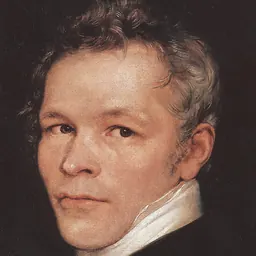
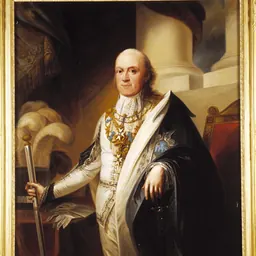
Related people
Same field, nearest in time

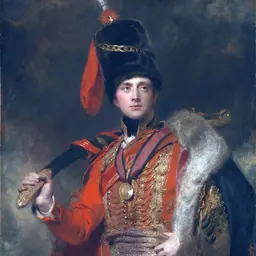
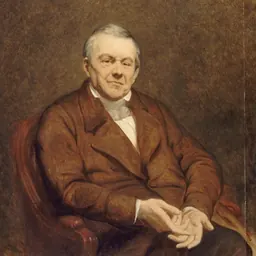


Contemporaries
People whose lives overlapped Wilhelm Malte I's

Frequently asked questions
Who was Wilhelm Malte I?
German prince (1783-1854)
When was Wilhelm Malte I born?
Wilhelm Malte I was born on 1 August 1783 in Putbus.
When did Wilhelm Malte I die?
Wilhelm Malte I died on 26 September 1854 in Putbus.
What was Wilhelm Malte I's occupation?
Wilhelm Malte I was a politician and military personnel.
What nationality was Wilhelm Malte I?
Wilhelm Malte I was German and Swedish.
Sources & further reading
Cite this page
APA: Biography.guide. (2026). Wilhelm Malte I. https://biography.guide/wilhelm-malte-i/
MLA: "Wilhelm Malte I." Biography.guide, https://biography.guide/wilhelm-malte-i/.
Chicago: "Wilhelm Malte I." Biography.guide. https://biography.guide/wilhelm-malte-i/.
Data last updated: 2026-09-20 · Spot an error? Report a correction.
Page generated 2026-09-27 05:28 UTC