
About Wilfred Burchett
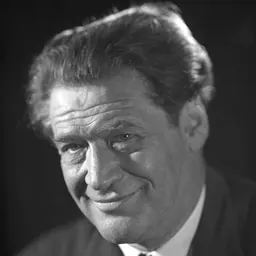
Lived 1911 – 1983 (aged 72). Wilfred Burchett was an Australian war correspondent, journalist and photographer.
Wilfred Graham Burchett (16 September 1911 – 27 September 1983) was an Australian journalist known for being the first western journalist to report from Hiroshima after the dropping of the atomic bomb, and for his reporting from "the other side" during the Korean and Vietnam Wars.
Burchett began his journalism at the start of World War II, during which he reported from China, Burma and Japan and covered the war in the Pacific. After the war he reported on the trials in Hungary, the Korean War, the Vietnam War, Portugal during the Carnation Revolution, and on Cambodia under Pol Pot. During the Korean war he investigated and supported claims by the North Korean government that the US had used germ warfare. He was the first western journalist to interview Yuri Gagarin after Gagarin's historic first flight into outer space. He played a role in prompting the first significant Western relief for Cambodia after its liberation by Vietnam in 1979. He was interviewed in 1970 about his career as a journalist, which can be accessed at the National Library of Australia.
He was a politically engaged anti-imperialist who always placed himself among the people and events about whom he was reporting. His reporting antagonised both the American and Australian governments and he was effectively exiled from Australia for almost 20 years before the incoming Whitlam government granted him a new passport.
In the 1970s Burchett launched defamation action after being accused of being a KGB operative.
Early life Burchett was born in Clifton Hill, Melbourne in 1911 to George Harold and Mary Jane Eveline Burchett (née Davey). His father was a builder, a farmer, and a Methodist lay preacher with radical convictions who "imbued [Burchett] with a progressive approach to British India, the Soviet Union and republican China". In his free time he studied foreign languages, mainly French and Russian.
Career as a journalist, 1940–1978
Second World War Burchett began his career in journalism in 1940 when he obtained accreditation with the Australian Associated Press to report on the revolt against the Vichy French in the South Pacific colony of New Caledonia. He was unarmed, and carrying rations for seven meals, a black umbrella and a Hermes Baby typewriter. His Morse code dispatch was printed on the front page of the Daily Express newspaper in London on 5 September 1945. Entitled "The Atomic Plague", and with the subtitle "I Write This as a Warning to the World", it began:
The US military's Far Eastern Command (FEC) wanted to silence Burchett by "exfiltrating" him from North Korea but its request to the Australian government for permission, which included a $100,000 inducement (over $1,000,000 in 2022 dollars), was turned down. Instead, the FEC established a smear campaign against Burchett with the backing of the Australian government. Australian journalist Denis Warner suggested Burchett had concocted the claim that the USA was engaging in germ warfare and pointed out the similarity of the allegations to a science fiction story by Jack London, a favourite author of Burchett's. However, Burchett's former colleague and veteran anti-communist, Tibor Méray, confirmed Burchett's insect observation in his critical memoir On Burchett. Burchett's finding was later supported by a 2010 report by al-Jazeera. Historian Gavan McCormack wrote that Burchett regretted this analogy, but said that the factual basis of the description was confirmed by POW Walker Mahurin. Similarly, Tibor Méray reports a "Peace Fighter Camp" which had no fences.
On 21 December 1951, Burchett achieved a major scoop by interviewing the most senior United Nations POW, US General William F. Dean and organising for photographs of Dean to be taken. The US had claimed that Dean had been killed by the North Koreans and had intended using his death as leverage in negotiations with the North Koreans. It was consequently angry that Burchett reported he was alive.
In his study of war correspondents, The First Casualty, Phillip Knightley wrote that "in Korea, the truth was that Burchett and Winnington were a better source of news than the UN information officers, and if the allied reporters did not see them they risked being beaten on stories".
Moscow In 1956, Burchett arrived in Moscow as a correspondent for the National Guardian newspaper, while also writing for the Daily Express, and, from 1960, for the Financial Times. For the next six years he reported on Soviet advances in science and the rebuilding of the post-war Soviet economy. In one dispatch Burchett wrote: "A new humanism is at work in the Soviet Union which makes that peddled in the West look shoddy, for it starts right down in the grass roots of Soviet society; its all-embracing sweep leaves behind no underprivileged". When US President Kennedy increased funding for the war in Vietnam, Burchett wrote: "No peasants anywhere in the world had so many dollars per capita lavished on their extermination".
During his time in Vietnam he had access to the North Vietnamese leadership and the South's Viet Cong. He tried to help the British and US governments in obtaining the release of captured American airmen. In 1967, he had a significant interview with the North Vietnamese foreign minister, Nguyen Duy Trinh in which Nguyen provided the first indication that the North Vietnamese government was interested in peace talks.
Cambodia In 1975 and 1976, Burchett sent a number of dispatches from Cambodia praising the new government of Pol Pot. In a 14 October 1976 article for The Guardian (UK), he wrote that "Cambodia has become a worker-peasant-soldier state", and, because its new constitution "guarantees that everyone has the right to work and a fair standard of living", it was, Burchett believed, "one of the most democratic and revolutionary constitutions in existence anywhere". At the time, he believed his friend, former prince Norodom Sihanouk, was part of the leadership group.
As relations between Cambodia and Vietnam deteriorated, and after Burchett visited refugee camps in 1978, he condemned the Khmer Rouge and they subsequently placed him on a death list.
Burchett visited Phnom Penh in May 1979 and wrote in The Guardian about the desperate situation there. The Phnom Penh government drew up a list of required emergency relief which Burchett took to London, where he read it out at an all-party meeting in the House of Commons. He said that the governments in both Vietnam and Cambodia had assured him that relief would be welcome and that "a great many human beings are starving and need your help". The UK government did nothing in response to Burchett's request since the newly elected government of Margaret Thatcher had joined the US boycott of Vietnam and suspended all food aid to both Vietnam and Cambodia. However, Jim Howard, a technical officer for Oxfam was at the meeting and was moved to arrange for the first significant Western relief to Cambodia.
Writing style Greg Lockhart analysed Burchett's writing in an article in The Australian newspaper. Lockhart thought the "involved narrator" present in Burchett's writing was similar to that of Henry Lawson. He said Burchett's style fitted with the "politically engaged, social realist reportage -- the I narratives -- that swept progressive journalism in Europe and Asia in the '20s and '30s: George Orwell's Down and Out in Paris and London (1933), for instance". Lockhart said that Burchett's method of writing quickly and outside the structures of Western journalism was both a strength and a weakness of his work. Sinologist Michael Godley said that the camera verite method, which was in vogue in Beijing in 1951 when Burchett was there, may have influenced his style. He again requested an Australian passport in 1960 and 1965 but was denied both times. A further request in July 1968 was rejected by prime minister John Gorton. Matters came to a head in 1969 when Burchett was refused entry into Australia to attend his father's funeral. The following year his brother Clive died, and Burchett flew to Brisbane in a privately chartered light plane as the Gorton government had threatened commercial airlines with steep penalties for flying Burchett into the country. In 1972, an Australian passport was finally issued to Burchett by the incoming Whitlam government which said there was no evidence to justify its continued denial. Writing in The Australian, Greg Lockhart described the previous governments' actions as "a remarkable breach of the human rights of an Australian citizen" in which it "simply exiled him for 17 years".
Government attempts to prosecute Burchett Conservative Australian governments between 1949 and 1970 tried to construct a case to prosecute Burchett but were unable to do so.
After Burchett reported from North Korea about the use of germ warfare by the Americans, the Australian government looked at charging him with treason. It sent ASIO agents to Japan and Korea to collect evidence but in early 1954, conceded it could not prosecute him. He claimed that Burchett had proposed a "special relationship" with the Soviets at their first meeting in Berlin in 1947. Krotkov also said that Burchett had worked as an agent for both Vietnam and China and was a secret member of the Communist Party of Australia.
In September 1971, Democratic Labour Party leader Vince Gair accused Burchett, in the Senate, of being a KGB operative and tabled Krotkov's testimony. In November 1971, the DLP published details of Gair's speech in its pamphlet, Focus. In February 1973 Burchett filed a one-million-dollar libel suit against DLP senator Jack Kane, who was Focuss publisher. In preparing his case, Kane received support from The Herald and Weekly Times, Philip Jones and Robert Menzies. Australia's military chiefs-of-staff appeared as witnesses for Kane. ASIO provided the names of Australian POWs whom Burchett had met in Korea and Kane put thirty of these on the stand. The former prisoners testified that Burchett had used threatening and insulting language against them and in some cases had been involved in their interrogations. North Vietnamese defectors, Bui Cong Tuong and To Ming Trung, also testified at the trial, claiming that Burchett was so highly regarded in Hanoi he was known as "Comrade Soldier", a title he shared only with Lenin and Ho Chi Minh.
The jury found Burchett had been defamed, but considered the Focus article a fair report of the 1971 Senate speech by Gair and therefore protected by parliamentary privilege. Costs were awarded against Burchett.
Historian Gavan McCormack has said in Burchett's defence that his only dealings with Australian POWs were "trivial incidents" in which he "helped" them. With regard to other POWs, McCormack stated that their allegations were at variance with earlier statements which either explicitly cleared Burchett or blamed someone else.
For his part, Tibor Méray alleged that Burchett was an undercover party member but not a KGB agent.
Bukovsky archive During his return visits to Moscow in the early 1990s, veteran dissident Vladimir Bukovsky was given access by the Russian government to classified documents from the archives of the CPSU Central Committee. Bukovsky secretly photocopied thousands of pages and in 1999 these were posted online. Among the documents were a memorandum dated 17 July 1957 and a decision dated 25 October 1957 concerning Burchett. Manne concluded in 2013 that "Every detail in the KGB memorandum is consistent with the Washington testimony of Yuri Krotkov". Manne wrote that Krotkov "was not a liar and a perjurer, but a truth-teller".
In 1997, journalist Denis Warner wrote: "he will be remembered by many as one of the more remarkable agents of influence of the times, but by his Australian and other admirers as a folk hero".
Nick Shimmin, co-editor of the book Rebel Journalism: The Writings of Wilfred Burchett said "When he saw injustice and hardship, he criticised those he believed responsible for it".
Personal life Burchett met and married his first wife Erna Lewy, a German Jewish refugee, in London and they married in 1938.
Don’t just read it —
keep it.
Full-length biographies made to live with: read them, listen on the way to work, watch them tonight.
- E-book
- Audio
- Video
Instant download · yours to keep · every purchase keeps this site free
Important facts
People in Wilfred Burchett's life
Named in this biography and alive at the same time


Related people
Same field, nearest in time



Contemporaries
People whose lives overlapped Wilfred Burchett's






Frequently asked questions
Who was Wilfred Burchett?
Australian journalist (1911-1983)
When was Wilfred Burchett born?
Wilfred Burchett was born on 16 September 1911 in Melbourne.
When did Wilfred Burchett die?
Wilfred Burchett died on 27 September 1983 in Sofia.
What was Wilfred Burchett's occupation?
Wilfred Burchett was a war correspondent, journalist and photographer.
What nationality was Wilfred Burchett?
Wilfred Burchett was Australian.
Sources & further reading
Cite this page
APA: Biography.guide. (2026). Wilfred Burchett. https://biography.guide/wilfred-burchett/
MLA: "Wilfred Burchett." Biography.guide, https://biography.guide/wilfred-burchett/.
Chicago: "Wilfred Burchett." Biography.guide. https://biography.guide/wilfred-burchett/.
Data last updated: 2026-09-22 · Spot an error? Report a correction.
Page generated 2026-09-27 05:04 UTC