
Wilfred Adolphus Domingo
Jamaican journalist and activist
About Wilfred Adolphus Domingo
Lived 1889 – 1968 (aged 78). Wilfred Adolphus Domingo was a writer, newspaper editor, activism and journalist.
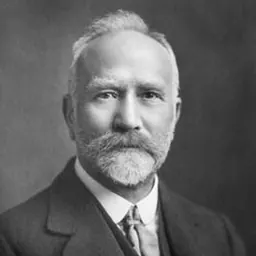
Wilfred Adolphus Domingo (W. A. Domingo) (26 November 1889 – 14 February 1968) was a Jamaican activist and journalist who became the youngest editor of Marcus Garvey's newspaper, the Negro World. As an activist and writer, Domingo travelled to the United States advocating for Jamaican sovereignty as a leader of the African Blood Brotherhood and the Harlem branch of the Socialist Party.
Early life Domingo was born in Kingston, Jamaica, the youngest son of a Jamaican mother and a Spanish father. Domingo and Garvey eventually had a falling out over the content of Domingo's writing, which often argued in favour of radical socialism, and which Garvey said was "not in keeping with the UNIA programme."
In 1936, Jamaican writer Walter Adolphe Roberts and Domingo created the Jamaica Progressive League, of which Domingo became the vice president. The League's most basic aims included establishing Jamaican self-governance, universal suffrage, and the right to form labour unions. They also encouraged their countrymen to study Jamaica's history and art in order to foster the desire for people to express themselves and their culture artistically.
Domingo traveled back to Jamaica in 1941, after 31 years of living in the United States. He is buried at Woodlawn Cemetery in the Bronx. Domingo also criticizes Western Black leaders who encourage the Black proletariat to engage in capitalist institutions, which Domingo argues are their downfall. He ends his essay by urging Black people of the West to get behind an international proletariat revolution.
"Gift of The Black Tropics" (1925) Writing for Alain Locke's The New Negro, Domingo used this essay to discuss the relationship between native-born Black Harlemites and foreign-born Black Harlemites, as well as the unique contributions from foreign-born Black Harlemites to their community. Domingo stated that, in 1920, about 20 percent of the Black population in New York City consisted of Black immigrants. At the time when he was writing this essay, Domingo believed that about 35,000 of these Black immigrants resided in Harlem. He characterized the foreign-born Harlem population, of which he was a part, as frugal, hard-working, and refusing to conform to the ways of native-born Black Americans. Additionally, Domingo compared foreign- and native-born Black folks in terms of their political and religious beliefs, contributions to the Harlem community, and feelings surrounding the color line. Domingo stated that since colorism was a much smaller part of life in the Caribbean than in America, foreign-born Black folks were more likely to reject conforming to expectations set by the color line and instead blaze trails in predominantly white spaces. This essay situates how the intersections of racism, colorism, sexism, classism, and xenophobia affected the lives of Harlem's Black population in the 1920s.
"British West Indian Federation: A Critique" (1956) In a stand-alone critique on the West Indian Federation, Domingo argued against final ratification of the federation which was to take place in 1958. Domingo stated that the federation is ultimately unfair because no public debate against the federation was allowed or acknowledged, and those in favour of federation were in control of the media and pushed pro-federation propaganda. He argued that neither race, nor geography, nor culture, nor history, nor economics justified a federation of the nations of the Caribbean. Domingo contended that the nations in the Caribbean lack the oneness that the British Government was trying to place on them; he said that England saw the people of the Caribbean as simply "West Indians", rather than as Jamaicans, Haitians, Trinidadians, Barbadians, and so forth. Finally, Domingo claimed that federation of the West Indies would ultimately benefit the British Government the most, and that those who would be most negatively affected by the federation had no say in the decision to federate.
Don’t just read it —
keep it.
Full-length biographies made to live with: read them, listen on the way to work, watch them tonight.
- E-book
- Audio
- Video
Instant download · yours to keep · every purchase keeps this site free
Important facts
People in Wilfred Adolphus Domingo's life
Named in this biography and alive at the same time




Related people
Same field, nearest in time




Contemporaries
People whose lives overlapped Wilfred Adolphus Domingo's





Frequently asked questions
Who was Wilfred Adolphus Domingo?
Jamaican journalist and activist (1889-1968)
When was Wilfred Adolphus Domingo born?
Wilfred Adolphus Domingo was born on 26 November 1889 in Kingston.
When did Wilfred Adolphus Domingo die?
Wilfred Adolphus Domingo died on 14 February 1968 in New York City.
What was Wilfred Adolphus Domingo's occupation?
Wilfred Adolphus Domingo was a writer, newspaper editor, activism and journalist.
Sources & further reading
· Wikipedia: Wilfred Adolphus Domingo
· DBpedia: Wilfred Adolphus Domingo
Cite this page
APA: Biography.guide. (2026). Wilfred Adolphus Domingo. https://biography.guide/wilfred-adolphus-domingo/
MLA: "Wilfred Adolphus Domingo." Biography.guide, https://biography.guide/wilfred-adolphus-domingo/.
Chicago: "Wilfred Adolphus Domingo." Biography.guide. https://biography.guide/wilfred-adolphus-domingo/.
Data last updated: 2026-09-22 · Spot an error? Report a correction.
Page generated 2026-09-27 05:14 UTC