
About Wilf Barber
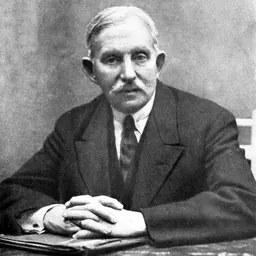
Lived 1901 – 1968 (aged 67). Wilf Barber was a British cricketer.
Wilfred Barber (18 April 1901 – 10 September 1968) was a professional first-class cricketer who played for Yorkshire County Cricket Club from 1926 to 1947. He played two Test matches for England in 1935 against South Africa. An opening batsman with an excellent batting technique, Barber often batted in the middle order. He scored 16,402 runs in first-class cricket at an average of 34.28 with 29 centuries. Barber made his debut in 1926 and made several appearances over the next few seasons. Despite a sound defence, Barber did not secure a regular first team place until 1932. He scored a thousand runs for the first time that season, a feat he was to achieve eight times, while he scored over 2,000 runs in 1935. Until the Second World War broke out, Barber continued as a regular member of the Yorkshire side. After the war, he played one more full season before retiring in 1947. His career continued in club cricket and he went on to coach local sides before his death in 1968.
Career Barber was born on 18 April 1901 in Cleckheaton, Yorkshire. He did not appear for the Yorkshire Second XI until he was 25, in 1926, when he scored 600 runs, including a century, and averaged 40. In the next season, he was chosen to play three matches, with a top score of 18. For the next few years, he was unable to attain a regular spot in the Yorkshire side as there were many batsmen competing for places. In the 1928 season, Barber played 16 matches, mainly when other batsmen were required in representative matches, passing fifty for the first time in an innings of 98 against the West Indians, and followed this with two other fifties. In total, he played on 22 occasions and scored 857 runs at an average of 30.60, However, Barber was in and out of the side over the next two seasons. He did not play 20 matches or reach 500 runs in either season and passed fifty only four times in total. His runs also played a part in Yorkshire winning the County Championship in his first full season. After this breakthrough, Barber steadily improved his total of runs and batting average, helping Yorkshire to win the County Championship twice in 1933 and 1935. However, Barber's best season statistically was the following season, 1935, when he achieved his best aggregate of runs and highest average in an English season, passing 2,000 runs in a season for the only time in his career. He scored 2,147 runs at an average of 42.09 and finished third in the Yorkshire averages. These performances earned him selection for the Players against the Gentlemen at Lord's Cricket Ground for the only time in his career, where he scored 61 and 18 not out.
Also in 1935, Barber was chosen to represent England in the Test series against South Africa. He played in the third and fourth Tests after England had lost the second match to be 1–0 down in the series. He was one of six Yorkshire players selected that season. He scored 83 runs in four innings with a highest score of 44 in the fourth Test but England only drew these matches and he was left out of the final game. He also took a wicket with his second (and final) ball in Test cricket, when the match was heading towards an obvious draw. Following these matches, he was chosen to go on the non-Test playing tour by the Marylebone Cricket Club of Australia and New Zealand that winter under the captaincy of Errol Holmes. He was the senior professional but was not as effective as had been expected in Australia. However, in New Zealand he scored 365 runs in the matches against a New Zealand representative team, at an average of 60.83. He scored 797 runs in all first-class matches, average 41.94, including two centuries. Following the war, Barber played one more full season, scoring 1,170 runs at an average of 30.00 in 1946 to be fourth in the Yorkshire averages. It was the eighth and final time he passed 1,000 runs in a season. During these seasons, Barber's runs contributed to Yorkshire being County Champions in four consecutive seasons from 1937 to 1939 and then again after the war in 1946. and was described by Gerald Howat as "the fourth pillar" of the Yorkshire batting in the mid-1930s (after Herbert Sutcliffe, Maurice Leyland and Arthur Mitchell). He was a good batsman on the off side and had a very good defensive technique, Although an opening batsman, he often went in lower down the batting order. On his death, Wisden described him as having "rendered admirable service." Barber also scored 248 against Kent in 1934. He had scored 73 in the first innings but Kent had built up a lead of 148 on the second day of the match. Barber, opening the batting with Len Hutton, scored 248 and shared a stand of 267 for the first wicket. As a result, Yorkshire drew the game. Barber shared in seven other century opening partnerships Yorkshire, four of them with Arthur Mitchell, and six other 200 partnerships. This included a stand of 346 in four and a half hours with Maurice Leyland, against Middlesex in 1932 which was a record for Yorkshire's second wicket. His fielding, generally done in the deep, was described by Wisden as "first rate".
Retirement After his retirement, Barber played club cricket into his fifties, playing for Lidget Green and King Cross until 1952. After he left Mirfield, he became coach to the North Riding Educational Authorities,
Don’t just read it —
keep it.
Full-length biographies made to live with: read them, listen on the way to work, watch them tonight.
- E-book
- Audio
- Video
Instant download · yours to keep · every purchase keeps this site free
Important facts
People in Wilf Barber's life
Named in this biography and alive at the same time




Related people
Same field, nearest in time

Contemporaries
People whose lives overlapped Wilf Barber's

Frequently asked questions
Who was Wilf Barber?
cricketer (1901-1968)
When was Wilf Barber born?
Wilf Barber was born on 18 April 1901 in Cleckheaton.
When did Wilf Barber die?
Wilf Barber died on 10 September 1968 in Bradford.
What was Wilf Barber's occupation?
Wilf Barber was a cricketer.
What nationality was Wilf Barber?
Wilf Barber was British.
Sources & further reading
Cite this page
APA: Biography.guide. (2026). Wilf Barber. https://biography.guide/wilf-barber/
MLA: "Wilf Barber." Biography.guide, https://biography.guide/wilf-barber/.
Chicago: "Wilf Barber." Biography.guide. https://biography.guide/wilf-barber/.
Data last updated: 2026-09-20 · Spot an error? Report a correction.
Page generated 2026-09-27 05:26 UTC