
About Wilbur John Carr
Lived 1870 – 1942 (aged 71). Wilbur John Carr was an American diplomat.
Wilbur John Carr (October 31, 1870 - June 26, 1942) was an American diplomat. He was a leader in building a professional American diplomatic corps, cutting it loose from domestic politics. He was named one of three Great Civil Servants, along with William Hunter, and Alvey Augustus Adee.
Early life and education He was born in Taylorsville, Ohio, on October 31, 1870. He attended college in Kentucky, graduating from the Commercial College of the University of Kentucky in 1889. After taking a shorthand course, he became a stenographer and accountant at Peekskill Military Academy while continuing his education. In 1894, he received an LL.B. from Georgetown University; in 1899, he was awarded an LL.M. from Columbian University. He helped establish Civil Service reform, leading to the Rogers Act.
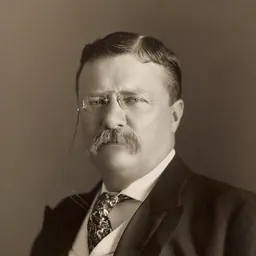
Carr's most prominent success in bringing professionalism to the foreign service was achieving passage of the Lodge Act of April 1906. It made officers of the Consular Service careerists on regular salaries, rather than amateurs who depended on collecting fees from applications. He worked with President Theodore Roosevelt on the executive order of June 1906 which ended the patronage system of appointing consuls for reasons of domestic politics, and instead required promotions by merit through competitive examinations. Additional laws of 1915 and 1931 created the Division of Foreign Service Personnel, of which Carr was the first chairman. He personally drafted the critical Rogers Act of 1924 which united the two rival services, consular and diplomatic, into an integrated Foreign Service. He helped design the quota system of the Immigration Act of 1924, giving significant powers to consuls to issue immigration visas. The promotion of American commerce was also a high priority, which he emphasized to consuls. He often found himself in opposition to old-line diplomats in the State Department.
From July 1, 1924 to July 28, 1937, Carr was Assistant Secretary of State. In 1937, President Franklin D. Roosevelt appointed him U.S. ambassador to Czechoslovakia. In this time, among other activities, he documented the livelihoods and natural beauties of the country as an amateur videographer. He was recalled in 1939, after the German invasion of Czechoslovakia forced the closure of the embassy. that Carr was anti-Semitic and that his antipathy to Jews had a long history.
Later life and death
Carr retired from the United States Foreign Service after returning to the United States.
Wilbur J. Carr died on June 26, 1942, of a heart attack, at Johns Hopkins Hospital.
Don’t just read it —
keep it.
Full-length biographies made to live with: read them, listen on the way to work, watch them tonight.
- E-book
- Audio
- Video
Instant download · yours to keep · every purchase keeps this site free
Important facts
People in Wilbur John Carr's life
Named in this biography and alive at the same time



Related people
Same field, nearest in time

Contemporaries
People whose lives overlapped Wilbur John Carr's





Frequently asked questions
Who was Wilbur John Carr?
American diplomat and reformer
When was Wilbur John Carr born?
Wilbur John Carr was born on 31 October 1870 in Taylorsville.
When did Wilbur John Carr die?
Wilbur John Carr died on 26 June 1942 in Baltimore, Maryland, United States.
What was Wilbur John Carr's occupation?
Wilbur John Carr was a diplomat.
What nationality was Wilbur John Carr?
Wilbur John Carr was American.
Sources & further reading
Cite this page
APA: Biography.guide. (2026). Wilbur John Carr. https://biography.guide/wilbur-john-carr/
MLA: "Wilbur John Carr." Biography.guide, https://biography.guide/wilbur-john-carr/.
Chicago: "Wilbur John Carr." Biography.guide. https://biography.guide/wilbur-john-carr/.
Data last updated: 2026-09-20 · Spot an error? Report a correction.
Page generated 2026-09-27 05:25 UTC