
About Whitney North Seymour, Jr.
Lived 1923 – 2019 (aged 95). Whitney North Seymour, Jr. was an American lawyer and politician.
Whitney North Seymour Jr. (July 7, 1923 – June 29, 2019), known to friends as Mike Seymour, He grew up in the Manhattan borough of New York City, Seymour's father was a prominent attorney
Seymour graduated from the Kent School in Connecticut in 1941. serving as an artillery officer in the Pacific theater during World War II, and resigning in 1945 with the rank of captain.
After the war, Seymour attended college at Princeton University, graduating magna cum laude with a AB in 1947. His first political position was as a Republican precinct captain in the 1950s.
Seymour ran unsuccessfully for the New York State Assembly in 1958, challenging William F. Passannante. While in the Senate, he sponsored the legislation to create the South Street Seaport Museum, persuading Governor Nelson Rockefeller to sign it despite the objections of his brother David Rockefeller. To maintain his nearly perfect record of attendance in the state Senate, Seymour also missed many opportunities to make campaign appearances during the primary campaign. The NRDC's establishment was partially an outgrowth of the Scenic Hudson Preservation Conference v. Federal Power Commission, the Storm King case, in which Seymour was involved. A dozen concerned citizens organized the Scenic Hudson Preservation Conference in opposition to the project, citing its environmental impact, and the group, represented by Seymour, his law partner Stephen Duggan, and David Sive, sued the Federal Power Commission, and successfully achieved a ruling that groups such as Scenic Hudson and other environmentalist groups had standing to challenge the FPC's administrative rulings. As U.S. Attorney, Seymour also prosecuted New York City Police Department corruption and misconduct cases brought by the Knapp Commission. Under Seymour, former Richard Nixon Cabinet members John N. Mitchell and Maurice H. Stans were indicted on charges of accepting illegal campaign contributions from fugitive Robert Vesco, but both were acquitted. Seymour was, however, initially skeptical about the practical use of the then-new Racketeer Influenced and Corrupt Organizations (RICO) Act; in a meeting with G. Robert Blakey, the law professor who pioneered the act, Seymour dismissed RICO as a waste of time. Later, after RICO's value in fighting organized crime was demonstrated, Seymour acknowledged that "in hindsight we were one hundred percent wrong." In Seymour's view, from a practical perspective, the government had "lost the battle but won the war" in the Pentagon Papers cases, since the Times and Washington Post, following the Supreme Court's decision, did not publish material whose release could damage national security, such as the "secret Defense Department study directly affecting military and intelligence operations and secret diplomatic efforts to achieve peace." He ran as a self-described moderate Republican, Sullivan, the most conservative of the primary candidates, won the primary with a comfortable lead. Seymour came in last place, and later said that he had taken "a foolish stab" at the nomination.
In 1982, Seymour departed from Simpson Thacher & Bartlett after more than three decades of affiliation with the firm, believing that large law firms were becoming too bureaucratic.
Independent counsel in Deaver case In May 1986, a panel of three federal judges appointed Seymour as independent counsel to investigate Michael Deaver, a senior aide to President Ronald Reagan. Deaver was the deputy chief of staff in the Reagan White House before leaving in May 1985 and becoming a lobbyist for the Canadian government. Deaver was indicted on five counts of perjury on charges that he had given false testimony to a grand jury that he did not remember a January 1985 meeting with Canadian ambassador Allan Gotlieb and his wife Sondra.
During the investigation, Seymour stirred controversy by issuing a subpoena to the Gotliebs, seeking their testimony. Gotlieb ultimately did not testify at Deaver's 1987 trial, although former national security adviser Robert C. McFarlane and former U.S. ambassador to Canada Paul H. Robinson Jr. did both testify as witnesses for the prosecution. Deaver was convicted of perjury.
Later life and death Seymour eschewed conventional notions of retirement, and remained active as a New York lawyer into his 90s.
Seymour died at Charlotte Hungerford Hospital in Torrington, Connecticut, on June 29, 2019, at age 95.
In 1976, Seymour organized the National Citizens Emergency Committee to Save Our Public Libraries, which advocated for public libraries and opposed budget cuts. Seymour was a staunch opponent of political action committees, believing them to have a malign effect on Congress, and was a founder of Citizens Against PACs. In United States Attorney: An Inside View of 'Justice' in America Under the Nixon Administration (Morrow, 1975), Seymour reviewed the history of federal law enforcement, criticized bureaucracy in the U.S. Department of Justice, called for more vigorous investigation and prosecution of white-collar crimes, and criticized the "arrogance and political expediency in the Nixon Justice Department." Seymour proposed a reform in which the Federal Bureau of Investigation would be separated from the Justice Department, and a new non-political post of chief prosecutor would be created. A Kirkus review described the work as a "well-meaning sermon/book" and criticized the "relentlessly banal, uplift prose" as "bland and superficial."
Personal life In 1951, Seymour married Catryna Ten Eyck, who died in 2017. He had two daughters. Seymour was a "rather formal man"; his tendency to "come across as a stiff, even dour, candidate" may have inhibited his political aspirations.
Seymour maintained homes in Greenwich Village, Manhattan, and Salisbury, Connecticut. He was an avid watercolorist and oil painter.
Seymour was an Episcopalian. He was a member of The Players.
Don’t just read it —
keep it.
Full-length biographies made to live with: read them, listen on the way to work, watch them tonight.
- E-book
- Audio
- Video
Instant download · yours to keep · every purchase keeps this site free
Important facts
People in Whitney North Seymour, Jr.'s life
Named in this biography and alive at the same time

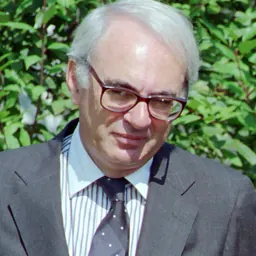

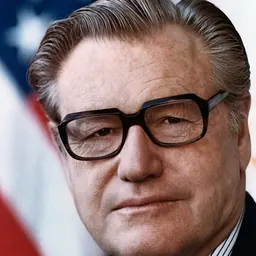

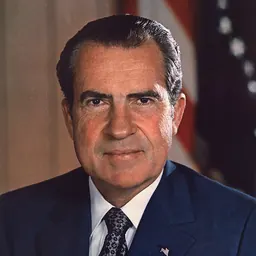

Related people
Same field, nearest in time



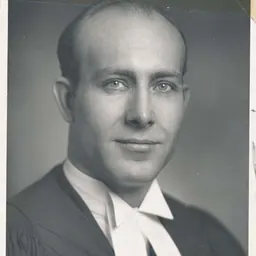
Contemporaries
People whose lives overlapped Whitney North Seymour, Jr.'s

Frequently asked questions
Who was Whitney North Seymour, Jr.?
American politician (1923-2019)
When was Whitney North Seymour, Jr. born?
Whitney North Seymour, Jr. was born on 7 July 1923 in Huntington.
When did Whitney North Seymour, Jr. die?
Whitney North Seymour, Jr. died on 29 June 2019 in Torrington.
What was Whitney North Seymour, Jr.'s occupation?
Whitney North Seymour, Jr. was a lawyer and politician.
What nationality was Whitney North Seymour, Jr.?
Whitney North Seymour, Jr. was American.
Sources & further reading
· Wikipedia: Whitney North Seymour, Jr.
· DBpedia: Whitney North Seymour Jr.
Cite this page
APA: Biography.guide. (2026). Whitney North Seymour, Jr.. https://biography.guide/whitney-north-seymour-jr/
MLA: "Whitney North Seymour, Jr.." Biography.guide, https://biography.guide/whitney-north-seymour-jr/.
Chicago: "Whitney North Seymour, Jr.." Biography.guide. https://biography.guide/whitney-north-seymour-jr/.
Data last updated: 2026-09-26 · Spot an error? Report a correction.
Page generated 2026-09-27 05:13 UTC