
About Werner Wolfgang Rogosinski
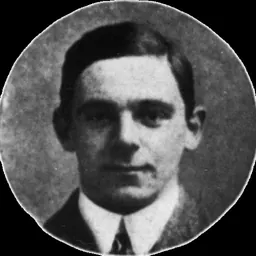
Lived 1894 – 1964 (aged 69). Werner Wolfgang Rogosinski was a British and German mathematician and university teacher.
Werner Wolfgang Rogosinski FRS
Life Rogosinski was born into a Jewish family in Breslau, German Empire (now Wrocław, Poland). His father, Hermann Rogosinski was Counsel in Breslau. Rogosinski studied at Mary Magdalen School from 1900 until 1913. He attended the University of Breslau, University of Freiburg and University of Göttingen, with Edmund Landau. His studies were interrupted by World War I, in which Rogosinski served as a medic.
Rogosinski focused his studies on pure mathematics, physics and philosophy. His interest was analytical problems, especially in series. His dissertation, "New Application of Pfeiffer's method for Dirichlet's divisor problem", caused a stir in 1922.
Career In 1923, he first went to Koenigsberg as a lecturer, and became an associate professor in 1928. He worked with Richard Brauer, Gábor Szegő and Kurt Reidemeister for five years. Rogosinski and Szegő families became friends. His first book Fouriersche Reihen was published in 1930. It provided a student's introduction to the Fourier series. The original was translated into English in 1950 and is still used.
Rogosinski married in 1928 in Königsberg. In 1932, his son Peter was born. After the Nazi takeover, his fortunes changed. In 1936, his teaching credentials were withdrawn. He was allowed only in some Jewish schools in Berlin. The Cambridge professors G. H. Hardy and John Edensor Littlewood invited him to come to the United Kingdom. He moved with his wife and child to Cambridge in 1937, with support from the Society for the Protection of Science and Learning.
He published five papers with Hardy from 1943 to 1949, under the title Notes on Fourier series. In 1944 Rogisinski and Hardy published their book Fourier Series, which might be said to be a rewrite, using Lebesgue integral methods, of Rogosinski's 1930 book. He was a teacher in Aberdeen in 1941. In 1945, he became a lecturer at Newcastle University (prior to 1963, King's College, University of Durham). In 1947 he was appointed professor and in 1948 Head of Department.
In 1959, Rogosinski resigned his position at Newcastle. Svend Bundgaard brought him into the Mathematical Institute at Aarhus. In 1954, he was elected Fellow of the Royal Society. In 1962, he was elected a foreign member of the Royal Danish Academy of Sciences. His intention was to go to the new University of Sussex. He died after a long illness, aged 69, in Aarhus.
Don’t just read it —
keep it.
Full-length biographies made to live with: read them, listen on the way to work, watch them tonight.
- E-book
- Audio
- Video
Instant download · yours to keep · every purchase keeps this site free
Important facts
People in Werner Wolfgang Rogosinski's life
Named in this biography and alive at the same time



Related people
Same field, nearest in time

Contemporaries
People whose lives overlapped Werner Wolfgang Rogosinski's

Frequently asked questions
Who was Werner Wolfgang Rogosinski?
British mathematician (1894-1964)
When was Werner Wolfgang Rogosinski born?
Werner Wolfgang Rogosinski was born on 24 September 1894 in Wrocław.
When did Werner Wolfgang Rogosinski die?
Werner Wolfgang Rogosinski died on 23 July 1964 in Aarhus.
What was Werner Wolfgang Rogosinski's occupation?
Werner Wolfgang Rogosinski was a mathematician and university teacher.
What nationality was Werner Wolfgang Rogosinski?
Werner Wolfgang Rogosinski was British and German.
Sources & further reading
· Wikipedia: Werner Wolfgang Rogosinski
· DBpedia: Werner Wolfgang Rogosinski
Cite this page
APA: Biography.guide. (2026). Werner Wolfgang Rogosinski. https://biography.guide/werner-wolfgang-rogosinski/
MLA: "Werner Wolfgang Rogosinski." Biography.guide, https://biography.guide/werner-wolfgang-rogosinski/.
Chicago: "Werner Wolfgang Rogosinski." Biography.guide. https://biography.guide/werner-wolfgang-rogosinski/.
Data last updated: 2026-09-25 · Spot an error? Report a correction.
Page generated 2026-09-27 05:11 UTC